Showing posts with label Notre Dame. Show all posts

Monday, November 11, 2024

WVFI's Luxury Interview-Chisel meets the Breeders (1992)

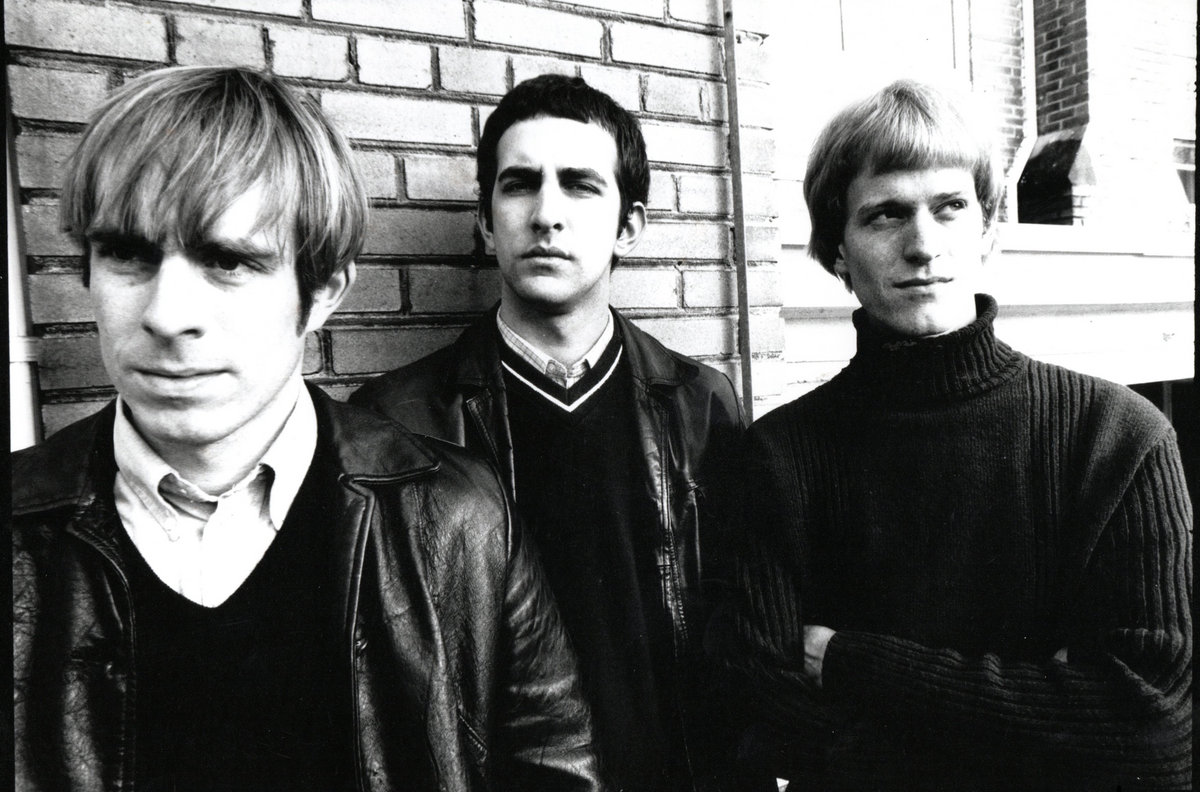
Chisel: Ted Leo (guitar), John Dugan (drums) & Chris Norbord (bass)

Two members of Chisel (Ted Leo & Chris Norborg) caught the Breeders at the crossroads between their 
Safari EP (familiar then to "in the the know" listeners) and the breakthrough of Last Splash that has gone on to become recognized as an essential album of the '90s (and a favorite of Olivia Rodrigo and Ratboys).  This interview originally appeared in WVFI's Luxury ("today's barometer of youth culture") in fall of 1992. 

WVFI's Luxury Vol. 1, Issue 1-Fall 1992
WVFI is the college radio station for 
the University of Notre Dame

In October (1992), a pair of Luxury staff reporters (Chris Norborg and Ted Leo) had the opportunity to meet with the Breeders backstage at Chicago's Cabaret Metro in the midst of the band's fall tour supporting their second album, SafariPod, their first album on the British 4AD label has just been re-released in America. The Breeders feature Kim Deal of Pixies fame on vocals and guitar and the drummer from England's Spiritualized (Jon Mattock). Kim's twin sister, Kelley Deal (guitar) and Josephine Wiggs (bass) were present for the interview. Another interviewer from the University of Wisconsin was also present. 

Luxury Operative Chris: What's the drink you guys were drinking that everyone was getting sick off of? I read this thing in I think it was Melody Maker.  Well, what was in it?
Kelley Deal: It's vodka, Kahlua and Bailey's.
Chris: Kahlua?
Kelley: Yeah, it's really tasty.
Chris: Oh. 
Kelley: There should be warnings...
Chris: Oh, it's really dangerous...
Josephine Wiggs (British accent): It's dangerous because it...it tastes like a milkshake, but it's three shots of spirits in the same glass.
Chris: Who was it who was really suffering from it?
Kelley & Josephine: Tanya, Tanya threw up twice.
Chris: Oh, no. 
Kelley: I mean, her body weight...
Chris: Is she still ill now?
Kelley: No, I think she's all right now. 

Breeders 1992: L to R: Jon Mattock (drums), Kim Deal (guitar),
Tanya Donelly (guitar), Josephine Wiggs (bass), Kelley Deal (guitar)

University of Wisconsin interviewer: I haven't really read much about you guys, except that...I mean the British press fawns all over you guys and is totally like psycho about it, but like, I mean, that's a cool photo through, with the red, that's awesome, But, um, they build you up and then they carry you guys down...I mean obviously not you all, but the British press...
Kelley: They do, yeah.
Josephine: Yeah there is a tendency to do that, probably because they're bored.
UW interviewer: Like the band Suede. 
Kelley: Plus, England is so small, You could probably fit it all in Texas or something.
UW interviewer: Sure, probably. 
Luxury Operative Ted: Or Indiana.
UW interviewer: I'm from Texas, from El Paso. 
Kelley: I think we're going to play there next leg of the tour, this is the band's recreational vehicle. 
UW interviewer: Yeah it's beautiful, I was going to mention...
Ted: Cool, yeah.
Kelley: My dad is driving us around. 
UW interviewer: Yeah?
Ted: Alright.
Kelley: And my mom just joined up with us yesterday, that's why this place is so nice and clean, isn't it nice?

Kelley Deal and Josephine Wiggs in Mr. Deal's RV
Photo from the BreedersArchive

Chris: Speaking of your father, I was going to ask you, You and Kim, before the Pixies or anything, what did you guys do? You guys played together a while, didn't you?
Kelley: We did, we've played ever since we were in high school. We played at this bar called Mo's Lounge in Ohio, we did disco stuff.
Ted: Oh yeah?
Kelley: Yeah
UW interviewer: Covers or originals?
Kelley: Covers. We had this keyboard player who would do...These old ladies would yell out 'You redheaded F---!' cause the guy had red hair.  It was just gross, awful, Think about it, you know, you have those memories, where you blush, ugh! But anyway, after that we just did some stuff around Dayton. We got out of the disco, and more into the kinda drug-era thing. 
Josephine: (laughs) But we weren't into drugs.
Kelley: And, we opened up for Steppenwolf, and John Cage stuff, you know. 
Chris: Did you win a contest or something?
Kelley: No, (unintelligible name) was in that heavy metal band, they're still going on, aren't they? And so we'd play around, it was just Kim and her acoustic guitar and her and me singing, just a little acoustic duo, you know? And so we drive up to this gig, and it's all motorcycles.
Ted: Oh wow! (others chime in cries of surprise)
Kelley: But it really turned out good, I mean they really liked us.  We were pretty surprised about that. A bit relieved, too.
UW interviewer: What about Ivo Watts-Russell? what's that guy like?
Kelley: He is so nice, he's great.
Josephine: Yeah, he is a really nice guy  I don't know, he's just really calm, and quite often, when things feel as though they're in a complete state of chaos, I'll just ring him up, and say 'Look, here's what's happening and stuff.' And he's just got a real good view on things. 
Chris: Is it the same way with Vaughan Oliver? I know he does the album covers for most of the 4AD stuff, like v23 is that what it is?  These people, how integral are they, the image that they create with the records like with Pod and stuff like that?
Josephine: I think the the whole 4AD image is a very recognizable style, and I think Vaughan had a lot to do with that, because they made a decision, that we were going to have an in-house designer, and I think that the whole unity that there is with the label, with one guy deciding what's going to get put out, and it's all stuff that he likes, and you've got one guy who's doing all the artwork, gives it a real sense of unity that I think is really cool.  I think people like it, like the Coca-Cola brand name, it's something instantly recognizable and people like that. 
UW interviewer: And now with those distribution deals, you don't have to pay thirty dollars to get a record anymore, like Dead Can Dance and all that stuff, you can get it. It's kinda nice.    

Safari ep-Design by Vaughn Oliver

Last Splash-Design by Vaughn Oliver

Chris: Do you expect to be recording again soon?
Kelley: December. Yeah, we're doing a few new songs tonight.
Chris: Oh yeah?
Kelley: Yeah, we've got what, seven new songs to do, they're all like a minute, minute twenty or so.
Chris: So you've got an LP coming out soon?
Kelley: In the spring. (Editor's NoteLast Splash was released on August 30, 1993)
Josephine: Yeah, if we get it recorded in December, it'll be ready for the spring. 
Ted: What label will that be on?
Josephine: It'll be 4AD and over here we got license through Elektra. 
Ted: Do you find it's easier working with indie labels like 4AD? I mean, how involved in the dealings with Elektra have you been?
Josephine: To begin with, Elektra didn't really know what we were about, because of the weird origins of the band, and there's horror stories. Kim, when Safari was released, sat at home thinking 'Oh, the record's coming out in two days time, and I haven't done any press for it.' So, she rang up the press department at Elektra and said 'I am available, you know. I'm not lazy about doing press stuff,' and they said, 'Oh, we thought it was a reissue of an old record and we weren't going to do any press.' They had no idea we had a new record coming out, and that's kind of scary. 
Ted: Yeah, that's awful. 
Josephine: I think it has to do with the fact that it is a big organization. They have got so many other names to be dealing with. 
Kelley: Or with Glastonbury, remember, when we had to tell them that we were doing a....Was it Glastonbury?
Josephine: Yeah it was. 
Kelley: They said, 'You're not going to play there, why should we be advertising?
Josephine:  Yeah, somebody from Spin rang up, asking if she could interview, or review the gig or something, and they didn't even know that we were playing at Glastonbury.
UW interviewer: Did this anger you?
Josephine: It's just annoying because it means that there are people who's job is to be doing that and they're not doing it. But, then, every walk of life is like that. If you go into any office there's people not doing anything or reading the paper. So, you can't get too uptight about it. 
Kelley: I think we should just be thankful that 4AD is a major player, and not smaller, because this gives you a good indication of what could happen if we were solely dealing with Elektra. 
Josephine: If you, as we occasionally do, talk to bands who are trying to get deals and stuff, if you get a deal, when you're just starting out with an independent label who hasn't got much money and stuff, they can't give you a big advance, but they will take care of you and they will interested, and will prioritize you as a band, whereas, if you sign to a major company, the chances are, you're just going to get lost. 
Kelley: But then again, and I've heard Kim say this, she's like 'Forget all this indie label stuff' because of Rough Trade. 
Ted & Chris: Oh yeah...yeah.
UW interviewer: Is that why they released Pod again or is it because you guys wanted to be like Temple of the Dog and kind of like re-release it and you know...
Kelley: We weren't told they were re-releasing it. We don't have the slightest idea why they wanted to re-release it. 
Josephine: I thought it was about that you couldn't get it anymore. Since Rough Trade went down you couldn't get it anymore.  And then when the Rough Trade stuff was auctioned off, Elektra bought the masters. 


Chris: I wanted to ask about the "Safari" video shoot, was that fun, or was it a mess? What was that like?
Josephine: Well it was fun at the time, yeah.
Chris: I love that video, it's one of my favorites. 
Josephine: The one bad thing about it was that we were on this white shape on the floor. I think that was part of the reason that it was so static, was because we couldn't really walk around on it because it would make marks.  So it was like 'you've gotta stand real still, you mustn't move your feet!'-so of course everybody is like this. 
Kelley: Yeah. (laughs)
Josephine: But, you know, it was good fun. 
Kelley: I was kinda bummed out about the size of the studio, because, well, have you seen the original, the Black Sabbath one?
Ted: I haven't seen the Breeders video, sorry. I haven't watched MTV in a while. 
Kelley: It's huge, the space, and their little bodies take up half the screen. 
Chris: Which Black Sabbath?
Kelley: "Paranoid," it's on that tape, MTV Closet Classics, anyway, they're about half size. Then when we got into the studio we were like 'I dunno, it seems kind of small...so, what are we going to look like on TV?'...That was one cool part about it. 
Josephine: Yeah, it was, it was. Because the size of the TV screen is like this, and the size of the figures is like this on the Black Sabbath video, cause they did it in a huge warehouse...
Ted: So, what's your favorite Black Sabbath song?
Josephine: (after a pause) I don't know, I guess "Paranoid."
                             
The Breeders at a Cincinnati Reds baseball game-Sept. 2023
                                  
UW interviewer: So, have you been listening to a lot of music on this tour, or..
Kelley: Well, our RV, we had a catastrophe, it's so weird, every night it's like some new thing. The first thing that happened, we blew both tires out on the one side while going a mountain in Pennsylvania, I think it was. 
Josephine: No Maryland.
Kelley: Yeah, and it was the middle of the night, like two in the morning and we blew out two tires, and so it took all night to get that fixed. And the next night at the hotel, in Washington DC, our first gig out of Ohio, somebody broke into the RV and stole two Walkmans, some tapes and stuff. 
Josephine: and a guitar...
Kelley: Yeah, an acoustic, so..no, we haven't listened to much music. (laughs)
UW interviewer: Is it out of line to ask about, like other bands, like the Throwing Muses, your opinions of any of the current stuff they're put out, like the Red Heaven?
Kelley: I haven't really listened to it. 
Josephine: I was really surprised by the production on it, it really took me aback the first time I heard, it, especially the drums, But, having heard a few things since then, I'm kind of more used to it now. Her voice is great on that album, I think it's the best her voice has ever sounded, real, real good. 
Chris: What do you think of  a lot of other new bands now, like PJ Harvey?
Josephine: I saw them do a show a little while back and I kind of understand all the attention they've been getting, they put on a great show, they're very intense. 

After another lengthy and insightful question from the other interviewer, our dynamic Luxury crew ran out of tape and sadly the interview came to an end.

Photos depict Chisel as the Mummies from a Halloween show!

Chisel live at Chicago's Empty Bottle in Feb. 2023
Photo by author James Kennedy

Thursday, September 12, 2019

Nobody's Children/Savage Rose: '66-'68 Notre Dame & South Bend Sounds

Last summer, I came across an amazing 1967 color photo of Savage Rose on the U. of Notre Dame Class of 1969 blog. As a Notre Dame graduate (1995), I document, from time to time, the musical acts that formed at ND during the '60s. I was not previously aware of Savage Rose or their predecessors Nobody's Children and the photograph intrigued me as it was one of the most striking of the time and place.  I was later to learn this particular photo was just the tip of the iceberg!  The keyboard player Dr. Bill Mitsch sent along a run of photographs that were some of the most evocative and encapsulating of Notre Dame’s music scene of the mid to late ‘60s which emerged, broke through the preordained patterns and connected campus to South Bend.
Savage Rose-1967 Peter Herrly, Bill Mitsch, Roy Marshall, David James, Steve Foss
The undeterred musicians who comprised these two intertwined groups were able to provide additional multilayered insight into these elusive, uncertain, but certainly exciting times which simultaneously transpired at Notre Dame and across the country.  Interestingly, much of this history seemed to emanate out of Farley Hall on the north end of the Notre Dame campus. Farley Hall became sort of a ramshackle mid-sixties musical epicenter starting with the folk revival and then John Hall (later of Kangaroo and Orleans) making some electrified rock 'n' roll racket down in its basement.  This group of Arts & Letters and Engineering students also arose from Farley Hall and shifted from garage rock (Nobody’s Children) to an eclectic and even unique combination of burgeoning psychedelic and blues rock (Savage Rose) all in the compressed expanse of 1966-1968. With these two groups as the focal point, the time has come to revisit these flourishing flatlands and further document Notre Dame's groundbreaking music scene at the Indiana crossroads of the ‘60s.

Nobody's Children
Origins, Formation and Early Days


Who comprised Nobody's Children?

Bill Mitsch-keyboard (Wheeling, WV)
Roy Marshall-lead guitar (Columbus, IN)
Peter Herrly-bass guitar (South Bend, IN)
Jim Pino-vocals (Santurce, San Juan, Puerto Rico)
David James- vocals (Atlanta, GA)
Richard “Dick” Luebbe-guitar, Greek sailor’s hat (Oak Park, IL)
"Cowboy"-drums (?)

First Nobody's Children Gig-10-8-66 Dick Luebbe (guitar) & Bill Mitsch (keyboard)
In front of Keenan-Stanford Hall (Army vs. ND weekend)
Bill: Initially Nobody’s Children was started by me and Richard “Dick" Luebbe (ND class of 1970). He and I were in Farley Hall and he dropped by when I was practicing with the new Farfisa portable organ I had just purchased the previous summer on July 29, 1966 in Wheeling WV, my home town. I finally bought an amp at Jack’s Music Store, 325 S. Michigan, South Bend that fall of 1966.

The other members of Nobody’s Children were Roy Marshall (class of ’68) who joined us before our first gig, since he signed the contract for that one. Peter Herrly (class of ’68) was our bass guitarist. Lead singer was Jim Pino from Puerto Rico for part of the year.  I cannot recall the name of the drummer.  I recall we called him "cowboy." I do not think he lived in Farley Hall.

Roy: (reviewing the photos) I'm playing the Telecaster which I wish I still had. Dang. It seems to me there was a lot of music around, enough to make me want to get into it. New Yorkers in Farley Hall brought folk music and there was a folk jam in some pizza place basement where a banjo player blew me away singing “They Call the Wind Mariah.” My roommate taught me the ukulele, but for me the main excitement was the Beatles, Stones, Kinks etc. Exciting and depressing times; music was my savior.

I do remember John Hall’s band practicing in Farley Hall’s basement and thought he was pretty cool. Don’t remember other bands much. I was a lead singer my freshman year in a band that I don’t recall the name of, started by a campus disc jockey from Texas.

Peter: (reviewing the photos) I’m playing a Hohner bass (a la Paul McCartney which like him I picked up hitchhiking through Germany) and dang I wish I still had it.

I started my lifelong liking of rock and roll with Elvis, Buddy Holly, Ritchie Valens, Everly Brothers, and then surf music, especially Dick Dale & His Del-Tones. I went to high school on the ND campus, Holy Cross Seminary, across the lake, (with Chuck Perrin, by the way, though I was never much into folk music I liked Chuck a lot) and one football weekend there was a student band, the Nightlighters, playing on the steps of Sorin Hall.

The Nightlighters-1965- Tony Andrea (as Dion) & Stroke (Bob Straker) on the right R.I.P.
photo courtesy of Cappy Gagnon (class of '66)
They did “The Wanderer” by Dion and the Belmonts. That was really it for me, from then on, I wanted to play... But the Stones were the big influence, for wanting to play more blues. Bass seemed a natural. I knew I was not a huge natural talent for lead, nor a rhythm obsessive for drums, I am by nature a federator, so... bass. I got involved with Nobody's Children as I had a bass and an amp, and the guys in Farley Hall were looking for a bass player.


Stepan Center - "One of the first geodesic dome facilities in the nation" was
completed in 1962.  The Turtles, MC5, the Beach Boys, the Four Tops, the Temptations,
Smokey Robinson and The Miracles, Lovin' Spoonful, Little Anthony and the Imperials,
the Supremes, the Kingsmen were among the many major acts appearing here in the '60s,
Note the original gold dome roof that was later painted golf ball white.

Nobody's Children-Stepan Center-Jan. 1967-Jim Pino, David James, Roy Marshall, Bill Mitsch
Nobody’s Children had for a time the unique distinction of featuring two lead singers.

Roy: Jim Pino was a great singer and could really sing “La Bamba.” He could play the guitar a little and was always telling me how to play; he was no doubt right. He later left Notre Dame.

Peter: We called him Juan, or Jimmy. His vocals on “La Bamba” were exceptional. Wish he could've seen the movie on Ritchie Valens.

Jim Pino most likely transferred to Loras College in Iowa in 1967. It appears from Ancestry.com that Juan J. Pino left this earth on August 13, 1976.  Time recently took away another lead singer of Nobody’s Children.


Bill: David James (class of '70) was the lead singer at the end of the Nobody’s Children year and he continued on with Savage Rose. He died in Jan. 2018 at the age of 71. Here is a South Bend Tribune tribute written about him. He truly stayed in the music business his whole life.

David James (1946-2018)-South Bend Tribune photo
Did the band play any of the South Bend spots like the Top Deck, Village Inn Pizza Parlor, or later on at The Delphic Oracle?

Peter: No, we played mostly at Morey’s Party House, Carriage House, and Laurel Club.

Bill: I did usually sign for the band in a one-page contract we had, so I have pretty good list of when we played and who was the customer:

October 8, 1966  11:45 am for at least 1 hour in front of Keenan-Stanford Hall --
(football Saturday, ND v. Army, note the photo of Luebbe and Mitsch above)
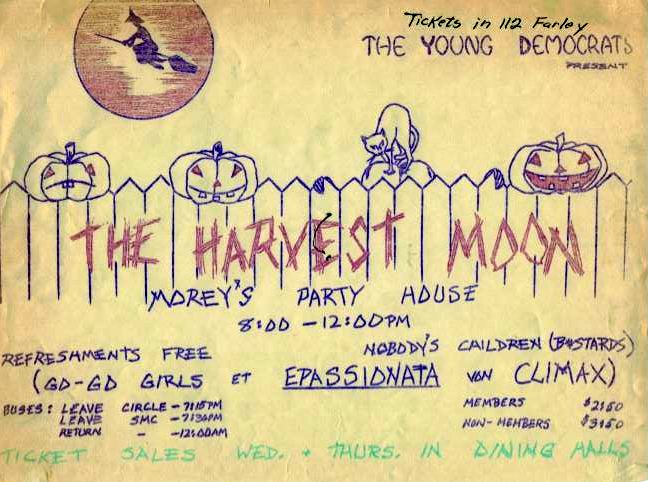
October 28, 1966 8 pm to 11:30 pm Morey’s Party House- -ND Young Democrats


October 31 1966  8:30 pm - 12:30 am Morey’s Party House --ND Detroit Club
November 4, 1966 8 pm - ? Morey’s Party House--ND New Jersey Club
November 12, 1966  8 pm- 12 am  Carriage House --ND Glee Club
January 1967--Stepan Center
Feb 17. 1967 Carriage House--ND Glee Club
March 3, 1967 8:30 pm - 12:30 am Laurel Club--ND Rugby Club
March 17, 1967  8 pm- 12 am Carriage House--ND Glee Club (green beer provided)
March 18, 1967  8 to midnight Carriage House--Farley Hall Dance and Date Party
April 8, 1967 8 -11 pm Immaculate Heart of Mary High School, Westchester, IL--IHM Student Council
April 22, 1967  8 pm - 12:30 am Laurel Club--ND Crew Club
April 29, 1967  8 pm -12:30 am  Laurel Club--ND Crew Club


Tell us more about playing in the classroom in South Bend?  Do you recall how this came about?
Peter: It wasn't a classroom except part time, I think it was a room where like the Knights of Columbus would meet. Our manager David Uhlig might remember. A gig is a gig... that one did not pay a ton. Like in The Blues Brothers, that scene where they play at the C & W road house...

Peter Herrly, "Cowboy" drummer, Roy Marshall, Jim Pino vocals, Dick Luebbe, Bill Mitsch,
 David Uhlig (manager) behind band

When did Dick Luebbe leave the band?
Bill: Dick lasted only the Nobody's Children 1966-67 season with NC’s “death" determined to be April 29, 1967 according to some documents I have.  He went on to play rough & tumble club hockey for Notre Dame.

Roy: I remember Dick wanted to play stuff like “Kind of a Drag” by the Buckinghams and “Never My Love”  by the Association. It was a little too sophisticated for my fledgling ability, but I think we all found some consensus.

Bill: We didn’t have the voices for the Association songs!


Did Nobody’s Children have any original songs?  If so, who did the songwriting?

Peter: Not really. We wanted to cover our favorites and entertain, and r&b was what we could agree on -- the Animals were big, Stones -- Roy loved the Beatles, but they are tough to replicate.  We would always discuss songs to cover, often heatedly and with passion -especially as music evolved in '67 and '68.  Our covers stayed more on the blues and rock side, but not always. We did the Animals very well!


What was the relationship like between your groups and the other campus bands like the Shamrocks, the Plague, the Shaggs or later Captain Electric and First Friday?

Peter:  Nothing for me, David James was way more into these groups and became quite the mover in those circles later (’69 and ’70, he told me).


Nobody's Children at a South Bend party spring 1967 "Cowboy," Roy Marshall, David James, Bill Mitsch
Were you aware of any of the local South Bend garage bands like the Illusions?

Peter: No. The big thing we were doing was checking out all the blues legends that were playing on the South Side in Chicago, and once in a while appearing in South Bend. Muddy Waters came to a club on the west side, unforgettable! In Chicago, we saw Howling Wolf, Lightnin’ Hopkins, Jimmy Reed, BB King... just amazing acts, before anybody but the Stones had heard about them, except the folks who went to the clubs of course.

Spring & Summer of 1967
Several members of the band were able to directly encounter the changing scene that was dawning on the West Coast.  The shift of youth culture from the Sunset Strip to the parks could be seen as a harbinger of things to come.

Peter: Roy, David James, manager David Uhlig I made a crazy road trip from South Bend to Los Angeles during spring break 1967. We were at that Easter Sunday "Love-In" at Griffith Park in March of 1967, which was fun and we also saw Lightnin’ Hopkins at the Ash Grove on that same trip.

Love-In at Griffith Park, Los Angeles on Easter Sunday, 1967- photo from Tropico Station
With the end of the 1967 spring semester, Bill headed home for a new musical experience.
Bill: I joined up with the Fantastic Emanons as their keyboard player upon returning home to Wheeling, WV for the summer break. The Fantastic Emanons ("no name" spelled backwards) were pretty good had already cut several regional hit records including “Hitch-Hike” that we played almost every night at a summer bar gig (The El Toro Lounge) we had.  We played all over the Ohio River Valley that summer.  I recall playing in Bellaire Ohio and Wheeling Park in Wheeling WV. We also practiced once on our Mitsch family front porch in suburban Wheeling that summer (2 summers before Woodstock) and a big crowd of neighborhood kids came by. It was a great event until we got busted by the Wheeling Police because some neighbors obviously complained. The good thing that came out of that is that my brother taped us with our Dad’s tape recorder.  Years later, after Dad died, we found the tape in the Mitsch home basement.  I took it to The Ohio State University audio folks and they were able to clear up a few of our songs. I have them on CD, but also on my iTunes. Every so often, the Emanons come up on my playlist as I am driving my Mustang in Ohio or Florida or sometimes on a visit back to Notre Dame.

The Fantastic Emanons-sans keyboard player Bill Mitsch

Fall 1967: The Emergence of Savage Rose
1967 saw the band at the crossroads as there were changes everywhere when they reconvened for the fall semester.  Besides what David James described in an archival email as a "heavy dependence on the Stones and Jimmy Reed material," psychedelic, soulful and heavier sounds from the likes of Blues Magoos, Young Rascals and Procol Harum seeped into their repertoire.


What was the impetus behind the band name change to Savage Rose?  

Peter: As I recall, we were kicking it around and there was a flower being tossed around. I did not want to be too flower-power, and Savage came in there – David James might have had the formulation, and David Uhlig was engaged (as a good manager should be!)


Who comprised Savage Rose?

Bill Mitsch-keyboard (Wheeling, WV)
Roy Marshall-lead guitar (Columbus, IN)
Peter Herrly-bass guitar (South Bend, IN)
David James-lead singer (Atlanta, GA)
Steve Foss-drums (Albuquerque, NM)

One of the key pieces in the evolution to Savage Rose was the inclusion of Steve Foss (class of '69), a very talented drummer fresh from a year in Innsbruck, Austria with the ND study abroad program. Prior to Notre Dame, Steve attended secondary schools in Albuquerque after a childhood of moving around the globe. The Farley Hall resident was brought into the band by David James.

Admist the alterations, their Leslie Speaker did make the transition from Nobody’s Children.

Bill: It makes an electric organ sound like a church organ as it has spinning speakers that give the wah-wah sound out of single notes and chords. It was the best thing I ever purchased, but it was a pain to haul around to gigs. It really got a workout with the Fantastic Emanons in summer 1967 as we played every night for much of the summer. 

Farley Hall, Oct. 1967, Roy Marshall, Steve Foss, David James, Leslie Speaker

The clothing choices for Savage Rose are very interesting for fall 1967 as the band appears to be wearing "working man" or "proletariat" clothes.  Am I reading too much into this or was this appearance chosen to stand out from collegiate look on campus and or the excessive psychedelic look that was in full bloom in places like Chicago?

Bill: Maybe reading too much into our clothing. We were a blue jeans group, but there was never any discussion about what we wore. We just showed up.

Was anyone the driving force or guiding force in the band as far as direction?

Bill: haha, everybody was! When David Uhlig took over, my role as record keeper and contract manager stopped.  That is why I do not have very much detail or documentation of what we did as Savage Rose.

Peter: David James took on a leading role as the lead singer, but also very good on blues harmonica.  He was also a solid rhythm guitar player who could keyboard, and was indispensable on equipment, etc.  Later David was indeed a huge force in the South Bend scene - music, Irish music also, and progressive politics. A wonderful man and a dear friend that my kids adored.

According to the aforementioned archival email from David James, Savage Rose took the stage at bygone South Bend spots and schools like Nicola's Pizza, St. Stephen's Church hall, the Mishawaka Bomb Shelter, the St. Mary's College Coffee House and the St. Mary's Academy which was on South Miami Street. The group also played at the still open Frankie's BBQ (est. 1968) and Rocco's (est. 1951). 

Spring 1968-The quintet looks over the edge of the unknown

What was the highlight musical moment for you in that era?

Roy: The Anti-Military Ball.

(The Anti-Military Ball was headlined by Phil Ochs.  It was held at the now demolished Notre Dame Fieldhouse and featured the groups Captain Electric and the Flying Lapels and Savage Rose playing under their other appellation of Indiana Joy!)

Peter: Playing at the Anti-Military Ball*... the same night that I as the commander of the Army ROTC elite spec ops unit had a date at the Military Ball. We played extremely well that night, but I had to do some magical stuff (including dumping off my date and disguising myself) to make my part happen. I did get to sing my one and only song “I'm your Hoochie Coochie Man.” At least that is how I recall it.

Savage Rose playing under their alias of Indiana Joy!
Image courtesy of Tom Wishing

* Note: "The university ROTC departments had a long-standing tradition of holding a Military Ball every spring. During the anti-Vietnam War protest movement of the late 1960s, when feelings against the Vietnam War had morphed among some into a more generalized anti-military feeling, it seemed to the protest movement at Notre Dame a fitting idea to have an Anti-Military Ball. Such was the climate in 1968." - Peter


Did the band both back Phil Ochs and play their own set at the Anti-Military Ball?

Peter: I was there for our own short set, then left as I recall to change and dance at the Military Ball, so I do believe we backed up Phil Ochs. David James would have remembered.

Bill:
it seemed like Savage Rose drifted away from me or me from it in 1968. I was at the Anti-Military Ball in 1968 (don’t remember seeing Savage Rose aka Indiana Joy! there) and ironically was still in ROTC the year before and went to the Military Ball.  One of our competitor bands borrowed my Farfisa keyboard that night and turned it up to screeching levels.  Sorry I was so generous.

The best moment I remember was in front of Farley Hall in Oct. 1967 with Roy Marshall singing a searing version of the Rolling Stones’ “Get Off Of My Cloud” and superb percussion by Steve Foss that bounced off all of the dormitory buildings on the north quad. Wish we had taped that session.


Farley Hall, Oct. 1967, Bill Mitsch, Peter Herrly, Roy Marshall, Steve Foss, David James
Steve: Seeing the Shaggs play in the basement of the LaFortune Student Center remains as one of my fondest memories of those times. It was a good place to meet girls from St. Mary's College in an informal setting.  Plus, there was dancing to a jukebox. Also should mention the Ed Sheftel Combo (from Northwestern University) at the 1966 Notre Dame Collegiate Jazz Festival (judged by Quincy Jones and Billy Taylor).  However, nothing beat the Shaggs at the student center!

Were there ever plans to record?
Peter: Maybe towards the end, glimmer of mention, with David James, our peerless vocalist, keyboard, rhythm guitar, and amp and sound man... but we never had time to get there. Roy, David, I and our manager David Uhlig all moved off campus, to the South Bend suburb Riverside no less.  Bill was very busy with his studies and David could fill in on organ -- but we were really doing more blues, and David was really pretty good at the blues harmonica.

Aftermath: War & Weddings

Bill:   I wanted to add that Leslie Organ Speaker was one of the reasons we were so good doing “Whiter Shade of Pale” by Procol Harum. That was Ruthmarie’s (Rosary College-Dominican University girl whom I charmed at Rosary’s grand piano in their lobby with Beatles and Otis Redding ballads) and my wedding march in May 1970. The band at the wedding that was permitted by a liberal Catholic Church was Dick Luebbe’s new band in Chicagoland, named Misery Loves Company.   We did not catch the irony of the band’s name for a wedding until later…Again, I better remember the date, May 28, 1970, and the place, Church of St. Leo’s, St. Paul MN. My wife’s name is Ruthmarie Hamburge Mitsch. Hitting the big 50 anniversary next year and I am sure bands will be discussed. We will try to get some old ND friends back in the fold.

Misery Love Company-May 1970-Ruthmarie Hamburge-Bill Mitsch Wedding
Dick Luebbe (originally from Nobody's Children) in white suit with red Gretsch
Steve:  After Savage Rose, I drummed with the South Bend-based Tommy and the Tornadoes led by Tom Wishing (class of '68). I also gigged with the progressive band Rotten Apple in Albuquerque.  Later, I acquired a pilot license which allowed me to fly from the Southwest to San Francisco to drum for the Tornotics comprised of Noam Cohen, Tom Wishing, his son Devin, and Johnny Augeri (class of '69).

Peter:  Afterwards the Vietnam War saw us all on very different ways, but those are other stories!

Roy: After college I got drafted into the army, spent about a year learning Vietnamese and then went AWOL to Canada for a while, came back and was put in the stockade for a while, then finally got discharged. I worked for Macy’s Parade in NY for a few years and then have been working as a carpenter/ handyman ever since and still am. I married a gal from Seattle, been here since 1980. My wife and I continue to play music together and now with our son. The Marshall Family Band; you can listen on Bandcamp. Still trying to figure out music, an endless pursuit started in Farley Hall.

Peter:  In 2017, we were invited to do a 50th reunion concert in front of Farley Hall by the young women there, but it was not to be with the musicians now located across the globe. All in all, our lives are connected to the past, and the future that we don't know.
Savage Rose-Fall 1967 Peter Herrly bass, Bill Mitsch keys, Roy Marshall guitar
While previously unexplored and largely unacknowledged, Nobody's Children & Savage Rose, can now be considered instrumental, along with foundational groups like the Shaggs, the Winds and Webster's New Word, in helping to establish Notre Dame's first musical golden age. This unpretentious group accomplished all of this by showing up to play direct, propulsive and essential rock ‘n’ roll that still stands out today.

Contributors:

Steve Foss

The Tornotics

Colonel (retired) Peter Herrly
Blue Line Films

Roy Marshall
Marshall Family Band

William J. Mitsch, Ph.D.
Director, Everglades Wetland Research Park
Eminent Scholar, College of Art & Sciences
Sproul Chair for Southwest Florida Habitat Restoration
Florida Gulf Coast University
2004 Stockholm Water Prize Laureate
Professor Emeritus, The Ohio State University

Special mention and thanks: Tom Wishing, Bernadette Netherby, RN


Saturday, February 16, 2019

Hats off to Larry Finnegan

"One-hit wonder from the early sixties" is the usual reductionist treatment that Larry Finnegan receives in his home country when it comes to his 1962 #11 hit record.  However, “Dear One” continues to evoke responses of "I love this song," and "You don't hear this song that often,” whenever it is played on oldies radio or heard streaming over a computer.  When it comes to attribution, "Dear One" is frequently mistaken to be an early Del Shannon song. While Finnegan did not have the same level of consistent commercial success in America as Del Shannon, Larry certainly made his own distinctive mark in terms of international hits, songwriting and producing records for a host of others.   Thanks to the internet, it is now easier to hear a reservoir of his recordings beneath the lightning strike moment of "Dear One." Equally important are the opportunity for others, outside of Sweden, to discover more about the underrated musician, composer, and producer behind a substantial stack of sweeping sixties sounds. 

The Inside Track
Larry was actually a student in the College of Arts and Letters at the University of Notre Dame when he had his worldwide hit in early 1962. When he arrived at Notre Dame in 1959 from Jamaica Estates, Queens, NY., he was already a versatile musician who was said to be competent on guitar, piano and drums. "Larry never took any music lessons," reveals his wife Sharon Finneran.  "He had an ear for music and was self-taught."  Larry came from a family of 9 children with 7 boys and 2 girls.  Both of his parents were born in Ireland and his father worked as a security guard for the New York Daily News.  Prior to Notre Dame, Larry attended Bishop Loughlin Memorial High School in Brooklyn and ran for their track team.


Woodshedding, WLS & Courting Sudden Fame at Notre Dame
The legend at Notre Dame begins atop a creaky wooden floor of a dorm room in a collegiate Gothic-styled residence hall. "Larry Finneran was an extremely nice, unassuming guy. Our rooms were a few doors apart on the fourth floor of Morrissey Hall," recalls author Rich Wolfe. "He was also very quiet and often could be heard in his room playing his guitar. The big radio station in those days for ND students was WLS-Chicago. “Dear One” by Larry Finnegan started getting a lot of air time on WLS, particularly by Dick Biondi, their star DJ. Also, Arnie “Woo Woo" Ginsberg was playing it a ton in Boston." The dichotomous experience of being a recording star and student was just beginning for Larry.   Rich Wolfe elaborates: "One day I jokingly said to Larry, 'This guy Larry Finnegan is trying to live off your name.' He replied, 'That’s me.'  I laughed...a few days later found out it was true. It was so incongruous. He was the total opposite of what you would expect.  When the song later would come on WLS many rooms on the fourth floor would turn the volume on high."  Probably to the surprise of his Notre Dame classmates and many others, "Dear One" was not Larry's first recording. In 1959, he recorded "I'll Be Back Jack" for Decca Records, but it was not released.  This solid first effort was later issued on their Coral imprint in 1962 after the smashing success of “Dear One," but it sputtered again. Its commendable flipside "Ain't Nothing in this World" ambles easily along with its integration of a fluid banjo.


Old Town in New York
Another seemingly improbable aspect was that Larry's pop hit was released on Hy Weiss' Old Town Records which was a New York City label deeply devoted to R&B and doo wop. Hy Weiss was one of those colorful record industry characters who recorded and released the street corner sound as an owner of a step-ahead independent. (Interestingly, Weiss even has a co-writing credit for the Velvet Underground's "Foggy Notion" to his name.)  Larry co-wrote "Dear One" with older brother Vincent Finneran who at the time was in his senior year at Boston College.  In typical show-biz fashion, Hy Weiss changed Larry's surname of Finneran to the stage name of Finnegan. Being mistaken for a Del Shannon song factored in early on "Dear One."  This misidentification certainly helped to propel the song up the charts and eventual classic status. Still, Vincent was looking out for his brother. "A story I recall is that Larry said his brother shopped “Dear One” around NYC," conveys writer Cappy Gagnon. "One record label loved the song and felt it would be a good one for Del Shannon, Larry’s brother insisted that the song must be sung by Larry."  In addition, ace studio musicians like Gary Chester on drums and Dick Pitassy (Notre Dame class of 1965) on piano helped the recording breakthrough and stand out from the competition of the time.  "There was supposed to be a guitar solo on "Dear One," reveals musician Dick Pitassy. "Little did I know in the recording session that my piano playing would become the song's solo in the finished take." Hy Weiss was refreshingly true to his word when it came to supporting Larry and his family.  "Hy kept in touch with me even after Larry died, sending me money off and on," states Sharon Finneran. A well executed cover of Don Gibson's "Oh Lonesome Me" is one of the highlights of his follow-up attempts on Old Town Records.  1963 saw the release of “Pick up the Pieces” and features a suitable arrangement by space-age guitar whiz Billy Mure.  Despite the lack of another hit in America, there is no denying that  "Dear One" made waves around the world and launched his professional career which would first take Larry to the recording meccas of Nashville and New York City.


RIC (Recording Industries Corp.) Records
After graduating from Notre Dame in spring of 1963 and completing his stint on Old Town Records, Finnegan next stop was RIC Records, a label, helmed by Joe Csida, with operations in both Nashville and New York City. The label's two bases seemed to perfectly coincide with Larry's affinity for pop country. The label’s initial offerings were the one-two punch of Rosie Grier, then a professional football star for the Los Angeles Rams, and Larry Finnegan.  Bobby Darin actually produced Grier's Soul City album in 1964. (Darin bought the Trinity Publishing company in 1963 from Joe Csida, who was formerly Bobby’s manager.)  For Finnegan, RIC went the sequel route with "Dear One, Part Two," but it failed to connect. The flip featured "Baton Rouge" which continues to stand the test of time. This lively and rollicking number was written by his brother Vincent and casts a celebratory mood.  Larry's next effort was a derivative novelty number "A Tribute to Ringo Starr -The Other Ringo" which spins off the 1964 Lorne Green's hit "Ringo," but ultimately tries too hard in its attempt to cash in on some of the Beatlemania.  While there was no chart success during his tenure, Larry gained invaluable experience in several facets of the music industry.


At RIC, he worked on the composition and production sides for a wide array of then peak-period pop styles (surf, soul and girl groups). These rare releases are aural testaments to his professional adaptability and skillfulness. 1964's "Surfin' in Bermuda" by the Cannon Brothers is a low-fidelity surf vocal number coated with the landlocked grit of  the Riverias and the Trashmen while West Coast harmonies and melodies can be detected under the haze.  Larry also composed and produced the soulful girl group rarity "Coolie" for Venita and The Cheries.  One of his most intriguing productions is "I'll Take You Back Back Again" from the Pittsburgh singer Florraine Darlin.  In its initial incarnation the song started as keyboard instrumental with an organ lead by the aforementioned Dick Pitassy.  Later the vocals of Florraine Darlin were added along with several additional layers of instrumentation-resulting in a catchy mid-tempo summer 1964 pop song that anticipates folk-rock while simultaneously echoing the Everly Brothers. Operating without a hit, momentum slipped away for the singles-oriented RIC Records by the mid-sixties. With the British Invasion in full effect, Larry saw the writing on the wall for heartland American acts.


One of his most intriguing endeavors during his time in New York was a 1964 girl group gem “Don’t Let it Happen Again” by the Kittens.  It actually featured two of Larry’s sisters (Mary & Christina) and is credited as a Finneran/Csida production and arranged by Dick Pitassy. It is also an example of the vast musical talent running in the Finneran family.  In addition, brother Vincent wrote the flipside “Nothin'." These days, this 45 exchanges hands in the amount of three figures.


The Tivoli Circuit-Summers ‘63 & ’64 in Sweden 
While his subsequent releases failed to return him to American charts, he was able to proceed forward with a successful career-extending move to Sweden.  Old Town releases like "Pretty Suzy Sunshine" raced up the charts in Sweden.  Sonet Records, lead by Gunnar Bergström, invited Larry to tour Sweden in summer 1963 and later signed him as a singer and songwriter. Dick Pitassy was part of Larry's backing band which included the Hi-Grades from England.  "We mainly played at what are known in Sweden as tivoli or fairgrounds," recalls Dick Pitassy. "Our musical performances were held in conjunction with other fair attractions and stage acts-even a beauty pageant one time." While Sonet Records gave Finnegan the initial incentive to break away from the rapidly changing American scene, his courageous and fortuitous move to Stockholm in 1965 quickly propelled him to stardom in Scandinavia and later in Germany. For Larry, Sweden was not totally foreign territory.  Finnegan's first exposure to Swedish sensibilities actually occurred at Notre Dame as a Communications Arts student. Finnegan, according to Claes-Hakean Olofsson, "Developed an interest in the Swedish welfare system (healthcare, disability pension, child allowance etc.) and as early as 1960 was describing Sweden as a leading country in these areas."   While he would have been on the periphery in the U.S., Larry could be on vanguard with his celebrity status in Sweden. "When I had my first child, Larry, Jr., Larry had me come to Sweden as we were living in more affordable Switzerland and presented me with a mink coat that had belonged to Princess Christina Magnuson," fondly remembers Sharon Finneran.  "A big picture of us was published on the back of one of their Expressen newspapers"  Larry's adventurous, ambitious and daring spirit propelled him beyond preordained domestic expectations and into seemingly uncharted worldwide realms.


Compounding his star status with his initiative, resolve and recording skills allowed Larry to become a major player in the Swedish music industry.  In Stockholm, he partnered with Swedish musician Rune Wallebom (a singer for the Violents) and established the record label Svensk American.  He also resurrected his publishing company Seven Brothers Music which was aptly named after his brothers of the same number.  In addition to producing and releasing several hits from Swedish acts like Sven-Ingvars, the label became home to several of Larry's own successful singles along with fittingly titled "My Type of Country." album.


Everyday, Everybody and Everytime
Besides refining his production skills during these years, Larry reached the peak of his own musical powers by straddling pop and country in Sweden. Along the way, he continued to develop his own distinctive guitar style which formed the back bone of "Everytime."  Obviously inspired by Buddy Holly's chiming and charming "Everyday" and Tommy Roe's inclusive "Everybody," Larry reeled off the lovely little "Everytime." This understated number is accented by a springing guitar tone where Finnegan is mostly likely utilizing the whammy bar in the best way. "Notice how it's in perfect sync rhythmically. It sounds pretty organic too, not to mention that it would be a pain to do that with a pedal or an amplifier effect," explains musician and writer Mike Fornatale. "As far a gear, I'll guess it's a Gretsch with a Bigsby vibrato." Overall, Larry's durable sounds satisfies listeners affinity for straightforwardness, sincerity and the plain-spoken, while convincingly expressing Larry's commitment to what he stood for and believed in.

Photo courtesy of  American Music Magazine (Sweden) archives 


The Crossroads of the Sixties in Sweden
Things truly did come into focus for Larry in Sweden. Stylistically, his records are at crossroads of pop, country and rock 'n'roll. Unquestionably, it’s the sound of middle and southern America played out in on Scandinavian stages during the mid-sixties.  It took a transatlantic crossing to have success with a sound that had the strongest distilled American elements.  It could be said that many of these Swedish releases were his most innately American thematically and stylistically.  These records continued to reflect the deeply rooted influences of Marty Robbins, Don Gibson, Johnny Horton and even Elvis. Larry could most authentically be himself playing this down home vernacular sound in foreign lands. While, 1966’s "Bound for Houston" will easily draws comparisons to Johnny Cash's "Folsom Prison Blues," it stands on its own with a chugging rhythm, requisite twangy and coiled guitars and a dollop of doo wop.

Photo courtesy of  American Music Magazine (Sweden) archives 
Somewhat hidden as a flipside, there is one intriguing musical departure with "Song for an Unknown Soldier." This could be said to be Larry’s Pet Sounds moment as it was released in 1966 and it addresses not only the sad plight of the solider, but also the senseless destruction of mother nature and human life itself through a series of striking vignettes. Musically it is reminiscent of the Beach Boys' "I'm Waiting for the Day" with its sectioned orchestration between the elucidating vocals. His unrivaled star status in both Sweden and later Germany allowed Larry to simultaneously retain his roots, while branching out in striking new directions.


Suzie  (and the Sunny Girls)
While Larry achieved Gold Record status in the States and celebrity status in Sweden as a recording act and singer, his arrangement, composition and production accomplishments tend to get overlooked both here and abroad. In Sweden and later in Germany, Finnegan continued to make strides in both the creative and technical sides of the recording process. For instance, he wrote and produced for the Dutch/Swedish singer Suzie (born Maria Pereboom in Holland) including her biggest Euro-hit "Johnny Loves Me" (not the "Johnny Angel" follow-up  by Shelley Fabares.)  Astoundingly, in October 1963, the Beatles opened for Suzie in Stockholm, Sweden!  In 1965, she married Mike Watson the bass player for the aforementioned backing group the Hi-Grades, the Lee Kings and later on intermittently for ABBA. Larry Finnegan was said to be fastidious in the studio and would require take after take.  Larry’s professional relationship with Suzie could be compared to Quincy Jones’ mentoring role and exacting production work with Lesley Gore.  Larry’s studio skills helped Suzie become one of the biggest stars in Sweden and in several other European countries.  Suzie’s “Johnny Loves Me” was even released in United States on the APT label in 1965. “Don’t Let it Happen Again” was the flipside.  Yes, that’s the aforementioned song previously recorded by the Kittens that featured two of Larry’s sisters almost a year earlier. Suzie also recorded "Don't Let it Happen Again" in German and Swedish. For a brief time 1967, Suzie led the Sunny Girls who have become international cult favorites over the years with the P.F. Sloan song "From a Distance." Larry & Suzie's musical relationship ended on a strong note in 1969 with an enthralling German-English cover of  "Da Doo Ron Ron," This record perfectly encapsulates Larry's production ability to capture that flash feeling of heart-lifting excitement.


Germany and the Race to the Moon
Thanks to Bear Family Records, his German language recordings originally released on Vogue Schallplatten became readily more accessible due to their inclusion on their "Komm Doch Zu Mir" CD release from 2000. Larry's quick and strong grasp of the German language and the Schlager style is presented in stunning sonic clarity. The Youtube era revealed one of his last and most adventurous undertakings before it was removed for some reason. His production on "Race to the Moon" by Gordon Young and the California Brass has almost an otherworldly Joe Meek feel to it.  Besides both producers being deeply enamored by the sound of Buddy Holly, there are other overlapping connections and small degrees of separation.  During it time on charts, Joe Meek took notice of “Dear One” and had Tony Victor cover it with the Tornados of “Telstar” fame supplying the rhythm backing on their rendition. Joe Meek also worked with the legendary Swedish rock & roller Jerry Williams.  Jerry Williams (Sven Erik Fernström)  recorded  his 1964's "More Dynamite" album with the aforementioned Dick Pitassy who composed "Race to the Moon."

1969 Larry Finnegan production of a Dick Pitassy composition


Back Home Again in Indiana
In 1970, Larry returned to South Bend, Indiana and a drastically changed America after five years of being overseas. Larry appeared to make the disorientating transition back in his usual genial, dignified and resilient manner. "I don’t recall when I first learned that Larry was a Notre Dame guy, but I became a fan.  Five years after I graduated in 1966, I was back at ND as Assistant Director of Admissions.  I became a Big Brother.  A year later, I was the Director of Big Brothers," relates Cap Gagnon. "A year later, Larry volunteered.  I can’t recall what his job was then, but I seem to recall that he said something about having formerly been a singer………and I said something like, 'You’re THAT guy!!'"  Gagnon continues: "He was a wonderful and modest man.  I asked him what happened to him after Notre Dame.  He said that he went to Sweden.  When I asked why, he said 'After the Beatles, the music tastes changed and guys like me couldn’t get arrested'  He mentioned a long list of folks who were in Europe with him.  The only one I remember was Big Dee Clark (“Raindrops”), although I believe he also mentioned Jackie Wilson."  It could be conjectured that it was a difficult shift in situation as Larry went from doing things on pretty much his own terms as a stratospheric star in Europe to quotidian workaday life between the prevailing blue-gray skies on the flatlands of South Bend.  However, Larry once again demonstrated his adaptability and ingenuity.  "When we returned to South Bend, my home town, he went to work as an advertising manager for Wheel Horse Products," explains Sharon Finneran.  "He invented a safety lawn mower which I have the patent for."  Wheel Horse Products was a South Bend-based manufacturer of lawn and garden equipment.  The company was later acquired in 1986 by the Toro Company.  In July 1973 everything came to a halt as Larry tragically died of a brain tumor, only a week after being diagnosed, at the way too young age of 34.  He was buried in the Cedar Grove Cemetery on the Notre Dame campus.   


Going Global into Crossover Country 
His radical (at the time) relocation to Sweden allowed Larry to freely express a middle American rock-pop-country aesthetic deep in the '60s.  Meanwhile, his early '60s pop contemporaries (e.g, Terry Stafford, Curtis Lee, Johnny Tillotson, Tommy Roe, Brian Hyland) had to navigate the tricky path, with varying results, to stay viable in the post-British Invasion era of American pop music of the mid to late '60s.  All in all, he didn't need to recast himself into something he was not in order to get with the capricious cosmic times. In a sense, Larry followed the brave tradition of American roots musicians who made the bold break to Europe where they were better appreciated in many cases-while blazing his own international and independent path. Larry was also before his time as country and pop did not coalesce together in the United States in the mainstream until the breakthrough of Glen Campbell.  Photographs from his time abroad reveal a look of quiet self-determination on his face as he pushed himself into new territories both musically and culturally. In the face of numerous challenges, he found opportunities to continue as a musician while also evolving as arranger, composer and producer.  The break away from the familiar allowed him to realize his hopes, dreams and aspirations as a crossover act on international and stylistics levels.


Out of this World
Finally, Larry is remembered  as a class act, a steadfast worker and most importantly as a good person by those who were fortunately able to interact with him during his too short time on earth.  Wherever his captivating record "Dear One" is played, Larry's musical spirit is readily recognized even if he himself is not. On one level, this seems appropriate as he seemed to be one to let the music speak for itself.  However, his wide-spanning, yet unsung life story is so remarkable that it simply compels long overdue acknowledgment and "Hats off to Larry." 

Acknowledgments & Sources: Sharon Finneran, Mike Fornatale, Jörgen Johansson, Dick Pitassy, Rich Wolfe, Erik Petersson, American Music Magazine, The Spectropop Discussion Forum Archives, Bomp List Refugees, Bear Family Records, 45cat.com, Discogs.com

Special mention and thanks to Cappy Gagnon and Kathleen Herzog as their enthusiasm, responsiveness and willingness to help provided the momentum to make this project possible.