Showing posts with label SFTRI. Show all posts

Saturday, August 05, 2023

The Wildebeests – Go Wilde In The Countrye


With 1997's Go Wilde in the Countrye, the Wildebeests arguably released one of the best garage rock albums of the ‘90s. The Edinburgh, Scotland trio are one of those groups, like the Cynics, who took the best from ’66 & ’77 and beyond to forge their own distinctive sound. While the unsung group had the courage to set out on their own path during the ‘90s garage revival, by and large their recordings have somewhat unjustly slipped through the cracks over the decades. The band features Lenny Helsing of the Thanes, bass player John Gibbs (the Kaisers, Holly Golightly Band, the Masonics) and vocals/guitars provided by Russell Wilkins. Wilkins is also a key figure in the Medway/Billy Childish scene and has extensive experience with the Pop Rivets, Thee Milkshakes and the Delmonas.

They were a last minute fill-in for the Kaisers at the first Las Vegas Grind weekender in October 1999.  I remember attendees being pretty crestfallen as they were anticipating seeing both the Neatbeats and the Kaisers on the same night at the same festival. They whipped the crowd into an instant frenzy and canceled their disappointment as soon as the first chord was struck. Their stage command and incendiary, yet melodic sound carried them through to impress the international audience and set up things perfectly for the Neatbeats (who played at the peak of their powers).  Russell Wilkins exhibited a certain savoir-faire with his resolute vocals and stage presence.  Further, he was able to achieve a pretty bold tone on the guitar that both growled and snarled.

The Wildebeests-at the Las Vegas Grind-October 29, 1999
This record encapsulates their sound that is simultaneously raw and ready, yet refined due to the accomplished and astute musicians involved. Their distinguishing characteristic is their ability to achieve a pretty fierce, thick, murky, melodic and full-blown sound within their self-imposed limitations. Additionally, their well-versed knowledge of music is second to none as exemplified by their deep-end covers that truly stretch across the decades of recorded music, while also displaying their propensity towards variety. The rumbling opener “I Need You” is not the Kinks song, but the next one “World Keeps Going Round” was definitely inked by Ray Davies. Next, they explore the unvarnished Pacific Northwest ‘60s sound with the R&B instrumental “5A Gibbs Entry.” The trio also excel at pointed manifestos (“This is My Year”) and determined declarations (“Standing Alone” CD-only).  There is an overall dynamic flow to the sequencing as their standout cover of the Ramones’ “Suzi is a Headbanger'' is perfectly placed between the aforementioned “This is My Year” and “Bad Storm Coming.” By the way, “Bad Storm Coming” sounds like quintessential American moody '60s garage punk. However, it was originally done by London’s Downliners Sect on their 1965 Country Sect album.

Beat & pop sensibilities frequently shine through their jagged sound that sometimes veers off into freakbeat. They also prove they can pull off the ‘40s and ‘50s blues on the old Bukka White/Mose Allison standard “Parchman Farm” and the Willie Dixon/Muddy Waters' vehicle “I Live the Life I Love.” The Wildebeests certainly go much further back into the roots, weeds and bogs than most bands. For instance, “Temptation” is the old 1933 evergreen first made famous by Bing Crosby and they deliver in formidable fashion making it sound like the natural precursor to the rockabilly/garage standard “Jezebel.”

It may be heresy in some quarters, but the Wildebeests go beyond the Medway sound and frankly, no other group sounds like them. Go Wilde in the Countrye captures their forward momentum of the time. It’s also one of those perfect albums to play on the drive home from work. In a way, they presaged the Kent 3, the Embrooks and Reigning Sound with their ability to combine surging immediacy and concision with expansive knowledge and skillful musicianship. Once again, the SFTRI label had the foresight to release another stellar record that has more than stood up and endured here in the '20s. This album should remain on the forefront when it comes to ‘90s garage rock.

L to R: John Gibbs (bass), Lenny Helsing (drums), Russell Wilkins (guitar)

Sunday, July 30, 2023

Supersnazz-Diode City & Rock Juice-Drink All Night


Some 30 years ago I recall being excited to see Supersnazz’s Superstupid! CD in the new rotation bin at the college radio station where I had an early Friday morning show. It seemed like a major departure for Sub Pop at that time to release the debut album from an all-female Japanese band. Little did I know at the time that Kurt Bloch, of Fastbacks, had produced the album recorded at Conrad Uno’s Egg Studio in Seattle and the band had connections with Scott McCaughey of the Young Fresh Fellows. Quickly losing track of them in the midst of busy college life was not surprising as their follow-up Devil Youth Blues was released only in Japan by Time Bomb Records based in Osaka.
Thankfully SFTRI came to the rescue in 1999 and licensed this album for North America release. Diode City is the album where it all came together for them. On the whole, the album is packed with propulsive power-pop and off-the-rails rock ‘n’ roll. There are hooks at every turn and an overall surging energy that both transmits and reflects the perpetual motion of Tokyo.  Leading off is “Words of Love” that rips right off from the start in Blondie fashion. The poppy, choppy and catchy “Baby Love” reminds me of the Eyes (Charlotte Caffey’s pre-Go-Go’s band) with its skip-along sensibilities and racing tempos propelling the song forward.  In fact, the entire record has some of the best punk/new wave/power-pop elements and influences of late ‘70s Los Angeles all over it.

Supersnazz (Tomoko & Spike)
Phoenix, AZ-Nov. 2001

“No Excuse” bursts out with that hammering stripped-down Stooges piano riff and swarming buzz-fuzz guitars before being anointed with Saints-like horns. The title track “Diode City” and “Star Kills” arrive with prominent X marks. They nail the menacing group-chant vocals on “Diode City,” while the blistering “Star Kills'' will have you wondering if it was in any way influenced by Yukio Mishima’s novella “Star.” The delightfully straight-ahead “It’s Alright” brings back the flash and dash of Sheena & The Rokkets.

Supersnazz (Tomoko & Shoe)
Phoenix, AZ-Nov. 2001

“From Home” is a dramatic supercharged girl-group gem with a dreamy melody. However, “From Home” is not the Troggs song of the same title (that was later covered by DMZ), but a Supersnazz original written by Tomoko that sounds strongly influenced by the said Troggs and “You Tore Me Down” Flamin’ Groovies.  “I Wonder” is another successful Crystals/Ronettes cover (and they would go on to have many-including Captain & Tennille’s “Love Will Keep Us Together” that was included on an entire album of covers entitled Sweat Box). Finishing the album off on a strong note, “Mr. Gee,” jubilantly extracts the ‘50s by way of the Ramones circa Leave Home. Supersnazz reached new heights on Diode City by masterfully blending their varied influences into a distinct, vibrant and enduring sound. 


Rock Juice logo illustration by Kame


Rock Juice Kame-Guitar (Machinicalis) Tomoko-Bass (Supersnazz, Tweezers, the Bucketeers)

Mick-O-Drums (Machinicalis, Noble Surfers, Royal Fingers) Tatsuya Inagaki (aka INA)-Guitar (Treeberrys, More Fun)

Naming your group after a Flamin’ Groovies album from 1992 is just one indicator of Rock Juice’s deep devotion to the Groovies. Further, a cyclical pattern emerges as Supersnazz took their name from the Flamin’ Groovies' first album. The sound and spirit of the Groovies undeniably permeates this entire release from the design through the layering of guitars to the song sequencing. Even their band logo is obviously rendered in Flamin’ Groovies/Cyril Jordan font. Fittingly, Rock Juice opens the album with a stellar cover of Flamin’ Groovies’ “Please Please Girl.” On this Jordan-Wison composition they quicken the pace, while striking a perfect chiming tone (stirring ‘60s folk rock meets ‘70s power-pop) that is embellished with folksy interweaving vocal harmonies. On a similar note, it also recalls the Groovies successfully speeding up the tempo on their cover of the Beatles’ “Misery” found on the Shake Some Action Lp.  Not only does Rock Juice, like their forebears, record many covers that they make their own, they frequently draw from the same well as the Rolling Stones, NRBQ and Chuck Berry are all common denominators when it comes to covers on Drink All Night.  In live shows, they even cover Abba’s “Dancing Queen” as a strong melody is a strong melody! 

Photos by Teppei Miki

From Supersnazz to Rock Juice, Tomoko has consistently been a versatile and solid songwriter and she continues to deliver two knockouts, “Lucky Girl” which has resemblance to the Muffs and the brisk, but unsparing “Lights On.” (I still wish to hear her country project the Bucketeers.) Inagaki (Ina) has written a minor classic anthem with “Stop Waiting for Rock “N” Roll.” It’s on the heights of their inspirational models the Sire-era Flamin’ Groovies. Their energy, execution and melodies and production are all in alignment on this striking debut. Rock Juice also convey a highly-developed sense of dynamics through both their guitar interplay and ambitious trade-off vocals. Overall, the record is a conduit to the excitement, immediacy and surging energy still possible in rock ‘n’ roll. May they themselves continue to influence new generations of guitar driven Japanese bands like Hazy Sour Cherry and Flashlights and let’s all hope for a follow-up album. They could even do an all-covers album of  Flamin’ Groovies songs and in the process go full circle. 

Rock Juice (L to R) Kame, Tomoko, Mick-O, Inagaki (aka Ina)

Saturday, November 05, 2022

Various – If You Gotta Go-Go, Go-Go Now : A Tribute To The Go-Go's

This seemingly came out of nowhere as it appears to be SFTRI’s first new release in nearly a decade. It has also been 20-some-odd years since their How Many Bands Does It Take to Screw up a Blondie Tribute? This is somewhat of a companion disc to the Blondie tribute as it shares the same compiler (Travis Ramin) and cover artist (Aaron Marshall), along with some of the same musical participants. In typical SFTRI swashbuckling fashion, the disc has been somewhat of an elusive treasure as the silver ring has seemingly been stuck on a container ship outside the Port of Long Beach, resulting in backstock status throughout 2022. 

How Many Bands Does It Take To Screw Up A Blondie Tribute? 

Like the aforementioned Blondie tribute album, the source material is so strong, it’s almost a foregone conclusion that this tribute album will be a successful one. Scanning the groups involved, reveals a beguiling mix of the Go-Go’s competitors and contemporaries from the late ‘70s & early ‘80s (Paul Collins, Nikki Corvette and Josie Cotton), some of the most compelling musicians associated with the best of the ‘90s (Fastbacks, Lisa Marr), famous in Japan acts from the last 20 years or so (Baby Shakes) and Japanese groups famous outside of Japan (the 5.6.7.8's).

SFTRI has a strong track record of bringing much needed attention to obscure, yet outstanding female-fronted and all-female bands with their many releases, tributes and compilations. Hearing how each act incorporates their own individual style within the vicinity of the distinctive sound and brash & bouncy energy of the Go-Go’s is the pull of this disc. There are some instant winners with the artists one already appreciates and then there are some unexpected pleasant surprises with a few previously unknown groups who share similar guitar-driven sensibilities. The only glaring omission was not seeing the inclusion of Peach Kelli Pop, who are one of the most Go-Go’s influenced bands going today. There are always many reasons behind these things. Perhaps they are waiting for a tribute to Redd Kross? Essential link between Blondie and the Bangles Over the decades, the Go-Go’s have become regarded as one of the key groups of the new wave movement and in a way a commendable cross-over act that connected the underground to the mainstream that one can still hear at wedding receptions and swimming pools or in short the essential link between Blondie and the Bangles. During the first five years of the '80s, they brought the changing sound of the San Fernando Valley, Hollywood and Los Angeles to the world. Along with the Plugz, the Plimsouls and Phil Seymour they played the Starwood and the Whiskey a Go Go. As things began to accelerate, they were off to the American heartland to open for the Pretenders before jetsetting with I.R.S./A&M labelmates the Police. With the hits, the foremost Southern California New Wave band became headliners and played everywhere from Palos Verdes High School to stages in Australia, Brazil, the UK, Japan and achieved international stardom in the process. (All this makes one wonder if they were ever considered to be included in the famous CHiPs’ “Battle of the Bands” episode as Charlotte Caffey’s father Thomas Caffey directed episodes of ChiPs?)

Their backgrounds were as distinctive and varied as the state of California itself. They ranged from the outsized appeal of Thousand Oaks’ favorite day-glo diva Belinda Carlisle to the Texan transplant Kathy Valentine, who brought an outsider perspective and hard-won wisdom from the Austin school of hard knocks. Gina was the girl from Baltimore who more than kept the beat, while Jane Wiedlin brought her Hollywood fashion school background to the foreground with a fair share of pixie dust. Further, Charlotte Caffey was seemingly a Golden State golden child from Glendale who radiated reserved cool and could do it all.

Worlds Away The Go-Go’s stirrings led to a ripple effect that eventually crested into momentous waves that continue to build, lift and launch these 24 acts from sea to shore. Fastbacks surge ahead with their version of  “Vacation” and make it unmistakably their own with Kurt Bloch’s nose-dive metal flake fills leading up to the indelible and exultant chorus. Some may recall that cub covered “Vacation” on 1995’s Come Out, Come Out. Writing of cub, Lisa Marr’s astonishing rendition of “Worlds Away” is simultaneously the most monumental and spare song on this compilation. She found such a gem to interpret and completely transformed it with her austere treatment. I consider it my favorite single song of 2022 as it takes on a life of its own, while expressing the seemingly overwhelming concerns of the day-to-day with the underlying and universal yearning to be worlds away. In addition, Marr makes the ukulele sound avant again as her playing style verges on the exotic-making it sound more like a koto or zheng.

“Tonite” is a Mike Skill (The Romantics) and Nikki Corvette collaboration featuring the coiling, yet compressed and gleaming guitar tone. These vets come closest to approximating the economical playing and the incisive sounds insisted by producer Richard Gottehrer on the Beauty and the Beat sessions. 

The splashy “Surfing and Spying” written by Charlotte Caffey is put into the capable hands of the 5.6.7.8’s. The Japanese trio blast out their surf punk guitar and make waves worthy of Charlotte Caffey, who joined the Go-Go’s after a stint with the Eyes. Songs like “Disneyland” indicated the Eyes’ own astute and askew take on the Southern California surfy punk sound.

This Town Baby Shakes reacquaint listeners with “This Town,” which has emerged as one the Go-Go’s finest songs. Besides marking a high point in their songwriting, “This Town” is also an example of the Go-Go’s undeniable ability to glean the decades like a thrifter with a trained eye. They were obviously and unabashedly spurred by the best early to mid-sixties pop rock, while also proudly wearing their prominent ‘70s power pop & punk influences on their tattered sleeves. Overall, they were not only in tune with their times, they helped shaped its direction by their awareness of the past and forward momentum.  

I used to see the name of the Nutley Brass bandied about in ‘90s zines like Go Metric and I dismissed them as a novelty act without ever actually hearing them. They bring something new to the table with their recasting of “Head Over Heels,” which was the Go-Go’s final top 10 hit from spring of 1984. Nutley Brass’ something new is a touch of KPM Music with a Sting of the Mike Flowers Pops Orchestra. The Nutley Brass is a project of the talented Sam Elwitt who would go on to produce two excellent albums for Miriam Linna.

Presented with punch and supreme poppiness, “Can’t Stop the World” was the worthy flip of “We Got the Beat” on the IRS single. Kathy Valentine's declaration of determination lends itself well to reinterpretation by Go-Go’s contemporaries Holly & the Italians as well as being the fitting closing song and statement (like on the Beauty and the Beat album).

Fast Times at Ridgemount High soundtrack stars The Go-Go’s were an effervescent, upbeat, catchy and pivotal group who partly defined the early ‘80s. Success arrived for them because of their ability to absorb and encompass the overlapping musical and visual influences of several Southern California’s extant sub-cultures into an appealing, distinctive and unified identity of their own. Music videos helped them further render their spunky look to an inflection point, while VHS footage (Totally Go-Go’s) showcased their live excellence. In short, they were able to put the symmetrical in the asymmetrical and the power in the pop. 

They had an intrinsic melodic sense that continues to give their songs perennial appeal. The quintet was also an eminently likable band, but unfortunately as an all-female band in the male-dominated music industry they were essentially regulated to second string status by the entrenched establishment. The Go-Go's eventually made their own way through years of self-imposed struggles, intragroup strife and industry resistance. Ultimately, their collective resolve took them all the way to the Rock & Roll Hall of Fame. More importantly, they have survived to succeed and influence successive generations through recent books, documentaries and their enduring songs. Their jolting and joyous energy is still breaking through.

Saturday, August 20, 2022

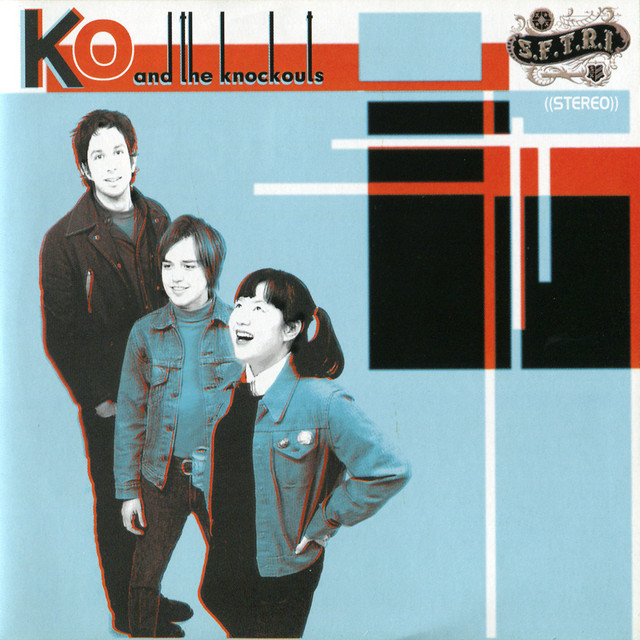
Ko and The Knockouts-20 Years Later

This Detroit trio came and went like a flash of lightning. I still recall the excitement of hearing this blast out of the speakers for the first time.  At the time, they most reminded me of early Blondie. Hearing this 20 years later, Ko’s vocals recalled Lisa Marr of cub coupled with the rust belt resolve of Chrissie Hynde, while the band surges with the dynamic energy of the Embrooks.

This 2002 album released by SFTRI captures their early momentum of their brief short-lived heyday (2001-2003). They generated quite an initial stir as they quickly found their sound that has retained an enduring edge.  In fall 2003, I was fortunate to see them in Tucson at Solar Culture opening for Holly Golightly with Ko backed by an entirely different line-up than the musicians heard on this recording (Eddie from the Sights on guitar and Jeff Klein on drums, Jim Diamond on organ and some others from Rocket 455). While the show was good, there was a seemingly discontented mood of “I would rather be somewhere else” feeling in the air. Tucson is certainly a lovely place to be in November. Perhaps it was an off night like we all have.

Songs like “Cry No More” and “Go Getter” are instantly captivating with their dashing tempos and Ko’s harmonized vocals leading the way. “Set Me Free” breakouts like the incendiary freakbeat stormer “When the Night Falls” by the Eyes. Fittingly, a serrated cover of the (UK) Birds’ "You're on My Mind" follows.  They are able to slow things down with the smoldering “You Did It,” which displays their command of rhythm & blues and now emerges as a worthy candidate for sync licensing. Their inspired and charged-up cover of Nolan Stong’s "If I (Could Be With You Tonight)" is up there with the best of the Detroit Cobras as they make this Fortune Records group harmony classic entirely their own. This would have also fit perfectly on 2013’s Daddy Rockin' Strong: A Tribute to Nolan Strong and the Diablos. “I Wanna (See You Again)” is an indelible out-of-time pop song with a growling guitar expressing their inherent grittiness that was mislabeled as "Twistin Postman" (and never corrected on the 2007 Wicked Cool reissue).

They were quite the garage power trio and frequently took their propulsive rock ‘n’ roll sound out to the edges of glory, demonstrating that the roll is as important as the rock. Their memorable songs are still striking not only for their infectious hooks and catchy melodies, but also for their combination of straightforwardness with some deft lane changes within songs. All this should have made them contenders on the level somewhere between the subterranean Subsonics and the major label-era of the Muffs. Overall, they made their first foray into recording appear so easy to do. Their self-titled power-packed album added a new layer to the Motor City's monumental tradition of stripped-down rock ‘n’ roll. Consequently, has there ever been a Detroit group and/or singer more deserving of thunderous applause and opportunity for a second act?