Sunday, December 14, 2025

Chicagoland at 45 RPM: The Mid-1960s Midwest Music Mecca-Interview with author George Plasketes

45 RPM=Revolutions Per Midwest (in mono)

Chicago ‘60s music, then and now, is somewhat still under-recognized on a national level. Assessing the need and filling a gap, George Plasketes presents a fact-filled and enlightening exploration of the glorious pop-rock sounds and scene that made Chicagoland “The Mid-1960s Midwest Music Mecca.” Plasketes shares his extensive research, passion for music and lived experience to offer a much deeper look into the people, places and culture that made it happen. Overall, Plasketes provides the most comprehensive account of Chicagoland’s thriving pop music scene of 1964-1971 ever written, while also extending the narrative to the Great(er) Midwest and striking a balance between detailed history and the "mystic chords of memory."

Author photo by Molly Bartels from Auburn Today's "Office Space" spotlight

George Plasketes is professor of media studies and popular culture in the School of Communication and Journalism at Auburn University in Alabama.  He also played defensive end for the University of Mississippi from 1975-1977.  His 1977 “Ole Miss” team has the distinction of upsetting a Notre Dame team that would go on to win the National Championship led by Joe Montana. Plasketes is also the author of Warren Zevon: Desperado of Los Angeles (Rowan and Littlefield).

What gave you the impetus to write a book about the Chicago music scene of the mid-‘60s besides the obvious fact of growing up there?  Was it something you have long wished to do or did it only emerge in the past 10 years or so?


Partialities, proclivities, and romanticism of Western suburbs Wonder Years aside…my enduring reflections and ruminations on that Once Upon a Time and Place, which I had long carried with me in sound and spirit as a pulse and steadfast whisper, gradually amplified into a shout. The Voices Within said that the Chicagoland mid-1960s music scene is meaningful and multifarious, and needs to be documented and presented as fully as possible. 


Fragments, profiles and highlights of the prolific period have appeared over the years in shorter formats (blogs, websites, liner notes) from a collective of resourceful local chroniclers and critics. Their writings and commentaries were cited throughout my narrative, informing my account of the mid-1960s Chicagoland scene. I felt it was important, if not urgent, to compile as much of this Stuff as I could, situating it into one place in as comprehensive a chronicle as possible.  In short, and long, a critical cultural and geo-musical narrative complemented by discographic archival resources. Such an edition was a long time coming. Way overdue. I was always a bit surprised that such a document had not been previously written or assembled. This was an opportunity for me to dutifully step up and tell the tale in its totality. The fine folks at McFarland publishing were swayed.


As a prelude, several years ago, I included a chapter on “The Suburbs Seven” (my branding for the best known Chicagoland suburbands) for a collection B-Sides, Undercurrents and Overtones: Peripheries to Popular in Music, 1960 to the Present which featured an “unsung popular music” thematic thread.  That essay was only a start, a surface scratcher that was far from what radio legend Paul Harvey would label, “The rest of the story.”


Did you happen to catch any of these groups live in their heyday?


Surprisingly limited, unfortunately only a handful. Certainly not as many live shows as I would have liked or expected to attend. Youthful age, among other circumstances, conspired and were factors not always in my favor. Transportation could be quite complicated, especially finding a ride to a show (other than family) before being of licensed age to operate a vehicle.  


Unfortunately, I never did catch the Buckinghams, the Cryan’ Shames and others live, though I felt like I did if that makes sense. The Buckinghams were located in what was perceived to us western suburbanites in North Riverside as “another world”—distant downtown and city limits, (though a mere 20-minute drive on the expressway). On the other side, the Cryan’ Shames were “based” westerly in Hinsdale, which also seemed far by suburban standards, not to mention protective parenting and driver dependency.  Excuses, excuses!


The performances I did attend were safely situated in high school gyms, church basements  and youth centers rather than the big downtown venues or outlying club stages, which may have been under caring, cautious parental restrictions.  Even though most teen clubs did not serve alcohol.


I saw the New Colony Six at York High in Elmhurst and the Ides of March in our Riverside-Brookfield High School gym.  Also caught the Ides at nearby St. Mary’s Catholic Church in Riverside; not during a high mass, but in the claustrophobic low ceiling basement activity room. The performance was memorable as the Ides struck an imprint chord with their cover of fellow Chicagoan Curtis Mayfield (and the Impressions) socially conscious, gospel infused “People Get Ready.” 


The Ides of March may have been the most accessible to me since they were from adjacent Berwyn. If it counts beyond concerts, once while at the Oak Brook shopping center, I happened to spot Ides of March icon Jim Peterik entering a Crate & Barrel home goods store. Someone else on the outdoor concourse also (sort of) recognized him--an easy mark with his shag coif, hippie/grannie specs, long coat—and yelled “Hey! It’s John Lennon!”  A case of mistaken Ides-dentity as I refer to it.  

Waterloo Courier (Iowa)

South Bend Tribune-Feb. 23,1968
clipping courtesy of Rob Branigin

How did you connect with so many willing participants such as Buckinghams’ Carl Giammarese and Ray Graffia of the New Colony Six? On a related note, I have been trying to track down the two still living and elusive members (Faith Orem and Mary Gallagher) of the Luv’d Ones for an interview for years-only leading to dead ends here in the digital age. Somewhat the same for the Same (see clippings above). 

I was very fortunate and grateful to have such willing, conversational participants. After locating contact information (email, websites etc), I simply floated a note their way, and politely explained my project and aims, that I was chronicling the Chicagoland mid-1960s music era for a book. I prefaced my pitch with emphasis that I was a “local,” with nearby suburban roots in North Riverside. I think it may have helped a little that I lived this stuff that was happening within the vicinity, rather than being an “outsider.” Another quirky credibility card I carried in my “procksimity” pocket was that Ides of March front Jim Peterik met his future wife, Karen, at a Turtles concert in my high school gym (Riverside-Brookfield) circa ’68! Small world, cool coincidence... 

The handful of band members I contacted Carl Giammarese (Buckinghams), Ray Graffia (New Colony Six), Jim Pilster (Cryan' Shames), and Ides of March members, Bob Bergland and Chuck Soumar, were accessible, personable, gracious, and appeared comfortable engaging in email and casual phone conversations about their experiences and vital presence within the vibrant music scene that they helped shape. I hoped that my aforementioned chapter on “The Suburbs Seven” would provide a pleasant stroll down a meaningful musical memory lane for them. When I had to request permissions for lyrics and images in the later stages of the publishing process, the band members were unflinching, polite, accommodating, and generous.  

Jim Fairs of the Cryan’ Shames was my only attempted contact that was an unable-to-contact or connect. In retrospect, I probably could have pursued a few more interviews with band members and I’m not sure how I missed the aforementioned Jim Peterik, along with other (more difficult to locate) important figures—producers, disc jockeys et al. (if around and available, as in “alive”).  All in all, I felt that my research was pretty exhaustive. Leave no cornerstone unturned! So, I figured that any interviews that I had the good fortune to garner would provide some insights, accents, colors, connect a few dots and fill in some blanks.  Which they certainly did!

In your extensive 7 years of research for this book, what are some things that you previously didn’t know that surprised you?  

Gosh, seven-ish years, give or take. Sounds like dog years, an itch or curse, or wandering aimlessly or purposefully in the desert. And a numerical theme—the seven year period from 1964-1971 was roughly the span I covered. And the other “Chicago Seven,” the “Suburbs Seven” group of bands (American Breed, Buckinghams, Cryan’ Shames, Ides of March, Mauds, New Colony Six and Shadows of Knight) were a cornerstone for the chronicle.  Cue Love on the soundtrack:  “7 and 7 Is.” A lifetime and legacy.


As for surprises and things I previously didn’t know: I was amazed at how LITTLE I knew and conversely, how much I learned. That is the essence of research, exploration and discovery. Nanook of North Riverside!  I was struck, if not overwhelmed, by the abundance, and how many layers that there were/are (bi-tensual) to this time, place and story, and how bits and pieces (a DC5 nod) continually interconnected, criss-crossed and contextualized nationally, internationally, regionally and locally within sweet home Chicago’s rich musical heritage. 


Ricochets routinely rang throughout the writing process, from here to there to everywhere and back. There is/was so much more to the story than the “Suburbs Seven.” To borrow from the Lennon/McCartney Song Book, “I Should Have Known Better.”  There were bands and more bands; “All kinds of ‘em.” With suburbs sprawling in every direction, each with a set of significant bands or a teen club contributing to the sound and the vibe. Songs, singles and albums in Revolutions Per Minute, Long Play and live. Of course, two powerful AM radio stations, WLS & WCFL, that were umbilical chords; their dynamic personality disc jockeys; television shows and performances; the lively teen club circuit, local, indie and national record labels, studios, ace producers, instruments in addition to guitars, such as horns and the Farfisa and Vox Continental combo organs, youth and teen culture, the sociopolitical climate and counterculture, the British Invasion; the Midwest.  And the beat goes on…


*As a footnote, many of these focal points and rich topics —the bands, radio stations, record labels, teen club circuit etc.—that are presented within my Chicagoland account could easily be expanded into individual book length treatments that transcend the mere (albeit thorough) chapters here. 

Clark Weber, WLS DJ, at a Monkees show with Davy Jones

You frequently mention the thriving Chicago economy of the time, the vibrant atmosphere and the strong and viable musical infrastructure of the city and sprawling suburbs: teen clubs (The Cellar, Like Young), record hops, record stores and departments (E.J. Korvettes), radio (WLS & WCFL), TV (Kiddie A-Go-Go) record labels (Mercury, Dunwich, USA and Columbia) and recording studios (Chess, Universal). While many major cities around the world had thriving scenes in the wake of the Beatles/British Invasion what was it about Chicago that made it such a magical time and place?

…THAT is the (19)64-thousand dollar question, isn’t it!?  A proverbial Perfect Storm perhaps? Destiny? Timing? Maybe something in the Lake Michigan water or simply the planets serendipitously aligning in the Chicagoland Sphere: musically, geographically, economically, organizationally, mass media, industrially, socially, economically, youth culture et al. A mysterious magical mix and prolific potion.

In the book’s conclusion/coda, I concisely compare and contrast the Chicagoland 1960s scene with other cross-cultural locales, metro movements and happenings— Los Angeles’s Sunset Strip & canyon scenes; the Pacific Northwest’s Portland & Seattle; 1960s San Francisco’s far out Haight Ashbury; New York’s Greenwich Village, Nashville’s cats; Austin, TX’s city limits and Michigan’s Motor City among them.     


The Chicago bands were also competitive, which made them better. Do you contribute the competitive nature of the scene to the survival instinct (partly due to the severe weather) that is part and parcel of the Midwestern experience & ethos?  The bands also dressed well in "continental mod" fashion because it was cold. Plus, bands could bunker in basements and musically woodshed vs. the allure being out in the California Sun. 


I sensed from various accounts--both in archival research and conversations with band members-- that there was what I refer to as a Music-teerian “All For One and One For Allness” undercurrent of mutuality and community. I believe everyone was aware that there was something special happening. At the same time, the competitiveness, which may have translated at times into professional jealousy or insecurities, was natural or inevitable-Human nature 101. Some of the band members spoke to that self-awareness. When they’d hear the latest song from one of their fellow suburb bands, whether live during a performance or on the AM radio airwaves climbing the charts, it was motivational:  “Wow, we gotta do something like that.” The Cryan Shames’ Tom Doody curiously compared the atmosphere to “Wrestlemania,” observing that there was “friendliness with an edge.” They all wanted to be the best.


As for the winter weather….? Interesting perspective. Though having survived many a blizzard, frigid cold and gleefully benefitted from snow days growing up there, I really didn’t emphasize or contextualize the meteorological music mix of the Midwest over the course of the writing project.  I don’t know whether or not  weather was a factor, and if so, how much; other than maybe a gig, a concert, travel or recording session being postponed or cancelled due to snow, cold and arctic blasts? 


Fashion wise, I never gave it a thought that the continental mod look, notably of the New Colony Six, was mod-ivated by seasonal temperatures. Though there was differentiation within their stylistic resemblance to Paul Revere & the Raiders, I naturally connected the “uniform” with Revere’s colorful group.  Ray Graffia dismissed the derivativeness, courteously reminding that both bands chose autonomously to be outfitted in the colonial costume.  And both wore the look well. 


I really appreciated your expansive approach with Chicagoland at the epicenter and how you extended your narrative to include and encompass the greater Midwest with the reach of the two primary labels (Dunwich & Destination/USA) and the two powerhouse AM radio stations (WLS and WCFL). You surprisingly start with the Rivieras of South Bend and end with the perennially overlooked Spanky & Our Gang (from downstate Peoria, Bloomington) with in-between visits to the Robbs of Milwaukee, Sounds Unlimited of Indianapolis and the great Luv’d Ones from Niles, Michigan. What led you to this expanded focus?


Thank you so much for noticing the satisfying and significant music “field trips” to neighboring Midwest spots, beyond Chicagoland. “Procksimity” is the term I like to use.  No boundaries or borders here. As local producer Paul Gallis proclaimed, “There was room for everybody.” Whether downstate or central Illinois, Michigan, Wisconsin, Indiana…that’s close enough!  Sound traveled well in those daze, especially over the AM airwaves (as you point out). My inclusion/expansion into a regional rotation beyond city limits and suburban surroundings was multiple parts curiosity, commitment and a compulsive condition to being as connect-the-dots, collect-the-whole-set comprehensive as I could/should be in dutifully chronicling the era and setting. I consider these “outliers” from across the Illinois state line important echoes in the Chicagoland soundscape.


These Chicagoland bands were a cut above and second only to the diverse Los Angeles scene (e.g., Love, Byrds, Leaves, Seeds, Electric Prunes, Association, Turtles, Doors etc.) There was not one sonic identity-unless you want to go with the latter horn rock sounds.  There is also regional/national dichotomy of the New Colony Six being big in the region, while the Buckinghams having hits on the national scene with their extensive touring and their smooth pop sounds. If you don’t mind playing favorites, which was your favorite Chicagoland group growing up and has it changed now?


A follow up footnote first: Many nice points here regarding the scene and the sound. The regional/national dichotomy.  And identity.  If I may respond, as I addressed this in passages throughout the book, including in the conclusion (Cornerstone Coda) with concise comparisons to other pop rock garage pockets across the country. While not necessarily an identity crisis, “Horn rock” perhaps sticks a bit more than other labels for Chicagoland’s sound during the era.  Among the sound suspects include the seven-piece band Chicago, who wore the bold brass badge quite well, if not as a signature. While many other locals certainly leaned on and integrated that sound, among them and at the forefront, The Mob (the overlooked musical group, not the syndicate). Another contributing factor to that perception/association (not the band the Association, who happened to be my very first concert at a downtown venue!) that some of Chicagoland’s biggest, most enduring hits during the period happened to be horn-centric: the American Breed’s “Bend Me Shape Me,” (and the fun fact that the Outsiders recorded the song first); the Ides of March’s touchstone “Vehicle,” and the Buckinghams’ ascending horns in “Kind of Drag.” More broadly—both regionally and nationally—groups such as Chase, Blood Sweat & Tears and the Canadian outfit, Lighthouse, with the catchy “One Fine Morning,” trumpeted that trendy sonic presence, jazzing it up with horns of plenty.  


As for personal “favorites,” there was some fluidity at work there short of flavor-of-the-month, with limited partiality or predominant preference. Call it collective allegiance. There was enough good music and distinctive sounds circulating that you could declare a fave Chicagoland band almost every day of the week (or “Eight Days a Week” on the Beatles’ calendar), often determined or influenced by the latest single in the WLS/WCFL radio rotations. In those Good Old Daze before “influencers,” I’d go through intervals of spending more time listening to one band more than another, especially when their album releases competed with singles consumption. There was an abundance of LP tracks to sample, repeat play, and to like. Albums broadened the band's songbooks beyond the WLS/WCFL radio airplay and stacks of 45 rpm singles. The Ides of March from Berwyn were located the closest in relation to North Riverside, so they got points for that, not to mention deep tracks such as “One Woman Man,” “Colorado Morrow,” and “Aire of Good Feeling,” which featured a lyric: “We’ll meet at Miller Meadow/I can hardly wait.” That couplet resonated as an anthem of familiarity.  Miller Meadow was a forest preserve locale in Forest Park on the Des Plaines River off First Avenue, less than a mile and short bike ride from my home on 5th Avenue in North Riverside. Procksimity strikes a chord again! These bands were OURS. They made the tone and tunes of the Times tangible. 

The Byrds (Chris Hillman, David Crosby, Roger McGuinn with WLS DJ Art Roberts 

A footnote on local favorites. As a Byrds kid captivated by their jingle jangle, folk/rock/electric/psych (and eventually country) sound, Roger McGuinn’s ringing 12-string Rickenbacker and the group’s chiming harmonies, I may have (and continued) to lean between a little and a lot toward the Cryan' Shames,’ whose sound adeptly borrowed and blended “B’s”--the Byrds, Beatles and Beach Boys and maybe a fourth “B”:  Brilliant!


The early New Colony Six were catchy and immediate, but also exploratory and adventurous. As I have become older, I have embraced the “Girls in the Garage” sound, led by the Luv’d Ones, the Daughters of Eve and the Same, that all played a significant part in the Chicago scene.  Also, I have come around to the Cryan’ Shames. I would have considered them too lightweight and somewhat cloying in my teens and early-twenties, but have reconsidered in the intervening years. Due to its front cover consisting of live shots, I also thought A Scratch in the Sky was a live album when I came upon it at a library sale in the ‘90s. (Live albums were a low priority when starting to build a record collection.)  I also passed because the vinyl was all scratched up.  Later, I read it was fairly common to think this was a live album and it’s hard to find in decent condition as the well-loved album merited many a spin.  Upon recent re-listening, it blew me away and it does deserve its belated "Pet Sounds-ish" recognition as it’s a showcase of their brilliance and also a “synthesis” of the Beatles, Beach Boys, Byrds and Hollies.


Spot on here, and can relate to similar taste/listening, sound shifts and preferences that have come with agingI  During the Day, there was a stack of New Colony Six 45s (Sentar/Centaur & Mercury) cued on the turntable spindle. Sensitive guy that I am, they hooked me with a string of garage, psych and cascading rhythmic singles and B-sides: the “Love You So Much/”Let Me Love You,”—a gem described as “a sublime slice of pure power pop”--“I’m Just Waitin’ (Anticipating for Her to Show Up),” “You’re Gonna Be Mine,” “Come and Give Your Love to Me.”   


In addition to the NC6, it was easy to be faithful to the Ides of March, Cryan’ Shames (see my previous riff on them), and Buckinghams. Those were my Fab Four on the local level. All those bands possessed and presented different appealing musical qualities in lyrics, sound, tempo, vocals and harmonies, instrumentation. And they were our home towners!


Unfortunately, that may have been a bit confining; a boxed-in set. There were many groups in the book that I came across while researching that I had not encountered, was aware of or listened to back in the day. I discovered that I missed/overlooked/neglected a lot of cool music and bands of ‘60s Chicagoland. Among them, the “girls in the garage” Daughters of Eve, Luv’d Ones along with the Knaves, Exceptions, Del-Vetts, Saturday’s Children and many others that I was able to include in the book. However, the Same that you mentioned are MIA! Drat! There are likely others, but the Same omission will haunt this obsessive completist.  Though I remain puzzled (and frustrated) that I did come across any reference to them anywhere. Bummer…but thanks!


This seems consistent with our elongated, if not endless, trek across the vast Chicagoland mid-1960s soundscape. Just when you think you have uncovered, explored, seen and heard pretty much everything, along comes another song, another source or reference, buried treasure uncovered in the archive or vaults; nuggets which subsequently strike a responsive chord on some level.  In this case, more cool stuff dwelling in the Cellar, ready to excavate and enjoy, relics from a bountiful locale and era. Seek, find, listen to. Never too late. 


And yes, there was a common misperception that the Cryan' Shames’ A Scratch in the Sky was a live record, largely suggested by the LP’s cover collage of performance images. 
The late Jimy Sohns and the Shadows of Knight-photo from the album 
The Shadows Of Knight – Live 1966 from Sundazed Music 

“Gloria” was obviously the shot heard around North America (and beyond) and continues to resound today.  What do you consider the quintessential Chicago singles and/or songs from that time?


….though New Colony Six founder and front Ray Graffia Jr. will be hasty with a rewind remind that the NC6’s “I Confess” preceded  Jimy Sohns’ Shadows’ “Gloria” to initiate/ignite the Chicagoland regional revolution; it’s impossible not to include their Them cover on the 1960s/early 1970s Chicagoland enduring A-Sides along with “I Confess.” Both are revolution requisites when compiling a Greatest Hits or Quintessential singles most representative of the Once Upon a Time & Place. 


The same with the Ides’ “Vehicle,” Buckinghams’ “Kind of a Drag,” the American Breed’s “Bend Me Shape Me” and perhaps the overlooked Mauds cover of “Hold On.” As for the Cryan’ Shames, I might go with the jangly uptempo “Sugar and Spice” (another cover), though a case certainly could be made for their Beach Boy Pacifica wavelength washing onto the shores of Lake Michigan on “It Could Be We’re in Love,” or the cover girl gaze of  “I Wanna Meet You.” The hit single status, charting course and enduring airplay of these songs make them obvious selections, and foundational as tracks in the resounding regional rotation.  And, it may be negligent not to represent Chicago (Transit Authority), the brass band, and their “more horn” (instead of cowbell) sound; so maybe a nod to “Beginnings” (1969) or “25 or 6 to 4,” into 1970, or any number of their notable hits.


Speaking of, or not speaking of,.. A few Honorable Mentions or rotation runners up: How about the Flock’s “Take Me Back;” and a windy city in your hair anthem providing period punctuation in the early 1970s (in addition to the Ides’ sentimental breakdown “L.A. Goodbye”): Aliotta Haynes & Jeremiah’s “Lake Shore Drive (LSD).”  “And there ain’ t no road just like it…”


Are you able to disclose anything about your next research, writing and/or book project(s)? 

Thanks for asking about works in progress and in motion.  Been outlining a book length volume, critical, bio-blend and comprehensive recording catalog of two of my longtime favorites: multi/maxi instrumentalist, understated Lords of the Strings, Ry Cooder (Rising Sons) and (the Late Great David Lindley (Kaleidoscope). Tentative work in progress title: Versatile Virtuosos:  The Sound Sourcery and Mutuality of Ry Cooder & David Lindley. 


What is your favorite experience behind researching and writing this book?


Completing the project! The journey’s end. Arriving. That was my wife’s favorite also.  Actually, pulling off what I had I hoped I could, telling this meaningful story as thoroughly as possible.  And, I was rewarded with the Gift of learning so much along the way.  


This project has been a privilege, a duty, an homage, a Labor of Love with a memoir demeanor and spirit. At the risk of sounding cliched, pedestrian or boringly academic, the research/writing process/experience of exploration and discovery; and managing, organizing and shaping/arranging/presenting such an abundance of information into a geo-musical and cultural history with an archival sound resource is very gratifying.  And achieving a Totality like pieces of a puzzle—words arranged in (hopefully) an engaging, informative narrative (with alliterative excess that usually annoys readers more than it does charms them); images for visual aid; carefully crafted titles and subtitles;  meticulously curated epigraphs to frame themes, chapters and subsections; an annotated discography—mid-1960s Chicagoland all bound in 250 pages. 


A Coda of grace and gratitude to you Ted, for your interest, support and kindred sound spiritship. To borrow from Sly and the Family Stone: Thank you (Falettinme Be Mice Elf Agin)

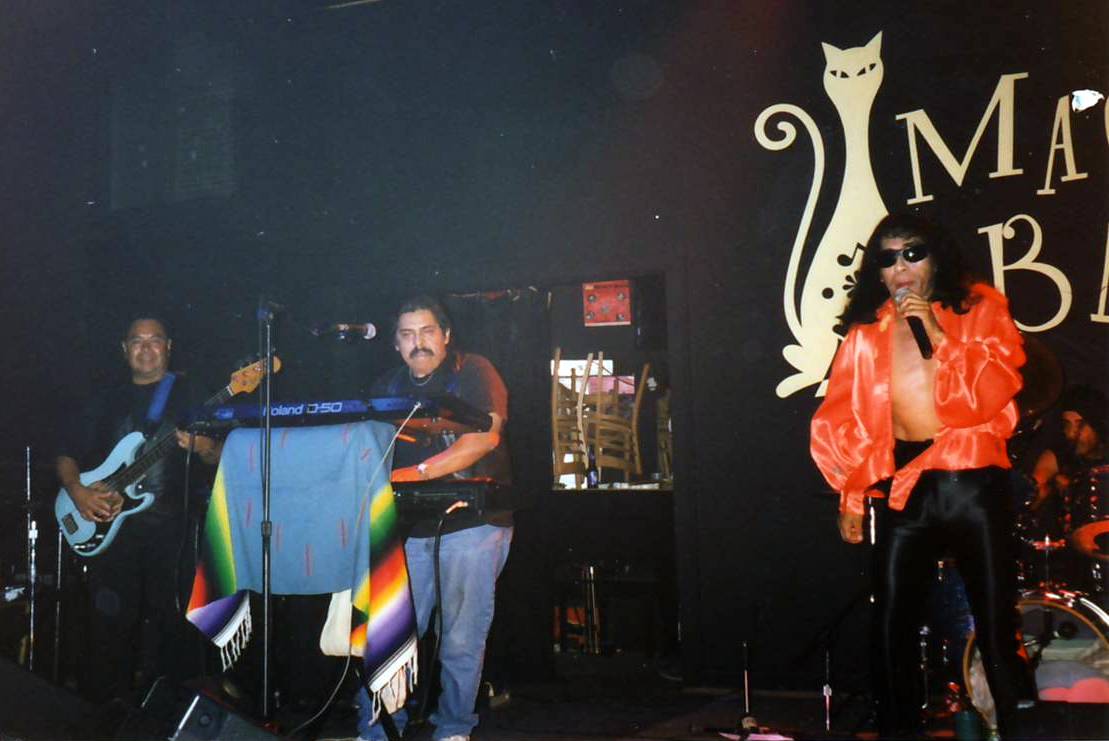
The Del-Vetts

Friday, November 21, 2025

The Numbers-Mad Day Out


When my friend first pulled Anthology '64-'67 out some 25 years ago from his record shelves, I thought it was a Swedish ‘60s band like the Tages. The trio actually conspired with Greg Shaw to throw many for a similar loop with their playful ploy. Co-conspirator Terry Tutor certainly did the leg work for Anthology '64-'67 and made sure influential college radio stations like Loyola Marymount’s KXLU had the 1983 release by patiently braving the 405 and taking it directly to the station himself. As Terry wisely stated, “You do the things you have to do, in order to do the things you want to do.” The record ended up spreading all over the world-mostly by word of mouth. The Numbers can now be added to acts like the Things and the Point who were on the periphery of the L.A.'s Paisley Underground scene, but are finally receiving belated reconsideration and recognition in the 21st century. In fact, Anthology '64-'67 is slated to be reissued by Bachelor Records in 2026. Their surging sound is actually a great encapsulation of stripped-down breakaway power-pop with striking melodies and wrap-around choruses that match up to the Nerves and the Beat along with their undeniable mid-'60s influences. 

Anthology '64-'67
L to R: Terry Tutor, Larry Dill, Larry Tutor

Their new recording, Mad Day Out, is immediately appealing from the first play and their years of playing combined with life experiences lends a blanketing sagelike quality. Their current sound can best be described as upbeat sparkling ‘60s influenced guitar-driven pop with bittersweet inflections. As might be expected, they are totally conversant with the masters: the Beatles, Beach Boys and the Byrds. In addition, they have retained their Texas twang and those Everly-esque brotherly harmonies. It’s competently played pop with absolutely no pretensions, which is as refreshing as it is reassuring. The uncluttered and dynamic production, masterfully mixed by Gregory Krueger at Krueger Sound in Sunland, CA, captures and layers their glorious guitar tones. Larry and Terry’s heartland roots pop songwriting, frequently upending clichés, is evocative of Jules Shear-namely "If We Never Meet Again" that was recorded by Tommy Conwell and the Young Rumblers and Roger McGuinn. The proficiency of the musicianship leans towards pure pop acts like Bill Lloyd, Walter Clevenger & the Dairy Kings and the Spongetones. It’s a sound you don’t hear too much these days, but it certainly has its place in both the congested and contested power-pop scene and the nebulous realms of pop-rock.  

Their racing tempos have been obviously tempered by time and circumstances, but their opener “If I Didn’t Have You” is an early indicator that they have retained their rich melodies and harmonies. Be sure to catch those Del Shannon inflections on “At The Speed of Darkness.” It’s hard to name other active bands influenced by Del these days besides the Smithereens and that was actually some 40 years ago. “Autumn” features one of their most indelible melodies and ranks with the best of Roger McGuinn’s solo phase spanning from Back from Rio to Sweet Memories. “Winter's First Green Is Gold” somehow evokes fellow Texans the Sprague Brothers as well as the Beau Brummels, the Cyrkle and poet Robert Frost. The standout backing harmonies on “Until Now,” veers them in the direction of ‘70s bands with streaks of AM radio catchiness in their sound like Orleans with “Still the One" or even Starry Eyed & Laughing. “A Little Time” reflects the big bang of the Beatles and Beach Boys and a little Bach.


On Side B, the album quickly goes from rousing Barry McGuire-ism (“Mad Day Out”) to the fragility of the Left Banke with a lovely guitar solo (“She Is Everything”) before returning to that to that crisp and ringing Roger McGuinn folk ‘n’ roll sound on the outstanding “Postcard.” The album then reaches the beach and moves towards the golden light. “The Coast Is Clear” is a fitting song for the year that Brian Wilson has left us and its gentle sunlit sounds are not too far removed from those of kindred soul Jeffrey Foskett. The last wave is caught with “Billy,” a rousing surf instrumental written for his son (who is the cover star of Mad Day Out). In other good news, they are in the process of recording new material and setting up some live dates to bring their formidable talents back to the stage. Who could have predicted this fortuitous turn of events-whatever year it is!

Top Left-Terry Tutor, Top Right-Voyce McGinley
Bottom Left-Greg Krueger, Bottom Right-Larry Tutor

Thursday, November 06, 2025

Freezing Hands-Ghouls of 22nd Street


As soon as the sound of the cascading drums comes crashing down on the opening number “The Log Book,” their 5th album veers off into a multitude of unexpected directions. While it was somewhat common for the '60s bands to put their exploratory song suites, jams or long number on side two (like “Revelation” by Love on their Da Capo album or the Who’s "A Quick One, While He's Away" to conclude A Quick One), Freezing Hands flip the convention and start strange right from the start on Side A-Wax.

Upon initial listens, Side A-Wax does not start as immediate as its four predecessors, but reveals its depth and breadth-in its own time. They open the doors to their own Butterscotch Cathedral as there seems to be a sense of beatific religious imagery and philosophical notions coursing through these songs which chase shadows of belief and disbelief.  Both the literary (inspired by Joyce? Vonnegut?) and the quotidian clash and converge within the lyrics to act as an invocation to ask further questions without scripted answers. Spillers’ somewhat cryptic language expresses and reflects lived experience from rakish rooms filled with the shards of shattered records and bad canned goods to those as an everyday educator attuned to the plight of the slighted and marginalized.

All paths lead to the title track where years of listening to Johnny Mathis, Sergio Mendes, Scott Walker, Bacharach, Love and the Zombies culminates in this free flowing bossa-infused number which is one of the best and most brilliant songs in their entire catalog.  Here, they turn the necessary corner from where things don’t make sense, to where they do. The sound of the words work in unison with the music and provide the poetry-in-motion permeating the album. “The Meek and the Mild” immediately brings to mind Minus 5 meets early ‘70s solo Paul Simon. Spiraling Dylan-esque lyrics wind like the roads up Tucson’s Mt. Lemmon to reach the truism of “One things for sure - nothing’s for sure” buttressed by assuring and soaring sundown harmonies.

Side B-Wane brings the Bowie beat to Rodney's English disco with Fowley lurking in the shadows on the stomping “Steppin’ to Holy Cow.” Its glittering melody was running through my head when I woke up the other night, which is not a bad thing at all. This glam slam could also have a strong appeal to listeners of the Lemon Twigs, Tchotchke, Uni Boys and Billy Tibbals. The skewering “Shooting from the Hip” is the album’s most jagged and riveting number and evokes Scared of Chaka when they were on Sub City. Hardly any traces of punk remain in the Hands' sound on this release, but they are still totally punk in spirit. Be sure to catch Kim Shattuck-ish yowl growl and Kevin Conklin’s menacing bass sound scraped off the cinderblock walls of Midtown Island Studio and layered thick upon the tape. 


“Fading Balloons” could have been the flip-side to “Nuthin’ in the Tank” from their preceding album with melodies and harmonies that recall Lost Balloons and Harsh Mistress. Scott Landrum provides some of the most delightful and apt keyboard playing since heard on those two Zumpano albums from 30 years ago. Presenting a view from above, “I’m on a 10,” shares sentiments with the Sesame Street (Ernie!) song “I Don’t Want to Go to the Moon.”  Meanwhile, the music recalls Badfinger with its guitar riff nick of “No Matter What” in particular. With its Sha Na Na/Bowser-ish utterance of  “Yeaah,” “Long in the Lung” reminds me of the 2010’s, when many bands were unabashed about unleashing their ‘50s rock & roll influences. Here, they throw their words and music into their own Freezing Hands blender to whip up quite a concoction to the beat of Matt Rendon's propulsive drumming. The album ends on the edges of classic rock with a sense of acute strangeness that permeates the first Alice Cooper album (Pretties for You) along the forward push of “Vehicle” by Ides of March.

Despite All the Complications These lyrics are delivered with considerable finesse and make this sort of a singer-songwriter album in the best sense like One Year by Colin Blunstone or those Scott Walker albums, but without the lavish orchestration. Spillers taps into his vast reservoir of words and images and offers character studies, detached observations and coded socio-political commentary along with his ever-present large sense of the absurd offset by appreciation of good things for what they are like donuts, baseball and libraries. Overall, it’s their most stylistically diverse album of all, while all the while maintaining their characteristic catchiness. They have additionally achieved a sense of continuity and momentum that comes with consistent practice and commitment. No matter how oppositional forces continue to conspire and distractions mount, they still believe, know and express that music & art does make a resounding difference.

Sunday, September 14, 2025

Prefaces-Hippodrome & Acqua Marina


This Lebanese trio strikes a remarkable tone and overall sound built upon the vibrant guitar interplay of Charif Megarbane and Salim Naffah along with the dexterous drumming of Pascal Semerdjian. An assortment of instruments appear and disappear across their records, but the guitars are the constant presence that drive the songs forward. The interplay of their teeming guitars lead to bright catchy melodies that frequently ring with substantial twang. Further, the trio’s apt use of shadings and contrasts creates depth and dimensionality. Both of their albums are sliding glass doors into the Middle East, filled with moments of overarching Middle Eastern musical influences, while other stretches contain traces of subtle undercurrents. 


Stampede of Sound
Their 2021 album, Hippodrome, named after a Beirut horse racing park, sets the pace with their inspired run through a variety of instrumental styles. This adventurous album could be considered one of the best, albeit mostly unknown, instrumental releases of the ‘20s. Their influences immediately flash across their debut starting with Morricone majesty ("Asifat el Midan") before entering the whirlwinds of ‘50s guitar vibrato (“Farah el Zaman”) and sweeping desert surf instrumentals (“Abul Zick” “Marengo”) along with numbers that features the aforementioned influences, but also immersed in the swirling currents of cumbia and chicha (“Embarator”). In addition, the effervescent “new agey” melody of “Ahlam” is not too far removed from Acoustic Alchemy or the California Guitar Trio. The hypnotic “Kaher el Kheil” is a shape-shifting workout of drony funk that could redefine the meaning of trance, as well as evoking the raga-rock era of the Byrds. Going into Joe Meek’s “Valley of the Saroos” with a “Telstar” above is “Mamnounak.” “Hiba” is widescreen Spaghetti Western music that spans a sea-level desert floor before being swept up by prominent Middle Eastern chants. “Zenobia” crackles with surging live energy and an evocative melody somewhat reminiscent of Gábor Szabó. Crossing the Mediterranean, “Fatha” weaves in keyboards and Afrobeat. Bringing things to a fitting ending, “Helwet el Midan” is the sparkling return to triplets galore and vibrato that spiral to the stars. 


They adeptly dive into a soothing and lush sound on Acqua Marina. The music carries itself with a quiet assurance along with an uncommon fluidity and molten malleability. This time around, the trio mainly takes its cues from production/KPM library music and Italian soundtracks. The album opens with “Abu Sinn” that has sunrise radiance and a playful melody line not too far removed from those of Eiichi Ohtani. In addition, this glowing number rises and goes off into an airy and ambient realms-near the vicinity of vaporwave. Songs like the plush, yet uncluttered “Lekkos Ramle” sparks the thought that Charif Megarbane could be considered the Sean O’Hagan of Lebanon. Additionally, the prolific Megarbane is currently the only contemporary artist to be featured in the Habibi Funk series. A possible Iberian Baroque influence (e.g., Batiscafo by Gregorio Paniagua) can also be detected-revealing additional facets of the trio and their extensive musical awareness. The fluid “Sultan Brahim” blends in Levantine musical elements that are played with finesse. The setting shifts from the concert hall to the discothèque as “Marmoura” recalls “Love’s Theme” by Barry White's Love Unlimited Orchestra.  Gliding guitars cross a stunning sunset on “Jaro” as the day and album fade off on a gentle note. 
Both Prefaces albums feature compositions built on layers of guitars, strong melodies and arrangements that take off in some unexpected directions. They also encapsulate Charif Megarbane’s melodic instincts and remarkable synthesis of international and indigenous influences. Along with groups like LA LOM, Resavoir + Matt Gold’s Horizon, Pekka Laine, and Etran De L'Aïr, Prefaces are seemingly part of a worldwide movement of acts taking guitar-driven music into new directions without abandoning its foundations. All in all, Prefaces should appeal to ardent listeners of guitar instrumental music or for those who are not afraid to venture out.

Sunday, August 17, 2025

The Evolution of Chinese Popular Music: Modernization and Globalization, 1927 to the Present


The Evolution of Chinese Popular Music:  Modernization and Globalization, 1927 to the Present. By Ya-Hui Cheng, Routledge, 2024. 230pp (softcover). Index. ISBN 9781032314044, $43.99, Part of the Ashgate Popular and Folk Music Series


Dr. Cheng, Assistant Professor of Music Theory at the University of South Florida, presents a compelling exploration into Chinese popular music against the backdrop of China and Taiwan’s tumultuous history of the past 100 years. As a Taiwanese, Cheng provides an astute analysis of popular music’s serpentine development, shared traits and varied roles in the two major East Asian countries that currently do not receive the same level of attention and scholarship as Japanese (J-pop) and Korean (K-pop) popular music here in the West. Cheng’s extensive research and well-balanced writing offers a comprehensive tour through the decades and different genres as one of her objectives is to examine, “The role of Western music genres-folk, hymn, jazz, folk-rock, rock, and hip-hop-on the Chinese population.” (p. 1) While intended for an academic audience, Cheng’s writing is accessible for interested readers as she presents her research in a straightforward manner and in chronological order. She makes it clear in the introduction that her emphasis will be on the music itself vs. the more common, yet valid sociological-historical approach that Andrew F. Jones takes in his outstanding book Circuit Listening: Chinese Popular Music in the Global 1960s. Throughout the book she demonstrates a strong command of music theory and uses it as foundational support to acknowledge the perpetual push and pull between Western and Eastern music.


Dr. Ya-Hui Cheng

Years spent living in both the East and West and frequently traveling across the Pacific for fieldwork in both Taiwan and the Mainland China, has allowed Cheng to weave in her experience and research and offer a nuanced portrayal. Chinese popular music, especially from the mainland, has been largely unexplored or covered only in generalities in the West. For example, she mentions both China and Taiwan’s mistreatment of the father of Chinese popular music  Li Jinhui (1891-1967) during his later years. If this pivotal figure is mentioned in the West, it is usually only in passing vs. the chapter-length treatment he receives by Cheng. Further, her music-centric emphasis is an original approach and what makes this book both groundbreaking and grounded. Cheng argues that Chinese popular music absorbs Western and global influences, to a greater or lesser extent, but it always retains its Chinese characteristics. She's able to demonstrate this dynamic by including musical notation and analysis for each of the selected songs. Her sweeping historical coverage supported by “musical-analytical” examples sets her work apart and the book’s inclusion will provide depth and breadth to music libraries along with the many public libraries serving the Chinese diaspora. Her introduction is especially strong as it explains her methodology, while also providing the prerequisite historical context of China, Taiwan and the symbiotic Taiwan Cross-Strait that separates and connects the two countries and cultures. Overall, Cheng’s examination of the music itself places her book in a realm of its own, while extending the range of scholarship. 

She investigates the ”initial emergence” of Western music in China during the late Qing Dynasty (1644-1912).  In the late 1840s, Christian missions arrived in China and Taiwan and brought with them their hymns including the evergreen carol “Silent Night, Holy Night.” The appearance of secular music followed sacred music. She introduces seminal figures such as the aforementioned Li Jinhui (1891-1967) who took the leading role in introducing popular music to the country, connecting his compositions to the young through his music school and laying the modern foundation.  For instance, he adapted “The Rakes of Mallows,“ a traditional Irish song,” for his Chinese folk song “Fly, Fly and Fly.” Additionally, he sought to retain Chinese aspects, while also incorporating Western influences with an underlying goal to help China transform from its feudal past to the modern age. For instance, his 1928 composition “Drizzle,” sung by his daughter, Li Minghui (1909-2003) is widely-considered to be the first Chinese pop song. It’s also an early example of shídàiqǔ music-an amalgamation of Chinese folk and Western jazz with high-pitched vocals. During the ‘30s, Shanghai became the epicenter of Chinese popular music with its many ballrooms and cabarets combined with full-scale production from several domestic and international record companies. However, Shanghai’s conducive and cosmopolitan atmosphere would come to a quick halt with the rise of the Chinese Communist Party in 1949. The Chinese sound recording industry then re-established itself in Hong Kong. The British commonwealth experienced their own halcyon era during the ‘50s & ‘60s as it filled the ongoing demand for musical entertainment. Mandarin & Cantonese pop songs were the prevailing style before being supplanted in the mid-60s when British beat and American pop became favored by the Hong Kong youth and the musically-inclined formed groups like Mod East, the Lotus and Teddy Robin & the Playboys.  


Cheng comprehensively covers the ‘70s when Taipei, Taiwan became known for its soft & sentimental “Gangtai” style pop music, spearheaded by female vocalists Fei Fei Fong and Teresa Teng as well as the Campus Folk movement. She contends that Campus Folk allowed the students to establish a distinct voice with lyrics in Mandarin, but it did so by utilizing Western folk melodies, instrumentation and structure. In response, a faction of the Campus Folk musicians like Li Shuangze sought to retain distinct Chinese characteristics by utilizing traditional Chinese instruments like the erhu, pipa and suona to counter the encroachment of Western influences. By presenting these dichotomies, Cheng reveals the movement was not completely unified, nor purist and also to recognize the limitations of evaluating only by Western methods and standards.  After the Cultural Revolution (1966-1976), China began to slowly open to music beyond the state-sanctioned Red Songs in the ‘80s. Taiwanese Campus Folk was permitted as well as music from the universally beloved Teresa Teng. The pop music that spread in the mainland continued to be characterized by its Western elements, but there was also a shift towards indigenous influences and instruments in what became known as Northwestern Wind Music. The ‘90s unfolded with the development of multiple musical genres and scenes in China as well as the ascendance of Faye Wong, once an acolyte of Teresa Teng, to the status of an Asian icon. 

Dr. Cheng in Tulsa, OK at the annual ARSC conference-May 2005

Cheng’s writing flourishes when she discusses the music of this century along with international contextual elements involving modernism, post-modernism and globalization and the inherent challenges of reconciling differences and competing priorities. The new century saw an era of enormous economic growth, technological acceleration and an unexpected openness that lifted the mainland music industry to new heights. In 2010, China surpassed Japan to be ranked as having the second-largest economy in the world and the Chinese entertainment industry followed the lead of Japan (J-pop) and Korea (K-pop) to bring (C-pop) quickly up to speed. She considers the immense popularity of the televised idol-type singing competitions judged by singing superstars from Hong Kong, Taiwan and China that has defined mainstream popular music in this century. This period of economic prosperity and stability has also allowed for the expansion of stylistic ranges and the continual evolution of Chinese music. Subsequently, Cheng asserts the cultural significance of vernacular Chinese Wind Music merging with Hip Hop as it has empowered Mainland Chinese youth to forge their own sonic identities against the ceaseless forces of Western dominance as its Chinese qualities distinguish its sound.  Cheng accomplishes the imposing task of succinctly addressing an unwieldy modern history, while presenting the music itself as a soft power that bridges the cross-strait divides and connects listeners in China and Taiwan on artistic and human levels. Further, this connection to a shared sound offers the possibilities to transcend temporal politics and progress towards improved relations and greater understanding.


2024 Certificate of Merit Award, for Best Historical Research In Recorded Country, Folk, World, or Roots Music, by the Association For Recorded Sound Collections (ARSC)

This review was published in the Fall 2025 (Volume 56, No.2) edition of the ARSC Journal.

Wednesday, July 09, 2025

? and the Mysterians-We Are Not Alone: Rarities 1968-1970


During the ‘60s, no one else was like ? and the Mysterians and no one else sounded like them. Their “96 Tears” surged all the way to #1 in October of 1966, eclipsing the Beatles and the Supremes in the process. Today “96 Tears” is recognized as an essential garage rock classic. 1966 & 1967 were whirlwind years for them as they released a slew of singles and two outstanding studio albums along with almost non-stop touring. 

Fortunately, their other songs were built on the glorious keyboard-driven Michigan Tex-Mex garage au-go-go soul foundation of “96 Tears.” Staying in their lane worked for both them and their listeners, until their record company (Cameo-Parkway) no longer worked and was bought out in fall 1967. Cameo-Parkway’s demise meant their last and one of their best singles didn’t get the push and promotion that it deserved. “Do Something to Me” features the hypnotic, swirling, incessant organ that made “96 Tears” the #1 song in America just a year earlier. Tommy James and the Shondells actually covered “Do Something To Me” and took it to the top 40 in 1968, although it’s a much inferior version in my perspective. The glorious and smile-inducing “Love Me Baby (Cherry July)” epitomises the best parts of summer for me and brings back memories of being at Bay City boat festivals where oldies-circuit acts like Mitch Ryder, Len Berry and Sonny Geracii would appear (out of a trailer).

Top Deck (South  Bend, IN) clipping courtesy of Rob Branigin

The band got lost in the monkey…I mean music business and was required to jump from label to label. This 1968-1970 period included singles released on the towering Capitol Records and Tangerine Records, which was owned by Ray Charles.  These four late-period singles stand up-even if they were considered passé in the chaotic late '60s/early ‘70s pop-rock period. Their Capitol 45 record “Make You Mine” has all the elements of a hit mid-sixties AM radio song, but it quickly stalled out in the heavy times of 1968. The flip “Love You Baby (Like Nobody’s Business)” seems inspired by “The In Crowd” by Ramsey Lewis Trio with its liveliness. You can actually hear the crackle 'n' pop of the “needle drop” on the digital transfer of both sides of this 45, which adds to the charm of being a singles collection. The band signed on to Super K and went straight up bubblegum with “Sha La La,” that is downright equal to the Equals. Hidden away on the b-side is “Hang In.” It’s a somewhat mysterious instrumental that first evokes the Yardbirds meeting the Chocolate Watchband, before later revealing itself as a stellar cover of “Going All the Way” by the Squires. 


The band got bluesier when they switched over to Ray Charles’ Tangerine label in 1969. However, it was not much of a stretch as the group had delved into the blues before with their cover of “Stormy Monday” on their debut album. Besides its bluesy-tinge, “Ain’t it a Shame,” was frequently requested by Rachel of the Detroit Cobras during live performances. The flipside "Turn Around Baby" has a Paul Revere & the Raiders kick to it. Further intrigue surrounds their Tangerine Records phase as they recorded their third album for Ray Charles’ label with the the Raelettes on backing vocals, but it has yet to see the light of day and is supposedly locked away in the vaults. 1970’s “Talk is Cheap” starts off with a bit of space-age organ that leads into the infectious “96 Tears” keyboard riff and overall feel that slants towards Sly Stone with a stomping glam-ish beat. The flip ”She Goes to Church on Sunday” is another impressive “lost in time” groove-edged pop number permeating with garage fumes and that percolating organ. As testament to their strength, most of these singles were included as part of their live repertoire when they returned to regularly playing shows and festivals in the late ‘90s and were among the highlights in their set.   


?, their flashy singer with many flashes of brilliance, could be the missing link between Little Richard, James Brown and Michael Jackson and Prince. It could be argued that ? had an especially strong influence on Prince as the purple one was also known by a symbol at one point in his career.  Returning the favor, ? covered Prince’s “Let’s Go Crazy” in 2007. To this day, ? claims Mars as his birth planet and waxes poetic about seeing a "? constellation" in the desert skies over Joshua Tree National Park.  When I look up to locate the Pleiades (aka Seven Sisters, aka Subaru), I often think of ? (aka Rudy Martinez). 

? live at the Magic Bag in Ferndale, MI 1997

They have never been equaled, and their songs still endure. Their sound went on to have a major influence on some of my favorite bands in subsequent decades including the Modern Lovers, the Original Sins, Lyres, Reigning Sound and Fortune & Maltese. Call these singles infectious. Call these singles hypnotic. Call these rare singles undeniably ? and the Mysterians.

? and the Mysterians at the Magic Bag in Ferndale, MI-1997
L to R: Frank Lugo (bass), Frank Rodriguez (keyboards), ? (vocals)

Friday, June 27, 2025

RYLI-Come and Get Me


No, it’s not one of those new fangled spellings of Riley that is spotted on a desk during an elementary school open house or even a typo of RIYL. They simply take their moniker from the first initial of each member. From the strike of the first note to the ring of the last, Ryli draw listeners back to a halcyon time that might have never really existed or maybe for just one Unrest song out of 120 Minutes. Yea-Ming’s distinctive voice is complementary to the layers of arpeggiated guitars that are evocative of early R.E.M.-when the Athens quartet connected bucolic country to mid-sixties influenced pop & garage like on Reckoning and Dead Letter Office. Ryli’s jangly pop not only encompasses early-R.E.M., Paisley Underground and Flying Nun sounds, but also sonically overlaps with the vibrant Spanish indie-pop scene of the early 2000s led by bands like Nosoträsh on Elefant Records. 

Making a Name for Themselves
Ryli quickly separates themselves from the nondescript or “samey” out there with their command of melodies, harmonies and arrangements. (Samey is how we described numerous college rock bands in the ‘80s that jangled like R.E.M., but lacked the captivating melodies needed for memorable songs.) Upon first learning of Yea-Ming’s newest foray, all I was hoping for was for Ryli to merely be like early R.E.M. with better vocals (ha). However, they have vastly exceeded my expectations. Each song delivers top-tier pop brimming with copious hooks and imbued with Yea-Ming’s resonant vocals. With their years of collective experience, they are so far ahead of the fly-by-night bands that receive internet hype-day in and day out. Their varied pathways have converged on this debut record where they have combined their strengths to create a world and sound entirely of their own.

L to R: Ian McBrayer (drums), Yea-Ming Chen (vocalist/guitar),
Luke Robbins (bass), Rob Good (lead guitar), photo by Corey Poluk

Green Grow the Rushes
Ryli is comprised of vocalist/guitarist Yea-Ming Chen (Yea-Ming and The Rumours), lead guitarist Rob Good (The Goods), bassist Luke Robbins (ex-Latitude, RE Seraphin), and drummer Ian McBrayer (ex-Sonny and The Sunsets, ex-Healing Potpourri). This lineup quickly coalesced into a band adept at building up and carrying out a guitar-forward sound that catapults Chen’s vocals. In other words, they wield their instruments in an economical, yet evocative way with their instant rapport. “Medicine Speed” is hypotonic, upbeat and unabashed crash pop with the joyous appearance of a bobbing organ solo that appears 3/4th through the song and sustains into the fade. In a way, Ryli's sound resembles the still unheralded Slumber Party debut album from the turn of the century, but sped up and surging ahead with a greater sense of urgency. 


First-Call
Yea-Ming’s highly competent and melodic compositions are enhanced by the involvement of Rob Good. The entire band provides the arrangements for Yea-Ming's characteristic yearning and bittersweet vocals that rise from earthy registers to soaring heights. The talented musican is finally receiving overdue recognition from influential outlets like Chickfactor and her mesmerizing vocals are in high demand in the Bay Area for musical projects like Organi as they add lush layers of depth and dimension that enhance the allure of any musical pursuit.  

Second Guessing
Their solid sound is mainly ‘60s and ‘80s influenced, but with dashes of ‘70s Power Pop & Post-Punk and nods to the messed-up ‘90s when Lush would play in the searing sun-when they should have been headlining American pavilions. Besides the aforementioned influences, hints of Arts & Leisure, Housemartins, Modern English, the Primitives. the Jesus & Mary Chain, Cast, cub, the Cure, the Church and Cinerama can be detected. From these UK and US starting points, their sound follows slightly different paths along their decidedly California-based musical sensibilities. On the pastoral pop title track “Come and Get Me” the coda recedes across the Beach Fossils to return out to the expanses of the sea. Not only do they express the shifting atmopherics of the greater Bay Area, but they also capture the churning rhythm of breaking waves that is undeniably coastal Californian.


Falling into Place
“I Think I Need You Around” is bathed in echo and first-rate melodies like “I Want You Around” by the Ramones. Their melodic arrangements come to the fore on what was their first single and highlight their collective capacity to compose sweeping melodies and instantly catchy songs. Yea-Ming continues to take the sound to unexpected places as “Downtown” radiates charged atmospherics that reminds me of “Havalina” by the Pixies with her Kim Deal-ish delivery. Guitars jangle and twangle radiantly throughout “Friend Collector.” Perhaps this song title is hinting at “Star Collector” recorded by the Monkees (and composed by Goffin and King)?  Nonetheless, this dashing song, featuring intersecting & intertwining guitars and strong melody lines, is certainly topical for these distracting times.


Harmonic Convergence
Long time listeners (both of the Hawaiian Getaway and Dreamdate variety) have always known that Yea-Ming has what it takes to write, sing and play stunningly melodic and memorable songs that are attuned to the moment, while also echoing the fleeting and best moments of the past. Now the rest of the world can catch up to this band that is just getting started, but already sound fully-fledged and a step ahead. 

L to R: Rob Good (lead guitar), Luke Robbins (bass)
Ian McBrayer (drums), Yea-Ming Chen (vocals, guitar)
photo by Bobby Martinez 

Friday, May 09, 2025

The Clicks-Come to Vivid Girl's Room! & Magic of White


On the surface, the Clicks could be easily slotted between Shonen Knife and Supersnazz. The Yokohama-based trio formed in 1998. They honed their sound by playing local live houses, releasing demos and contributing to various artists collections before catching the attention of K.O.G.A. Records. They successfully combined a huge wall of fierce guitars with girl-group harmonies and those super-catchy seesawing Japanese pop melodies across two albums. 2004 was the year of their debut Come to Vivid Girl's Room!, followed by 2005’s Magic of White.

Hooks & Harmonies
The somewhat spacious production on their debut allows for their high-caliber vocals to shine amid the instrumentation. Come to Vivid Girl's Room! was produced by Tomoko of Supersnazz-so there’s a definite rock ‘n’ roll edge to their sound. Their upbeat and sunny vocalizations race along with the charging guitars-reminding me most of the mid-'90s sounds of the Queers. Overall, they build up a surging and solid sound that is consistent as it’s catchy with remarkable rushing melodies. “Contrary’s Person Diary” jumps out of the speakers with the sound, spirit and rhythmic drive of the Muffs. “With Smiling” starts fully charged like “I Met Her at the Rat” by the Queers and offers one of Yoko’s fitting and appealing mini guitar solos. With its perfectly placed “Oh Oh Oh-Oh,” “Get Back!” brings together the Ronettes and the Queers on a subway car out to the Ramones' Forest Hills. The final song “Summer Has Gone” places them in-between the Beards and the Beach Boys with its addition of keyboards, xylophone and layered harmonizing. This dreamy song would also be perfectly fitting for Mama Guitar or the Pebbles to cover.

Sweet & Straightforward
Magic of White presents a more dense and polished production that was handled by the band. They continue to barrel straight ahead with some heavy riffage (almost at a L7 level) before merging into some pop passages and roller coaster melodies. Yuko’s stellar mini guitar solos continue to flash.  “Block Castle” is one of their strongest songs that is showcased in the above video. “Joy” and “Understanding,” both written by bass player Chiharu (ちはる), are other highlights with their brisk tempos and overall exuberance that characterize the classic K.O.G.A. sound. Makoto Sakarai from NUDGE ‘EM ALL provided them the song “Sweet Bright” that has almost a British Invasion bounce to it (namely “Pretty Flamingo.”) The title track “Magic of White” features churning guitars rhythmically pushing the song forward. Their backing harmonies and vocal arrangements truly come to the forefront on “Cherry Tree on the Hill.” This ultra-melodic song sounds fitting for a J-drama before taking off in the direction of the Muffs. “Try or Give Up” brings them back around to their speedy Supernazz sound. “Photograph” is not the Weezer song, but it does sound influenced by them and Ric Ocasek circa the “Green” album.   

As a live act, they made a striking impression by wearing sophisticated dresses that are more commonly worn by jazz acts or groups like Tokyo Groove Jyoshi. After touring Japan in 2005, they officially broke up on November 5th of that year. Bass player Chiharu (ちはる) went to the band Teenline (named after Shivvers’ song and power-pop compilation/omnibus series). Guitarist Yuko and drummer Yuki started their own group called newbie. I wonder if any of the members are still involved with music? Nevertheless, they left listeners these two unsung albums of exciting Japanese-girl-group-power-pop-punk that are now turning 20 & 21 years old respectively. While only around momentarily, you can hear the trio's influence on their contemporaries like the Squeaks, the Dazes and THE PORTUGAL JAPAN as well with younger acts such as the Selectionz and Jamto Highball ジャムトハイボール.  The music they made was immediate, yet enduring as the years have proven their songs were made to last.