Tuesday, March 22, 2022

Freezing Hands-It Was A Good Run

Ever since their wonderfully ramshackle and seemingly off-the-cuff debut album, Coma Cave ‘13, appeared out of the Southwest blue in 2014 like a holy grail custom press pop album, Tucson’s Freezing Hands have been going against the prevailing forces, while paying little attention to fleeting trends and flash in the pan scenes. Who else offered a Zombies-ish cover of the Impressions’ “You Must Believe Me”?  Moreover, I consider 2016’s Freezing Hands II one of the 10 best albums released last decade. (It was hard to keep up during 2010-2019, as there were stacks of remarkable releases-especially in comparsion to this already disqualified decade.) With the departure of so many musicians this decade, I have embraced the concept of a workhorse-like clockwork band, releasing captivating records and hopefully stepping up to stages in the Southwest-if Covid conditions continue to thankfully improve. Additionally, their immediately catchy songs like “See’s Candy Girl” and “Born in July” are seemingly in such short supply and acts that once were influenced by the ‘60s and ‘70s power pop have moved on to ‘80s slickness (e.g., Mystic Braves) or even the ‘90s (Harsh Mistress) in the form of vaporwave.

Don’t take the album title as face value, as it's not a posthumous parting shot. This streadfast quartet, with decades of experience in a variety of Tucson bands, are now operating in perfect working order. The opener “Too Good for Too Long'' surges out of the speakers with a hammering stripped-down Stooges piano riff, Clem Burke-like drum fills and keyboards that evokes the Cuts when they customized the Cars and Matthew Smith took the wheel of production from Reigning Sound’s Greg Cartwright. The incendiary “Don’t Ask Me (as I’m Walking Out the Door)” lands somewhere in churn and burn territory that was once the domain of the Dickies and the margins of Marked Men with its beseeching vocals and cycloning guitars. Faster, fuller, larger and louder are the operative words to differentiate the start of this album from previous mid-fi efforts. Still, have no fear as Rendon is not going  Andy Wallace on us with his production.


Consistent Track Record
Along with arguably having the best singing voice in Tucson, Spillers could be considered the punk poet laureate of the old pueblo, whose lyrics could be read under a tent at Tucson’s Festival of Books. In addition, I’ve always detected a bit of Bob Mould and Mike Watt when it comes to the artistic intensity and econo ethos in Spillers. “Pallet Gun” seems guided by the magnetic poetry school of Robert Pollard and aligns near the head space of Frank Black. “Broken and Unspoken” serves up the razzle dazzle while examining the human psyche. In other words, it’s like the Young Fresh Fellows going “Space Truckin”’ with its coiling swells of organ and sing-along chorus bursting down the straightaways. 


There is also a definite glam slam element that connects both ends of the ‘70s spanning the theatrical rock of Alice Cooper, the Tubes, through Bowie’s “Suffragette City” (esp. “Mobius Strip”) to the Dawn of the Dickies and circularing back only to later reappear at the door to ring in the Knockout Pills. Underneath the glitz of the stomping “Here With The Babies,” is a rushing undercurrent of wry social commentary that evokes The Beanery, the 1965 walk-in art installation by Edward Kienholz or a recent weekend night of my own when I went back to the crush of humanity at a Deke Dickerson show at Tempe's Yucca, only to encounter many peripheral aspects involving live music that I hadn’t missed one iota. The space invading (beyond the venue's Electric Bat Arcade) and the weight being thrown around made one miss nominal notions of social distancing that was practiced by some for the last two years.


Date Shake
The record lifts off with the glorious “Lovers of Humanity.”  It’s simply the perfect pop song of the year in full out Beach Boys glory. The wrecking crew pop comes complete with Matt Rendon employing Hal Blaine's signature pattern “Bum-ba-bum-BOOM!” first laid down in “Be My Baby.” The record soars like the Dukes of the Stratosphere getting “Near Wild Heaven” with its radiant melodies and harmonies galore and restores my faith in Freezing Hands, music and humanity. These Tucson Toros fans are not afraid to be ambitious and hit it out of Tucson Electric Park and the hits keep coming!


“Too Many Keys” expresses something we can relate to when some of us are now carrying as many figurative or literal keys as a janitor for our jobs. The song combines verses remenicient of Ted Leo and the Pharmacists with a chorus blending seamlessly into a Fleetwood Mac Greatest Hit or should I mention 38 Special-hanging on loosely before the bright tones of a Wurlitzer Spinet piano played by Scott Landrum appears as the solo and fondly evokes Zumpano. In addition, card game references and a sideways glance to the Steve Miller Band coincide to reveal their ace-up-the-sleeve. 

Extending the Range
With its layered harmonies, masterclass arrangement and varied textures “Regurts” is a sonic declaration that Spillers has come a considerable distance from the hardcore of Los Federales (which has proven foundational in Spillers' musical development and continues to informs their sound). “Life All Your Own” features that faux fifties vocalizing inside an English music hall that stretches back to the long gone Tucson bands of 2004 yore like Galactic Federation of Love with both bands’ dedicated following of the Kinks. I’m somehow suspecting Spillers might be the biggest Kinks fan this side of Lance Loud. “Timing Belt” and “Eric Hubbard’s Long Game” are rambling, yet snappy as pearl buttons numbers that take the scenic route and could be a loose salute to the recently departed Mike Nesmith.

The striking lyrics contained within offer another dimension as they straddle the line between the straightforward and the oblique. Not only does Spillers demonstrate the keen power of observation, but he is able to transform the raw security footage of life into magnetic melodies and appealing songs in lighting rod fashion. The quotidian concerns and competing priorities of the work week enter in and provide the songs a work/life presence and immediacy. You might find yourself singing the aforementioned “Too Many Keys...” around the house while looking for your keys or a door badge as 8 am rapidly approaches and time seemingly skips forward.

Matt Rendon (drums) & Travis Spillers (guitar)

The Dynamic Duo
In similar fashion to his musical counterpart and fellow Freezing Hand Matt Rendon, who I once described as "The bard of barbed prĂ©cis on the pitfalls on the scene," Spillers also dispenses veiled references on Tucson’s lively music scene by catching and releasing slice of life vignettes which intelligently lambast over and under the abundant hooks. Still, Spillers is never sanctimonious as he employs a self-effacing sense of humor along with realizing a pointed finger means there are three fingers pointing back. Furthermore, satire is just one of their many tricks as few can currently match their knack for fastening hooks and melodies, musical knowledge and overall range of songwriting approaches to express their musical visions.

Peak Performance
The unsung quartet has always seemingly and smartly been off to the side and wary of putting their time and efforts into any singular musical movement because they have been around long enough to know scenes fizzle out and eventually fade away or implode overnight. Fittingly, their straight-ahead, yet slanted sound does not coalesce into any ready-made categories or time periods. Overall, these pop prospectors are one of the leading bands currently turning out a distinctive and enduring sound and making their own way in the Intermountain West. Out in the haze the desert mirage is real, the purple mountain laurel is blooming and Freezing Hands have struck their tone and reached another sonic peak. 

Friday, February 04, 2022

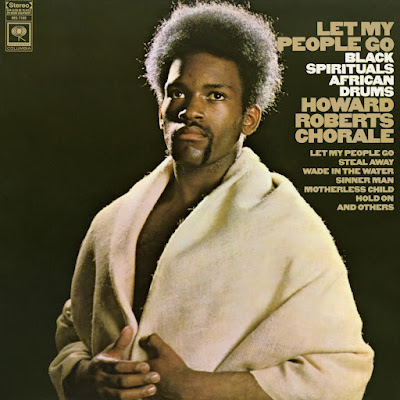
Howard Roberts Chorale – Let My People Go: Black Spirituals / African Drums

Not to be confused with the outstanding West Coast jazz guitarist Howard (M) Roberts, the versatile Howard (A) Roberts, who was based in Queens, brought years of experience as an musician, producer and arranger to this 1968 Columbia Records release which boldly blends traditional African-American spirituals with Pan-African percussion. Roberts, who first made his name in the industry by playing trumpet for vibraphonist Lionel Hampton, went on to produce or co-produce albums for giants like Miles Davis, Diahann Carroll and Tony Bennett along with overlooked singles from the likes of Webster’s New Word and Rhetta Hughes. Released in the formative years of world music, Let My People Go sounds like something that might have been released on Lyrichord or World Pacific Records as this was not the usual fare for Columbia’s Masterworks classical division. Credit is due to Columbia Records for being quite musically adventurous during one of their financial peak periods which spanned from the mid-to-late ‘60s.
The album’s opener “Let My People Go” commences with the sound of drums played in an inviting triplet pattern-musically complementing and contrasting the oscillating vocals of the chorale. In his insightful liner notes, Roberts mentions his deliberate arrangement of the drum choir having “the same spectrum as the vocal choir, that is soprano, alto, tenor and bass.” With Roberts’ stirring lead vocals, “Wade in the Water” surfaces as the defining moment of the album. While many listeners of the era might have been familiar with this traditional spiritual from the 1966 hit instrumental version by Ramsey Lewis, the copious percussion combined with the sweeping and coruscating chorale vocals takes Roberts’ rendition to new heights. Built upon an Afro-Cuban rhythmic pattern and call-and-response cadence, “Hold On” offers an undeterred statement that the foundational spirit will not be broken in the face of adversity and oppression. Roberts would go on to compose the highly-regarded Lord Shango soundtrack which accompanied the 1975 cult classic film and was reissued by Tidal Waves Music in 2021. In fact, Let My People Go is said to be a direct precursor to the Lord Shango soundtrack. Initially billed as the African Explosion, Let My People Go anticipates the ardent embracement of Pan-Africanism, while being a nascent expression of the ongoing movement heightened by the liberating powers of spirit and sound.

Friday, January 14, 2022

Ronnie Spector-She was the master of evoking emotion and conveying feeling through her music & words.

L.A. Exes-Get Some

They have the name, but do they have the sound? This debut by L.A. Exes was under consideration to be on my short list of 5 favorites from 2021. While it narrowly missed the cut as it initially confounded me on what it was trying to be, there were certainly alluring elements, namely the melodies, which called out for further exploration. My initial positive reaction to the catchiness was countered by the songwriting which slants towards the slight and self-absorbed side. The lyrics reminded me of Weezer's Rivers Cuomo or Beth Cosentino of Best Coast trying too hard to evoke whatever they consider California cool and formulating a 21st-century hit.  While patience is not really a virtue when it comes to the immediacy of power pop, the second half of “Get Some” will reward steadfast listeners with some of the catchiest melodies heard in this decade.

This debut seems to be split in two parts. Further listens revealed that the queer quartet seemingly has the dualistic quality of being in the Beatles in reverse as first five songs take their hues from the overburdened Beatles of 1967-1970 with some fragility of Big Star, while the second side is immersed in the exuberance and excitement of the 1962-1966 Beatles. In fact, their calling card single "Temporary Goodbye'' is the best sideways rewrite of "Do You Want to Know a Secret."

 
While casting out these hummable 2-3 minute pop songs, L.A. Exes operate in the greater context of the dreams, despair and delusions that swirl about in the charged air of the real and imagined sprawling Southern California. Playing up coastal cool and insouciance, they exude the seemingly competing qualities of certainty and capriciousness which seemingly still coexists within the golden kids along the golden coast. Additionally, the outfit displays a musical competence and confidence that were once instant draws for the major labels. 

Ironically, a distinguishing aspect of the talented group is that it is comprised of professional musicians who are already industry insiders or had an inside track (see also: that dog, the Like).  One of the Exes (Jenny Owen Youngs) co-wrote what I call the "Spidey rock" of "High Hopes” in which you don’t need any “Spidey-sense” to detect a similar feel in “West Keys.” It should also be noted that “Get Some” was produced by consummate pro Jake Sinclair (Panic! at the Disco and Weezer’s White Album, their best album in 20 years) and released on his Black Rainbow label.


With touches of ‘70s power-pop a la the Nerves, the radiant and rad “Baby Let’s Pretend” would also not sound out of place on a Muffs album. The crackling “I Got Half a Mind uncoils itself with flamenco flourishes before stepping onto the carousel for one of the best uses of waltz time since “Les Bicyclettes de Belsize.” There’s also an unbounded show tune aspect in the aforementioned anthemic “Temporary Goodbye'' that makes it sparkle and shine. Bolstered by the requisite abundant girl group harmonies, “Not Again” is their take on the Shangri-Las by way of the Detroit Cobras along with the specter of Amy Winehouse on the periphery.

By its very nature, pop music is obviously not predisposed to offering multifaceted insights on say The Diamond Sutra. Still, it does not have to be as one dimensional or dualistic when it comes to songwriting. Hopefully, they will integrate additional layers of finesse in their subsequent efforts, while conveying a wider variety of life influences to match up with their melodic strengths. Perhaps they can aim somewhere in the vicinity of the SFTRI sound of yore and between the Excessories and the Beards (side project of Lisa Marr (cub) and Kim Shattuck (the Muffs) or the current sounds of Peach Kelli Pop if we are getting specific. Then again these are my preconceived ideas of what their sound should be. Besides, I’m not the intended audience and have not stepped foot in Silver Lake or Echo Park since 2007.

 
L.A. was once a stronghold for this type of brisk pop with stacked harmonies that seemed to permeate the air. If certain people (Phil Spector, David Geffen, Kim Fowley anyone?) and pieces (L.A. Record, SFTRI, Teenacide Records) were still in place in the industry or at its margins, I could see this debut album (with a pleasant cover of "Linger" tacked on) being big in the contemporary realm & current marketplace of sync licensing. Yet, the scrappy mid-fi production, which immediately impressed me, might regulate this album to the cracks in the internet (which can be a good thing) only to be later rediscovered, reappraised and appreciated. For now, the group's harmonies and melodies express the inspiration that can still be felt upon landing in Los Angeles.

Saturday, December 18, 2021

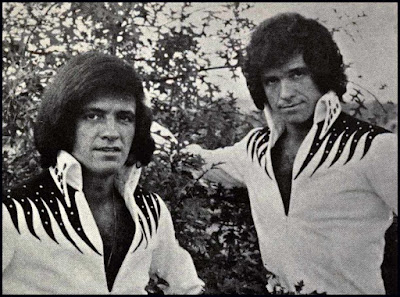
Columbia Singles: The Irwin Twins: Len & Glen (or Lynn & Glynn Irvin)

With its bright melodies rising up and driving guitars stretching out in all directions “Vera Cruz” is the perfect way to start this singles collection of the Irwin Twins. This talented duo straddled the elastic contours of country, folk and pop, which were overlapping in the early to mid-sixties and often found harmonic convergence. The twins were born on Christmas day 1942 and grew up in Louisville, Kentucky before following their musical dreams to Nashville. According to Brenda & Bill Woods in their book Louisville's Own, "It was Columbia's decision to change the family name of Irvin to Irwin and the spelling of Lynn and Glynn to Len and Glen."

They seemingly had everything going for them as the dynamic duo were co-produced by musical polymath Frank Jones, most known for recording Johnny Cash and Marty Robbins in the ‘60s, along with the legendary Don Law in Nashville. Also in their corner was the estimable Chip Taylor, composer of “Angel of the Morning” and “Wild Thing,” who furnished many of their well-suited songs. Their singles were also released by the most monumental of the major labels-Columbia Records. Furthermore, they were backed by best Nashville’s session aces in the state-of-the-art Columbia recording studio located in Music Row. Despite a 1963 Billboard magazine article calling them unknowns from Louisville, their releases were picked to click by the trade magazines of the time as they drew instant comparisons to the Everly Brothers.
1962-Lost Jukebox Future Stars

Everything seemed to be humming along-except the hits. Sure, some of the cloying song material (e.g. “I Fell in Love with Twins”) leans towards the mawkish, however the musicianship and production provided a top-notch consistency to each release. Around 1965, the Irwin Twins were rebranded as the more hep Len & Glen following in the wake of Simon & Garfunkel. Sonny & Cher, Brady & Grady, et.al. Along with so many others in the music industry, 1965-66 seemed to be their banner years. I could hear “Write Me Baby, Please!” being on the soundtrack of The Incredibles to tie-in with the animated films’ swanky mid-century motifs. In addition, the insertion of a captivating 12-string comes as an unexpected surprise, while enhancing the spy-fi atmosphere. Composed by the brothers themselves, 1965's “Midnight Prowler” is an uptown pop number and comes complete with some injected fuzz-guitar flourishes. Their 15-minutes of fame came on May 26, 1965 when they appeared on the ABC-TV show Shindig! The stellar line-up that night included the Rolling Stones, Sonny & Cher, Jackie DeShannon, Howlin’ Wolf and the previously mentioned Grady & Brady. For their prime-time placement, they performed the pleading “Go Steady With Me” in the same hour that Jagger & Co were declaring the strife of life during a raging war. While they seemed poised on the threshold of greater glory, the rapid cultural and sonic transformations of 1965 made it extremely difficult for these Kentuckians to keep up with the front runners.


Still, the brothers brought some intriguing offerings to the table, as the yearning “Prayer of Love” from 1966 floats atop an almost Eastern undercurrent.  In one of those “only in the ‘60s” moments, their "Boo-Hoo-Hoo" was covered in Portuguese by the Brazilian Jovem Guarda duo Os Jovens in 1967. Later songs like 1967’s “Tragedy”  feature some pretty ambitious arrangements along with continuing the ‘50s vibes deep into the ‘60s-almost to the point of prefiguring “Love Can Make You Happy” by Mercy. The song reached #6 on their hometown (Louisville) WKLO charts. Closely resembling the soft and lilting melodies of the Cascades and Chad & Jeremy, More Than Yesterday” finds the folk-pop middle ground between the showroom and the coffee house. The catchy “Kiss & Run'' echoes what Phoenix’s Floyd & Jerry were doing out West in response to the skiffle-beat-pop of Herman's Hermits. Ending on a strong note, “Let Him Know” sounds like their Columbia label-mates the Cyrkle with its bubbly organ crossed with the effervescent bounce of a Gary Lewis & the Playboys hit. The 12-string guitar embellishments reappear on this track that seemingly was never previously released.


At the time, all the elements were present for some of these songs to leap and bound up the national charts, but ‘60s glory was not to be. Belated reassessment and reevaluation has also eluded them as they leave little trace on the internet.  Past and present lack of recognition does diminish from the pop sensibilities, sonic quality and the musicianship found within these singles. Could it be they were a crossover act that never really crossed over, as they simply got caught in the classic crux of too country for pop and too pop-orientated for country in the transition time between the bop & pop of the Newton Brothers (featuring Wayne Newton) and the grapevine country of the Gosdin Brothers? Another explanation could be simply be timing and radically shifting musical landscape during the mid-'60s. Even the Everly Brothers had fallen way off the U.S. charts during this time, despite the fact they were recording glorious folk-rock songs like "I'll See Your Light." While these aspirants seemed on the verge of something big, their career trajectory seemingly went from dust to fleeting Shindig! fame to (record) dust. According to the aforementioned Louisville's Own encyclopedia, the brothers ran up against the inevitable reality of the draft in 1968. After serving their country for two years, the Army Vets eventually attempted their second act and returned to performing and recording music. In 1973, they self-released a single "Freedom Mountain" (written by Turley Richards) backed by their own composition "Come Closer." Regardless of the lack of national success, their honest musical efforts, elevated by Nashville’s finest, continue to stand out across the decades and allow these singles to carry the day. Above all, the tint of time has given a greater sense of the depth and dimension heard in their close harmonies that were there from the start. 

1972-Openers for Evel Knievel's Grand Canyon Jump?

Friday, October 15, 2021

Cassie-The Light Shines On


Cassie were one of the first-rate bands in the second-run Blondie business. The quartet first emerged in 1979 from the Isle of Wight under the name Flirt. The distinctive lead vocals of Debbie Barker place these previously unreleased recordings apart. Further, had these songs been set free in the early ‘80s, they could have given the Photos a run for the money in the UK Blondie sweepstakes. With the audio restoration help of Tim Warren, we can now hear the sounds of what could have been. Blondie (Eat to the Beat-era in particular) does indeed inform the main direction of their sound which radiates the expected strong sense of melody conveying similar themes of image, inspiration and intuition. Blazing guitars, skip-along drums, beguiling vocals and dashing jackrabbit tempos are framed and brought into focus by an overall tautness. The opening title track “The Light Shines On” recalls Katrina and the Waves with its bounciness and jauntiness, while also anticipating the Primitives and their spirals of chiming guitars. When it reaches the sing-along chorus, “Falling” drops into a gliding melody that could have been etched into fuzzy memories of listening to Rock Over London.  Skirting the edges of a show tune in the best way possible with its indelible melody, “Boys Will Be Boys” is the band's showstopper. This straightforward song (not an Undertones cover) could have easily fitted on Ace’s recent Girls Go Power Pop! compilation or slotted on Rhino’s Just Can't Get Enough: New Wave Hits of the '80s. 
  
“She’s a Flirt” is guitar-driven rock ‘n’ roll at its most bracing-serrated with a West Coast raw edge slicing along the Pacific Coast from the Avengers to Agent Orange before cutting back across the Atlantic to Bow Wow Wow and X-Ray Spex.
  
Another highlight is the ringing “Find A Way” that would have felt instantly at home on a Hyped To Death or Shake Some Action compilation. 
The dub influence which was so pervasive in UK music of the time appears in the digital bonus cut “Driven by the Tide.”  The dub components reappear and are perfectly integrated in the group’s searing & soaring “Will You?” which was the b-side of their lone "Change My Image" single from 1982.
 .

In retrospect, they had affinity with the mini-movement comprised of female-fronted groups spanning the globe and have gone on to achieve belated recognition like Holly and the Italians, Nikki & the Corvettes, the Mn'Ms, the Shivvers and even the Go-Go’s. The high tide of the new wave movement did raise all ships and thankfully began to open opportunities for groups led by women. It could also be stated, the quartet foreshadowed the later punky power-pop-ish sounds of Fastbacks, Supersnazz, Helen Love and Baby Shakes. It's undeniably exciting to hear these female-fronted treasures, sparked by the spirit of ‘77 and carried along by the changing currents of the new wave, resurface 40 years later to shine in the light of now.

Thursday, September 16, 2021

Turning the Tide Review-Lightning Strking: Ten Transformative Moments in Rock and Roll by Lenny Kaye

Lightning Striking brings together Lenny Kaye's considerable talents as a music historian and writer. Kaye’s words flow forth and lead readers through ten times & places that have been inextricably linked in the minds of listeners wishing they could have been part of these fleeting golden musical moments. The highly attuned scribe & musician witnessed many of the 10 scenes firsthand as they were unraveling in real time. Further, Kaye often played the role of a cultural catalyst helping to set off a ripple effect that often had a direct influence on the development of these scenes.  As a compiler, Kaye introduced Nuggets to the world in 1972, was the lead guitarist for the Patti Smith Group from 1975 to 1979 and even co-produced the widely-heard music of Suzanne Vega in the late ‘80s. Throughout Lightning Striking, Kaye expresses rock ‘n’ roll’s unbridled energy, while throwing in some well-placed stylistic flourishes and compelling accounts from his fieldwork. This one-two punch of reinforcing his research and writing chops with direct experiences sharpens the focus on the historical details-leading to a heightened awareness of the panoramic rock ‘n’ roll picture. In short, Kaye supports the traditional historical record at moments and then flips it at other times to provide readers vantage points from both sides of the record, the retail counter and the stage. Ultimately, Kaye is an adherent of the notion of letting the sparks fly where they may and possibly creating something new in the process or what Jonathan Richman called “Fly into the Mystery.”

Another View

Kaye begins by unboxing a stockpile of creation tales and origin myths, spurring the question: “How many times can one re-write this mega history and in how many ways?”  Bob Stanley attempted to do something similar with Yeah Yeah Yeah: The Story of Pop Music from Bill Haley to BeyoncĂ© in 2014 and received mixed reactions. By approaching rock ‘n’ roll history through mostly manageable bursts of 10 times and places, Kaye is able to present the scenes which had arguably the most impact on the direction of rock 'n' roll in the last half of the 20th century. Lenny does not strive to be comprehensive or exhaustive, just insightful, true to the music and wide-ranging. He is so conversant with this history, inside and out, that he can play it how he feels on a multitude of levels without forgetting to have “some kinda fun” with it, which should be the self-evident point of rock ‘n’ roll? Overall, his extraordinary versatility is on clear display as he has a vast repertoire and deep reservoir to draw upon.  Knowing his way around guitars, bands, recording sessions, mixing boards, record stores and live performances informs his perspectives and illuminates his writing.


Bringing out the Beach Boys singles-photo by Allan Tannenbaum

Trace Elements

For the better, Kaye frequently ventures off the conventional routes and explores the mean streets, street corners, the suburbs and subterranean stratums as he’s a believer in rock ‘n’ roll’s immediacy, infinite nature and enduring presence. As a musician, he also does not shy away from the music’s redemptive qualities as he frequently covers “Don’t Let the Sun Catch You Crying” by Gerry & the Pacemakers along with the spiritual dimensions which may be encountered in his work accompanying Patti Smith and Jessi Colter. While some of Kaye’s intriguing accounts have appeared in Ugly Things interviews and profiles over the years, his individual recollections are a welcomed companion-coinciding and bolstering his particular approach to the history. Readers get the opportunity to see it through Kaye’s watchful ears, street smarts, and vast experiences of seemingly being everywhere at once. It is in these accounts, wherein lies the book’s distinctive treasures. The scenes may be over and done with, but they are still reverberating and arguably as influential as the current times. 

Jessi Colter with Lenny Kaye-photo by David McClister

New York 1975

Kaye writes of his good fortune to be both at the epicenter and periphery of the New York street rock scene. I enjoyed encountering the fact that Sandy Bull once opened for Patti Smith & Lenny Kaye at Max’s Kansas City in 1974. Lenny recently expanded upon this experience in his appreciative piece on Sandy entitled “Sandy Bull: In a China Store” which appeared in Ugly Things #57. Would we expect anything less from a guy who assisted Waylon Jennings with his autobiography and included the fact that Waylon surprisingly played at Max’s Kansas City in 1973? He also mentions the sagacious roles played by streetwise label executives like Terry Ork (Ork Records) and Seymour Stein (Sire) on the industry side of things. All along, Kaye’s ethos has always been hovering somewhere between street level, the garage and those atmospheric nocturnal Bowery images offered by photographer David Godlis.


Photo by David Godlis


Kay offers plenty of other opportunities for readers to stumble upon the previously unknown details. He mentions the fact of Mickey Ruskin’s unsuccessful attempt to expand his Max’s Kansas City nightclub & restaurant enterprise when he opened Max’s Terre Haute. The second location did not catch on and quickly fizzled out, proving that the chickpeas were not magic beans. Interestingly, only about half of these scenes generated a high proportion of hits, but all of them went on to arguably change the course of history.  Musical acts emerging from Memphis 1955, Philadelphia 1962, Los Angeles 1984 and Seattle 1991 did top the charts of the times. In addition, Jefferson Airplane was able to briefly bridge the newly emerging AM & FM divide in San Francisco 1967. The Beatles (Liverpool 1962) and Blondie (New York 1975) would obviously go on to break through to mega-success on a global scale a few years later after putting in their Gladwellian 10,000 hours and Warholian 15 minutes of fame. The Ramones soldiered on to become highly influential and fondly remembered in the process, while Talking Heads didn’t breakthrough until the ‘80s music video-era when they were able to utilize their design school-influenced visual component.


Memphis 1954

Like the seemingly extemporaneous explosion of graffiti on a railcar that has already been sketched out on cardstock, Kaye gives credence to the notion that Sam Phillips was working along similar lines at the Sun Studio in Memphis.  Kaye conveys that Phillips knew enough to be dangerous and in the process helped rock ‘n’ roll blast off the Tennessee ground and become all the rage. Kaye details, “Where Les (Paul) is precise, pinpointed, Sam wants it pinwheeled; a blurrier sound, live and spontaneous as if it’s being made up right in front of the speaker.” (p. 22)


He also encapsulates the long green, quick cash, cut-rate schemes of R&B economics and logistics or the business of suspending platters:


“R&B is now a sales hierarchy with its own star system, rewarding the ability to get a record on the streets as soon as possible, before the next disc ships and the returns start to come in.  No room for error, it’s cash in motion, like the title of that other music trade magazine, Cashbox, which gets the flow of capital right. Nickel and dimes into the slot. You have to make them want what you're hawking before the next record plays.”  (p. 29)


I can picture a wide-eyed Seymour Stein, working as an apprentice for Syd Nathan of King Records, learning the tricks of the trade mentioned above.


Philadelphia 1959

Kaye illuminates his text with abundant local color and regional lore. The Mitch Thomas Show is mentioned as playing a groundbreaking role as well as being a direct influence on American Bandstand and later Soul Train when the discussion turns to rock & roll as presented by Philadelphia-area television stations. This treatment of early ‘60s Philadelphia, demonstrates Kaye is fair and balanced with his coverage. He does not short either or Dick Clark, Mitch Thomas or disc jockey & local Philly legend Jerry Blavat when recognizing and evaluating their notable contributions and influence on that scene. To his credit and for those who first consult the index before buying or checking out a book, Kaye stays generally neutral to positive on everyone he mentions. Kaye understands how hard it is to sustain a musical career even if your material starts to landslide after the ‘60s (e.g., Bob Seger). Overall, he demonstrates the quality to be able to step back and deliver a fair assessment with equanimity when it comes to evaluating the historical significance and influence of both overexposed and unheralded musicians.


San Francisco 1967 and the Embryonic Journey from Los Angeles

Kaye also bestows his first-person accounts of directly encountering and experiencing 1967 San Francisco when it was attempting to translate its experimental and ornate international ethos to the national stage.  Again, don’t let the chapter tiles fool you because he explores several more connected scenes and cities within. For instance, in San Francisco 1967 he also covers the gloriously sprawling Los Angeles/Sunset Strip scene 1965/66 of the Byrds, Love, Leaves, Bobby Fuller Four, Beach Boys, Buffalo Springfield, Doors, Turtles, etc. who emerged (boss) radio ready from Southern California’s surf, folk and R&B scenes. These leading Angeleno bands made each other better and even the average bands still had their moments in the sun because of the high standards set by the aforementioned world-turning groups. Still, the limitations of these grand sweeping accounts is that you cannot include everyone and everything due to the requirements of being selective. I wonder if there is an expanded bonus cuts version of the manuscript which might include Athens 1983, Manchester 1989 and/or Berkeley 1993?

At Village Oldies-photo by Allan Tannenbaum
                         

Detroit 1969   

It is well documented that Kaye has long been a dedicated and devoted enthusiast of vocal group harmony.  I’ve always enjoyed those his ‘n’ her (Patti Smith in Just Friends) accounts of Lenny working at Village Oldies record store on Saturday nights in the early ‘70s where he first met poet Patti who dug reading one of his pieces on the acapella revival for Jazz & Pop Magazine. Elsewhere, Kaye twice mentions the seemingly illustrious Lafayette Coney Island in Detroit as it was the setting for the afterparty, courtesy of Clive Davis of Arista Records, for the Patti Smith Group and where Patti Smith first crossed paths with future husband Fred “Sonic” Smith of the MC5.


Initially, I had a high interest in Detroit rock ‘n’ roll as mentions of the proto-punk of MC5, Stooges were prevalent in the late ‘80s, but the records of these Ann Arbor/Detroit groups were not readily available in the hinterlands.  I once met a guy along Grand River Blvd. in East Lansing who recalled people jumping up and down and walls shaking at a MC5 concert held at Michigan State University’s Student Union ballroom. I still felt the high energy emanating from this guy and his account still riveting even if it was 20 years after the fact (1990).  Another person told me he saw the 5 live and declared it was not his scene with all the American flags (upside down or otherwise). That same guy later told me the Modern Lovers was pretty much the only record he listened to in 1976.  Mileage may greatly vary when it comes to the MC5. 


My interest greatly waned with the ruse and fiasco of DKT/MC5. I recently became appreciative again after reading Wayne Kramer’s The Hard Stuff and seeing how frequently they played in their heyday through concert listings on the internet.  These listings revealed these road warriors played almost every night and most everywhere in the upper Midwest (including three of the colleges and universities that I attended). It has also been a revelation to re-realize what a hotbed the entire state was in the ‘60s by reading the outstanding history compiled on “Michigan Rock and Roll Legends.” Kaye’s writing and praise for the MC5 goes into overdrive. The spark plug collector powerfully and aptly details their rama-lama sound by bringing fitting descriptors such as “assembly plant rhythms“ out of backstock.  He’s effusive with his praise when it comes to the Detroit sound and you can see his passion for that once incendiary scene poured out on the page. Julian Cope might be the only contemporary who can match him in his enthusiasm for these motorvatin’ Detroit sounds. 


New Orleans 1957-The Missing Links

Throughout his interviews and writings, Kaye has consistently acknowledged and championed the forgotten forebears who created the Urtext like Hank Ballard and the Midnighters (“The Twist”) and the Gladiolas (“Little Darlin’”). The rough edges of these ramshackle records were later rounded off and taken up the charts into glory by the acolytes who became the recipients of the recognition.  I’m still surprised at myself that I didn’t know “Land of 1000 Dances” was written and first recorded by New Orleans’ Chris Kenner.  I’ve long assumed that the song originated somewhere along Whittier Boulevard in East Los Angeles.  


London 1977

The Sex Pistols are given abundant space on the page to the point where these derelicts seem to overstay their welcome. While it was a good refresher on the filth and the fury previously documented and unleashed in England’s Dreaming by Jon Savage, I veer towards the line of thought that the Sex Pistols were an off-the-rails rock and roll circus that quickly descended into orthodoxy in no small part to Malcolm McLaren’s Anarchy straightjacket and schtick.  When it comes to UK Punk, the Clash, Buzzcocks, the Jam and the Undertones should be commended for their balance of purpose, passion and pop-art (along with intelligence, design sense and melodic ‘50s and ‘60s sensibilities). These bands were said to be largely influenced by Kaye’s Nuggets.  In fact, the Undertones covered “Let’s Talk About Girls” by the Chocolate Watchband, which was originally recorded by Tucson’s Tongues of Truth (aka the Grodes). Shifting readers away the current vantage point, Kaye reminds us that punk as rendered by the Sex Pistols was truly up against the wall by the time ‘77 ended.  Steve Jones did go on to have a brilliant Los Angeles radio show, Jonesy's Jukebox, in the first decade of this century. 


Los Angeles MCMLXXXIV

It scared me how much metal I knew simply by osmosis from growing in a place where this particular music reigned supreme over the flatlands-filling the buses, gyms and corridors. Holding a hegemony over the heartland, this music was the sound and order of the day. I had to laugh when Kaye gets out his metal detector and describes Mötley CrĂ¼e’s drums recorded “As if in Carlsbad Caverns.” 


Seattle 1991

The final chapter contains too much Nirvana and their grunge brethren for my taste, but we live in a pop culture age where the trio has been regulated to a logoed “lifestyle accouterment” t-shirt to be bought at Target (next to ones for NASA, Ghostbusters, Polaroid and Thrasher).  Maybe the grunge overload is to reflect the excessive nature/orientation of the music? However, I was happy to see my all-time Seattle favorites the Fastbacks along with the Young Fresh Fellows receiving honorable mentions along with acknowledgment of the Pacific Northwest region’s progenitors: the Ventures, the Wailers, the Kingsmen, Paul Revere and the Raiders and the Sonics.  


“Do You Believe in Magic?”

Ultimately, rock ‘n’ roll is about a feeling and sound that cannot be contained. Kaye is able to present the sound and spirit with astonishing clarity as the cross-cultural-currents sweep over the sound. In no small measure, Kaye also gently reminds readers not to neglect those equally important and mostly invisible influences of the underlying collective unconscious. The musician’s calling of tapping in and articulating the intangible and expressing elusive feelings affixed to an uplifting or descending melody for the ages are arguably the ultimate artistic peaks to work towards.  


Photo from SiriusXM 
Bubbling Under the Surge of Creativity

Kaye understands that records emanate from vibrant scenes and cultural capitals  These scenes cannot be forced to happen as with MGM Records’ disastrous promotional/marketing campaign of the Bosstown/Boston sound in the late ‘60s being a perfect example. On the other hand, Columbia Records greatly benefited from having a recording studio on the teeming 52nd Street jazz/bebop scene in Manhattan during the late ‘40s and early 50s. Kaye reveals a common denominator beneath all these scenes is the elusive something (aka lightning striking) entering the mix along with musicians and an audience allowing things to unravel in order distinguish it from what has become before. All share the collective desire to make something happen and in the process elevate art & life to a realm that is more inspiring, illuminating and more engaging than the necessary, but repetitive work-a-day version. Factors stack upon factors, facet upon facet and events begin to take on a momentum of their own and add up to more than the constitutive parts to become a movement.  Things groundswell on the local and then the regional levels and in the charged air many remarkable events happen in a compressed amount of time. The emerging scene ultimately defines a new sound or vice-versa and then achieves musical lift-off into unexpected realms and anything seems possible-even transcendence.


Dissolution & Disintegration

Conversely, there is the inevitable downward slide and eventual fallout of the scene into apathy, factionalism, or absorption into a larger subculture or the mainstream culture. Internecine clashes, conflict and missed opportunities are also all part of the aggregate story.  I still have to accept the fact that Kim Fowley was indeed a prime mover and shaker in the Los Angeles scene of ‘63 to ‘70. Would we have ever heard the wonders of “Popsicles and Icicles” by the Murmaids without Fowley?


Sifting through for Gold Nuggets & Eureka Moments Many times, when I was much younger I subscribed to the face value notion that art just happened like a bolt of lightning without understanding all the work, commitment, and unseen efforts leading up to the gestalt moment. Kay provides ample evidence of both the optimal conditions and sense of possibility (or in some social milieus, the sense of desperation) required to set things in motion on a collective level. Kaye has certainly expanded and enriched the world as he has provided the monumental Nuggets, Waylon Jennings' autobiography, doo wop dissertations, documentary appearances on the glories of the Fort Worth ‘60s garage scene, and the foreword to the definitive book on Fortune Records. He also sets an inspiring example to keep searching, exploring, listening and bringing things to fruition. Like rock ‘n’ roll itself, one never knows the direction in which Kaye will go. Charged particles of creativity surge through Lightning Striking as it has throughout the work of Lenny Kaye. There is a bit of whirlwind cyclone in Kaye as he seems centered and calm at the eye of the storm, but his artistic expressions can be as unpredictable, flashing and boundless as the remarkable music he collects, documents and plays.