Saturday, May 30, 2020

Been This Way and That Way: An Interview with Yea-Ming Chen of Yea-Ming and the Rumours


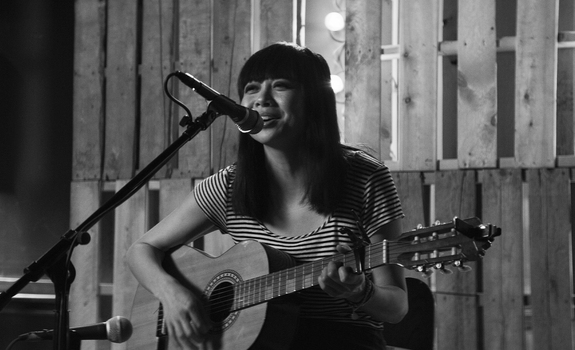
Photo by Eric Yang
Yea-Ming seems perennially overshadowed and unsung outside of her home base of Oakland and the overall greater Bay Area. Her songs are instantly captivating, memorable and endure over the long haul of time. Her skillful compositions are steeped in classic pop Brill Building structures and echoey atmospherics that would also be right at home in a Bakersfield honky-tonk with their distinctive steel guitar embellishments. The Rumours’ twangy guitars and amps are aligned to project a perfect timeless tone while her lovely lantern light vocals guide the way under Western skies. In their own distinctive and competent way, they have shaped and sustained an endearingly sincere and jangly folk-pop-country sound. Overall, their enchanting songs turn corners with attention paid to arrangements complete with unexpected bridges which effortlessly connect the songs to new realms. Yea-Ming has been leading her band the Rumours for almost a decade now with the time between performing and recording spent perfecting her natural acting abilities in films like Daylight Savings (2012) and I Will Make You Mine (2020). With everything up in the air, I thought this time was as good as any to check in with the multi-talented Yea-Ming and discuss her captivating music.


It must be exciting to have a movie that you star in named after one of your songs! 
How did Lynn Chen come about naming her directorial debut after one of your signature songs which is also the title of your 2016 debut album?

It’s very cool! I Will Make You Mine is the 3rd installation of a trilogy. The first two movies centered around the main character Goh played by Goh Nakamura and his 3 different love interests (Rachel, Erika and Yea-Ming played by Lynn Chen, Ayako Fujitani and yours truly) that you never really get to know.  For IWMYM, Lynn says she wanted to get to know these women and discover their humanness since they seem so cool and mysterious in the 1st two installments of the trilogy.  Since the first two movies were named after real life Goh’s real songs, Lynn thought the 3rd movie should be named after one of my songs.   She says that she went into my catalog of music and I think had her husband call out all of my song titles out loud until one sounded like a movie title.

L-R: Lynn Chen, Ayako Fujitani, Yea-Ming Chen, Goh Nakamura, Ayami Riley Tomine
Tell us about your background in music. I read on the Lilystars Records page that you studied piano for a time at UC Berkeley. (Nice to hear your waltzing piano playing on “Sign on My Window.”) How long have you been singing? Did your parents encourage (or discourage) you musically in any particular/general directions?


I majored in music at UC Berkeley but the Lilystars Records page is a little bit of an exaggeration in that I didn’t focus my studies on piano performing per se. If I had, I’d be a much better player haha.  But I did have to play the piano to get through a lot of those classes…

I took piano lessons from the age of 7 and through high school.  My parents were not particularly encouraging in me playing music but they did purchase a brand new KAWAI piano and pay for weekly lessons for 11 years which I now realize is not small change.  I believe that my mom allowed me to play piano because she read that prestigious universities required extra-curricular activities and piano would work.  For her, the purpose of piano lessons I think was so I would get into college, not to become a musician.  She was stoked when I got into Berkeley, but NOT stoked when I changed my major from biology to music.

I didn’t really start singing until I got into punk and indie music circa 1997-98.  I always loved singing but never thought I was a good singer and I even got rejected from the University choir at Berkeley when I tried out which was obviously very discouraging.  But when I started listening to punk and indie music, I began to realize the beauty and nuances of imperfect and unconventional voices. That encouraged me to start writings songs and make me feel like it was okay for me to sing them.

On a similar note it sounds like not a lot of music was played at home when you were growing up- let alone Fleetwood Mac! ( I finally now get the meta Fleetwood Mac Rumours reference.)

There was not!  You could probably count the music my parents owned on 2 hands, the most memorable of which was the soundtrack to Dr. Zhivago on vinyl.  Haha. So random!

I also read that you became enamored by Lookout! Records bands like the Queers, MTX etc.  Were you allowed to attend all-ages shows? If so, were you going to Gilman at the time? ( I can only imagine you harmonizing with Joe Queer/King like Lisa Marr has done so well over the years.)  Did you gravitate from the punkier sounds towards the softer Sacramento/SF (e.g., Go Sailor/Tiger Trap/the Softies) and Vancouver (e.g., cub) pop sounds or vice versa or did you embrace it all during the same time? (I also detect a trace of Dear Nora’s “ We'll Have a Time” and a wonderful Velvet Underground influence in your sounds.)  

I discovered the Queers and MTX in the college dorms my freshman year.  That was the first place I lived where I had access to ethernet and I was able to do music searches online. I ran across Lookout! Records and was able to download music videos off the internet with that “fast” internet connection. So by that time I was already 18 and was so ashamed of my limited knowledge of my hometown venue Gilman and hometown record label Lookout! that I caught up as quickly as I could.  Though, if I had known about Gilman while still underage, I wouldn’t have been able to do much about it since my parents were very strict and rarely let me go out.

So though I was late in the game, that fateful day in my college dorm room changed my life.  That exploration of pop punk and later on working at Rasputin Music in Berkeley led me deep into indie music, lo-fi recordings, classic rock and pop melodies in general.  I think I gravitated towards lo-fi recordings and unconventional voices because I myself knew I could never be the polished person that I felt was expected from me (from my parents and from the conservative music program at Berkeley). 

Were you in any bands prior to Dreamdate?

Before Dreamdate, I was in a band called Hawaiian Getaway which is where I met Anna Hillburg.  Anna “auditioned” to be the bass player for HG and killed it because she’s got such a natural knack for music so of course she joined the band.  And quickly became my best friend, songwriting partner and collaborator in Dreamdate and beyond.  I was in one other band prior to Dreamdate, but it was short-lived and never recorded and never named.

So what brought about your explorations into the echoey and forlorn country & western sounds? (which I love by the way)

I’m not sure exactly but it felt like my songs just started coming out a little country sounding around 2004. Of course, I know I didn’t invent those sounds.  I do however remember gravitating heavily to Appalachian bluegrass that I heard in an American music class at Berkeley.  I also remember being very attracted to the country twang in certain indie bands like Beachwood Sparks, Wilco and Yo La Tengo.  So I think it just seeped in to my work subconsciously.


How did you meet up with Eoin Galvin? His apt lap steel guitar playing (e.g., “You Took Me By the Hand”) is one of the things that sets the Rumours apart in the crowded and somewhat temporal indie-pop scene.  Another distinguishing factor is the group’s competence to shape a simultaneously amicable, yearning, strummy, plaintive and entrancing sound that does not fall into over-precious twee traps or self-absorbed folk.

Eoin Galvin was in a band called Readyville in the early 2000s, the same time Hawaiian Getaway was around. We played some shows together at that time and I always loved his nuanced and sensitive accompaniment.  He’s the kind of musician that knows how to play the song not the instrument.  I asked him to play with me when I first “went solo” and wasn’t even sure what I wanted him to do. At first, I thought maybe he could play keyboard.  But at our first meeting, he brought like 5 instruments to try and as soon as he started playing the lap steel, everything felt like magic and I knew that would become a huge component of our songs.

In the country music tradition, would you like to briefly introduce the band at this time?

I would love to!  On my left is the brilliant and beautiful Anna Hillburg on bass and vocals. Over here on my right we have Eoin Galvin (almost always on my right because he is left handed and otherwise our guitar necks would get tangled) making those sweet sounds on the lap steel and guitar. And of course we have Sonia Hayden holding us all together on the drums.

L-R: Eoin Galvin, Yea-Ming Chen, Anna Hillburg, Sonia Hayden
Photo by Adam Thorman
I’m curious how your Fender Stratocaster frequently sounds more like a Fender Telecaster or perhaps there are Telecasters used on the studio recordings?

Wow, that is a very interesting observation and to be honest I'm not sure.  I’m constantly being lured by studio guitars that I end up using when I show up to a session but I don’t actually remember what they are because I don’t have that kind of gear brain and I also have a terrible memory.   I do own a fake (Squire) Telecaster (my first guitar that cost $100 at guitar center in 1997) so it is possible that I have used that on some recordings.  But it’s also very possible that I have used my Fender Strat and played it cleanly to retain a bright-ish sound because that’s what I like. So I guess my answer is, I don’t know and you’d have to ask my music producers if they remember.

By chance, are you of Taiwanese descent?  I’m basing this on your hyphenated first name.

Yes!

How do you think your experience of growing up and living in California has obviously shaped your sound?   

I’m not sure how living in California has shaped my sound. Is it really obvious?  I never realized that. That’s kind of cool!  The truth is I have never lived anywhere outside of the Bay Area (besides Georgia and Taiwan briefly as an infant) so I don’t think I have an outside perspective on this.

Your songs contain bittersweet lyrics frequently expressing the intangibles of the human condition and experience.  You seem to take the coal and pressure of life and turn it into pop diamonds.  Would you like to elaborate on your “stubborn” lyrical writing process?

Thank you! I guess I do try to make lemonade out of lemons.  I always felt like lyrics should be personal, partially because I grew up naively thinking all art in general was personal, but also because I found writing about my pains and sorrows was very cathartic and therapeutic.  Maybe it’s cliche but it’s my way of getting together my difficult feelings and putting them in a neat package so I can lay them to rest but also revisit and be grateful for that difficult time by seeing it in this different light. I suppose I’m stubborn writing songs because they are so personal - they are like extensions of a diary - and therefore I prefer to work on them alone until I have a pretty set structure before I present them for collaboration.


You demonstrate an innate knack for super-catchy melodies. Do you compose and develop your melodies with guitar and/or on piano or do they just come across like bolts of lighting?

Ooh, I wish it was like bolts of lightning!  It’s been guitar for most of the time, but I’ve started exploring writing melodies on the piano in the last year.

Since you pretty much stick to playing in the greater Bay Area, are there any cover songs in your live repertoire either solo and/or with the Rumours besides "Anyway" by Dreamdate?

Are you thinking of "Go Fish" by cub?  Dreamdate also used to do a rad cover of "Monster Mash" that Anna sang lead whenever Halloween came around.  But lately, I actually don't have any cover songs in my live repertoire.  Don't know why.  Covers are fun.  I'll consider bringing them back.

 Design by Chris Appelgren
How do you decide which shows are solo and which are for the full group? I imagine work schedules must play a huge role in aligning the stars.

Really it’s just scheduling. And sometimes it's just what is requested

What factors do you attribute to the fact that the Rumours have been going strong and steady and blazing their own distinct path for almost 10-years now? A stable musical line-up in the transient Bay Area (where everything is subject to change without notice) is not something that listeners should not take for granted.

Honestly,  I think that it’s just that we like hanging out with each other.  We’ve never gotten huge, so there’s not much to stress out about and therefore not much to fight about. We just get together when we have shows or when I have an idea I want to explore. Hanging out with my band is super fun.  We spend a good 30%-50% of our practices gossiping and talking about TV, movies and books.

Are you the driving force or guiding force in the band as far as direction? 

Haha. Well if I have to pick one, I think I’m more of a guide. I’m not very aggressive and I’m not optimistic enough to be a driving force.

Any sneak preview words you can provide on the new album?  Will “Eskimo Eyes,” the closing song on the “I Will Make You Mine” soundtrack be included on it?

It's in the works!  Half of it is recorded.  The other half might have to be quarantined recorded.  I think "Eskimo Eyes" will make the cut but you never know.


What’s on the horizon for the band? Any particular directions do you foresee your music going?


I don’t know honestly. I’ve been doing this so long that I try not to foresee anything or else I get bummed.  The only thing I know is that I want to keep writing and recording because that's the part that makes me happy. Which also means I want to keep being inspired. So I foresee myself looking for inspiration wherever I can find it.


      "Let Me Stand Close to the Water"-video filmed by Claude Cardenas

What are some concepts that you have learned from being in a band that you are able to apply to work and/or life?


Teamwork, patience and empathy and (oh my god this is so cheesy but) finding a groove with other people.

Any book/author recommendations from your vast library?


One of my favorite books of all time is A Stroke of Insight by Jill Bolte Taylor. I think it’s super underrated.  It chronicles the recovery of a neurologist from a stroke on the left side of her brain.  Essentially, it’s a self-help book, but from the perspective of a scientist who’s learned to distinguish between her left brain from her right brain because of this stroke. I won’t go into it but it’s an amazing read for anybody neurotic, analytical but also creative and emotional which I guess is how I would describe myself.

Final thoughts/closing comments?

Thank you for listening to the music!
          Photo by Antares Meketa (@ameketa) 

Sunday, May 24, 2020

Etc. is the Name of the Band!


Sounds like the type of record that Jon Baker of CHiPs would put on in his apartment after a long day patrolling the freeways of Los Angeles. Etc. were based out of Westchester, CA (near LAX) and initially formed their band in 1973 while students at Westchester High School (also the alma mater of the Turtles). This 1976 album is somewhat of an anomaly for its time as it contains all original compositions, while looking back to ‘60s pop (namely the Beach Boys) for some of its direction. Still, it’s far from a proverbial lost classic as there are too many mediocre moments due to its time of release during the early tide of what is now retroactively called yacht rock.  (If the record was issued just two years later, it would have been interesting to see if the new wave/power pop movement would have had any influence on the band.)  Both “Rose for Sister Georgia” and “Left Me Blue” veer a little too far into Steely Dan and Doobie Brothers sheen pop territory to wishy-washy effect. Things get better with “Sazonar,“ a slightly spacey jazzy instrumental, that lifts off somewhere between Wes Montgomery and El Chicano before adding some “Shafty” chakka-chakka guitar that fills the air between the pet rocks, wood beams and skylights. “My Thought are of You” is their solid attempt for a pop rock commercial breakthrough that doesn’t quite make it. Still, the straightforward number does place a slight smile on one's face-reminding listeners of those contemporaneous big hits from Orleans.

Marina Pop
Soft rocking “Freedom” is noteworthy for its quixotic bid to reach the stars in a light polluted sky.  Its prominent harmonies and fluent guitar would not sound out of place on a Bread or David Gates solo album of time.  “Like a Star” and later “Freeway Driver” are as clunky, predictable and pedestrian as those Beach Boys bar band-ish blues shuffles that frequently filled their late ‘70s albums. Perhaps these hokey numbers sounded better live inside a rollicking lounge of a Century Blvd. Ramada Inn. “Red Eyed Sara” is a little better in its attempts to approximate the country rock sides of the Rolling Stones or Poco as it gains some momentum with some unexpected twist and turns. With some brief keyboard nods to the Today!-era Beach Boys, “The Beating of My Heart” takes things back to soft rock mode before stretching out to a sunset horizon filled with warm percussion and guitars. Lastly, “Julie’s Song” is another foray into the sunlit and soulful Bruce Johnston/Beach Boys-esque harmony pop rock. The band truly shines on these Beach Boys-inspired songs and could be said to be a lost link between the boys from Hawthorne and later acts like the Explorers Club who emerged in the wake of the Brian Wilson revival. Overall, this 1976 lone album by this semi-pro band is a worthwhile listen to discover the momentary traces of the ‘60s California Dream that had not completely faded deep into the ‘70s. 

Friday, May 08, 2020

West-Bridges

West-Bridges 1969
For a country rock band from Crockett, CA (East Bay Area), Bridges seems to be an apt title album. The straightforward album cover art depicting those landmark bridges spanning the Carquinez Strait provide a further sense of orientation. On sonic levels, the music itself literally crosses and connects several musical styles with a somewhat natural ease. Bridges is their 1969 follow-up album to their competent and congenial 1968 eponymous debut that has been somewhat unfairly derided over the years for its over-reliance on cover songs.  Both of their albums were recorded and produced in Nashville by the legendary Bob Johnston (whose production credits include industry giants like Dylan, Johnny Cash, Simon & Garfunkel and Marty Robbins). Johnston builds keenly and clearly upon the band's already established strong musical foundation. Overall, Bridges is not truly rock nor country, but leans towards a folksy twangy pop direction with subtle jazz undercurrents and is definitely stronger for it. While their sound could have benefited from some dusty steel guitar sparks, at least the gloppy Hearts & Flowers strings were not applied.  Some of these rustic and jazzy inclinations can be attributed to both the source material and the musicians involved. If there seems to be a thoughtful John Stewart (of the Kingston Trio) feel to the album, it is not coincidental, as John Stewart contributed two songs (“July, You're A Woman,” “Looking Back Johanna”) and the band also featured John’s brother and multi-instrumentalist Mike Stewart (formerly of the We Five). 

West 1968
The Byrds-ian “Peaceful Times” exemplifies the group's economical approach while showcasing their warm, yet striking guitar tones intertwined with harmonic vocals that build to the sky. This song stalled out as a single in 1969 as it probably seemed too countervailing during the burn out of the decade. It’s the later half of the album where West actually finds their firmest footing and true direction. “General Mojo's Well Laid Plan” is a well-executed jazzy country-ish instrumental that was contributed by jazz bass stalwart Steve Swallow (of the Gary Burton Quartet). Surprisingly, another fine instrumental “Funeral on the Beach” subsequently follows. This group composition places their proficiency and telepathy on the forefront. The hushed “Sad About the Times” is a low-key gem that echoes the Byrds’ “Everybody's Been Burned" in theme, but without the acidic burnishing. This soft pop song seems to encapsulate the unraveling present, while lamenting the end of the idealistic era and expressing reservations about the impending ‘70s. (“Sad About the Times” would also go on to later inspire the title of a 2019 compilation from Mexican Summer.) While generally too understated to move mountains or units for Epic Records, the seemingly good-natured and earnest group left a transitional album filled with bittersweet songs that continue to glow with the promise of the West


Wednesday, April 22, 2020

Melenas-s/t


Imagine if the Feelies’ matter of fact Lou Reed-ish vocals were replaced by female harmonies and they sang entirely in Spanish. Well, you can stop imagining things as this sound actually exists! Arising from Northern Spain, Pamplona to be exact, this foursome has only been together since summer 2016, but they are already making international waves.  Melenas (which translates to Mop of Hair) released this stunning self-titled debut in November 2017. “Cartel de neón” sets the tone for the rest of the album with its churning and clanging guitars signaling the charge while being propelled forward by a pulsating Krautrock rhythm via Stereolab.


They proceed to downshift on “Menitras” by employing taunt harmonies and atmospheric keyboards, evoking the melodic “Lovelife” moments of Lush. "Gira" has them deftly interlacing their Fender Jazzmaster guitar, Fender Mustang bass, stripped-down drums and Nord keyboard into a satisfying whole. “Sales” bursts forth with onrushing sound waves which lift and carry listeners to shore and leaves them with smiles on their faces. Entering with a bucking bronco kickbeat, “Volaremos” exemplifies their innate knack of being immediate, while also being competent and in command. At this point, their storming sound falls somewhere between the garage growl of Lyres and echoes of the late great Louie Louie (from Philadelphia). “¿Dónde estás?” reveals not only their finely tuned attention to harmonies, but also melodies, arrangements and overall sound. This musical finesse could be attributed to guitarist and vocalist Oihana, who was classically trained on the violin, but they truly flourish as a dexterous and dynamic unit as seen from their daytime slot at Primavera Sound 2019.


The quartet ace the perfect pop quiz with the dashing and ultra-catchy “Tú me haces lo mismo.” on top-tier Heavenly levels. From an U.S. standpoint, they also seemingly share sonic sensibilities with some of Spain’s Elefant bands like Juniper Moon, Nosoträsh, and Vacaciones who were active in late ‘90s and early 2000s. Their music videos further elicit some of disparate parts which comprise their vast milieu ranging from kiddie Nerf blasters to Etta James. Displaying their affinity for Slumber Party, “Alfajarín” generates a surging sound that ensnares the listening audience right back under with their hypnotic undertow and the reverb up at Matthew Smith levels!  In Spanish interviews, they have expressed their dreams of playing live in Austin, TX. This record continues to hold on to that dream, while creating anticipation for additional guitar-driven pop songs to arrive from this blazing group.


Saturday, April 11, 2020

5d: Another Dimension of the Scottsdale-Tempe Sound

L to R: Scott Nicholson, Mike Perikly, Mike Janes, Jim McLellan, Mike DeVirgilio
From the Garage to Greece

5d: 1966-1968 Coronado High School, Scottsdale, Arizona

Scott Nicholson (12-string guitar, rhythm guitar) 
Mike Perikly (drums)
Mike Janes (bass guitar)
Jim McLellan (singer, tambourine man) 
Mike DeVirgilio (lead guitar) Tempe High

From Here to There
While several Arizona groups from the ‘60s have been thoroughly documented or at least  briefly profiled over the years through anthologies, compilations and reissues of their recordings, there is another unsung substrata where the only scant evidence of their existence can be found in yearbooks, newspaper microfilm, or the hidden treasures found in private photo collections. Finding members of these bands can be tricky, even with all this ubiquitous technology, as commonly these musicians have been completely out-of-touch with each other for over a half-century.  5d has been a band that has eluded me for about 5 years.  I happened upon a photo of this group that was included on a panel featured in The Tempe Sound exhibit that ran at the Tempe History Museum during 2014 & 2015. The photo intrigued me as a 12-string Rickenbacker 360 guitar was present and the band’s name seemed possibly inspired by the Byrds’ groundbreaking 1966 album Fifth Dimension.  However, there were no details beyond the caption “The band 5d performing at the Tempe VFW hall about 1967” on the panel. The museum’s helpful and knowledgeable curators, Joshua Roffler and Jared Smith, had scant provenance information beyond the fact that the photo was contributed by a classmate from that accelerated era. After hitting many walls with my investigation, John Hesterman, keyboardist of the Grapes of Wrath and host of the internet radio station program Looking Back At Arizona's Top 40 cracked open the deeply buried universe of 5d when he came across a Linkedin profile of Mike Perikly.  Mike’s responsiveness and love for music enabled me to construct a basic framework around the enigmatic group and eventually a fuller understanding of their role in the compelling and transitional Arizona mid-sixties music scene.


The Coronado Expedition
Four of the five were students at Coronado High School in Scottsdale with Mike DeVirgilio being the outlier from Tempe High School.  Mike DeVirgilio said he was introduced to these Scottsdale musicians through his girlfriend (and now wife) who hailed from South Scottsdale.  A newly issued driver license allowed DeVirgilio to make the short trip up to Scottsdale for band practice.  “I remembered that we practiced at Mike Perikly’s parents house as they were in full support,” recalled DeVirgilio. The band purchased much of their equipment and instruments, including Perikly’s drum set, from still operating Milano Music Center in Mesa. The band went through the typical stages of selecting a name and making up business cards. “It might have been a dream, but I seem to recall that we had a marbled business card where our name was embossed as Thee Fifth Dimension,” added DeVirgilio. “We started to get wind of the soon-to-be-famous harmony soul-pop group the 5th Dimension on the West Coast and we shortened it to 5d.”

Coronado High School in Scottsdale, AZ

The Gold Standard
The band’s sound was initially inspired by both the local action and a then renegade British Invasion group that made their way to Phoenix. “We got to see the Rolling Stones at Veterans Memorial Coliseum in November 1965.  Place wasn't even sold out, we had cheap seats but were able to move closer since so many were empty,” fondly recalled Perikly. “I think I got interested in the drums from listening to “Satisfaction” by the Rolling Stones.  Just loved the way the drums sounded.  I believe I was about twelve at the time.  Soon after starting,  two older guys who were friends of my girlfriend’s older sister (both guitarists) asked me to play with them on the weekends.  They would pick me up and we would head over to downtown, south Phoenix (nothing like it is now) and ask the bar owners if they wanted live music.  Often we were playing behind chain link as the crowds got pretty rowdy.  I'll never forget when a guy from the audience came up to sit in with us.  He played the guitar left handed but looked and sounded just like Chuck Berry.” Mike DeVirgilio played up the local angle: “The Hearsemen were the gold standard at that time in Tempe.  My first band in junior high was actually named the Koachmen in response and recognition of the Hearsemen who were a few years older than me.  Max Keener, guitarist of the Hearsemen, would later become a great roommate for years.”

Unadulterated Alice
The band proceeded to make some waves on the local level and had a proverbial brush with future greatness.  The band’s repertoire consisted mainly of Rolling Stones songs with some Yardbirds numbers mixed in. “We did several Rolling Stones songs as lead singer Jim McLellan could do a good Mick Jagger” noted Perikly.  “We probably were not accomplished enough as musicians to pull off the Beatles.” While the band did not open up for any of the more recognized Phoenix-area acts like Phil & the Frantics, P-Nut Butter, Floyd & Jerry, they did have one especially memorable experience. “The following was not a dream: Alice Cooper (aka Vincent Furnier of the Spiders) did get up and sing with us one time!” remembered DeVirgilio. 5d did not really have grand aspirations and were just happy to play at their school. “Playing for our friends at a (Scottsdale’s Coronado High) dance was the highlight musical moment for me at that time,” conveyed Perikly. “We also played at Arcadia High School.”  The intrepid and gritty combo might have been as common as the citrus trees which once blanketed the area, but they did it with a distinctive Arizona subdivision slant as the act was also known to play patio parties over the hard-packed low desert floor.

Mike Perikly-1967-5d drums
Continual Changes
Somewhat reflective of the group’s name, the exact time frame of the band is indefinite, but it can be surmised that it was circa ‘66 to ‘68.  When asked about the duration of 5d, Perikly replied:  “Yes, that sounds about right as we started as sophomores,” Devirgilio offered a more amorphous take on the linear time. “It could have been two months or it could have been two years,” added DeVirgilio. Since all this was a half-century ago, the paucity of information is expected and the fuzzy memories understandable. 5d went their separate ways after graduation. Scott Nicholson later gained greater fame as a free-form disc jockey on KCAC & KDKB. Mike DeVirgilio went on to an extensive career at the Tempe Fire Department as lead paramedic and then later Deputy Chief of Organizational Development at the Gilbert Fire Department. “I still play, never quit, even though my professional career was quite different,”' asserted DeVirgilio. “With a few short breaks over the years, I’ve continued on. I played in various cover bands, gigged on an off, and still as enthusiastic as ever to play and continue to develop my craft.  I’ve got a few friends that I get together with just to scratch the collaboration itch, and would love to play in a group that fits my style and interests - and it’s relatively healthy to leave my house. That gets tougher as the years go by, I’m still a rocker.”  The other members are said to be scattered to places otherwise unknown, but hopefully the appearance of this piece will provide the impetus for them to share their perspectives and recollections. 

Athens-Arizona
On the surface, Mike Perikly took a hard left hand turn into traditional Greek music.  However, for a musician with Greek heritage, a fondness for folk-rock groups like the Beau Brummels and the Lovin’ Spoonful and a steadfast desire for continual learning, this was the next natural step. The demands and expectations of Mike’s father, who is 100% Greek, are what prompted  Mike in this new Grecian and life-changing direction.  He was “asked/told” by his father to play drums with a local accordion and violin player at a Greek event.  While Mike was not initially crazy about the music, it was girls his age who were impressed with the Hellenic sounds that spurred him to further explore Greek music and culture.  He then started to listen to the music at a closer level and found the unusual time signatures (many are 7/8, 3/4 or 9/8) to be a worthy challenge. He decided he wanted to learn to play the bouzouki, the string instrument featured in most Greek songs. “Most of the lead is done by the bouzouki and usually it's fairly intricate,” explained Perikly.  “I started recording records onto my reel-to-reel recorder so I could slow things down and figure them out.  Everything I learned at the beginning was by ear.” Mike was eventually awarded a scholarship sponsored by AHEPA that allowed him a two month, all-expenses paid trip to Greece right after graduating from Coronado High.  On this trip, he met John Papachristos who was a guitar player from Los Angeles. Mike who had brought along his bouzouki and John with his guitar were able to frequently entertain their peers.

The Phoencians 1972 at the Andros Restaurant in Scottsdale, AZ
L to R: Harry Bafaloukos (drums), John Papachristos (guitar), Mike Perikly (bouzouki)
Later, Papachristos moved to Tempe to attend Arizona State University with Mike which led to the formation of the traditional group, the Phoenicians. “After we graduated from ASU we returned to Greece (Athens) and spent almost a year there, working on our music and having a great time, enthused Mike.  “I've been back there 3 or 4 times since but nothing beats those first two trips.” Today, Mike plays a Gretch Jr. guitar in the Grecian Express. They are one of the signature acts for the Greek-American festivals held at St. Katherine Greek Orthodox Church in Chandler, AZ. Mike is able to place his previous musical efforts into inspiring perspective: “I believe the main concept or lesson I learned about being in a band is that if there is something important that you want (whether to learn or do or understand), it may take a lot of work (practice) and it may seem like progress is not being made, but if you stick with it, if your desire is great enough, you can eventually achieve your dream.”

New Realms
Now that 5d has emerged from the deeply buried layers of subterranean history via the inclusion of the captivating photo in the Tempe Sound exhibit, their legacy and lore can be more carefully accessed. 5d were emblematic of the many exciting groups pushing things to the edge during the era where garage slammed into psychedelia.  Opportunities for live acts adounded during this flourishing mid-sixties youthquake era and they were right in the East Valley epicenter of something happening. In this context, they epitomized the many of the unsung, unrecorded and sometimes unseen East Valley bands with wonderfully intriguing names like the Anti-Smog Protest Group and the Raspberry Lampshades.  In addition, for these resolute teens, music was not just a cool passing phase like slot cars or skateboarding, but something enduring that has remained an integral part of their lives. This formative experience also opened them to wider spears of influences. Lastly, they were able to transition their courage, determination, and passions into successful careers on the always shifting stages of life.

Acknowledgements: John Hesterman, Joshua Roffler & Jared Smith of the Tempe History Museum, Sam (classmate at Coronado High School)

Friday, February 14, 2020

Gene McDaniels-Natural Juices


While most recognized for his 1961’s #3 hit record “A Hundred Pounds of Clay,” Gene McDaniels had a long and extensive career as a singer, songwriter, performer and producer.  His 1975’s Natural Juices long player for Lou Adler’s Ode label arrived a year after Roberta Flack took his composition “Feel Like Makin’ Love” all the way to #1.  The song is now considered a perennial pop standard and has been covered by George Benson, Marlena Shaw, Susan Wong and over 400 others. This songwriting success furnished McDaniels the collateral in the industry to release an album entirely of his own compositions.  So what does a self-produced Gene McDaniels album from 1975 sound like? While a significant portion meets the presuppositions of a mid-career recording made in the gap between funk and the domination of disco, it largely exceeds expectations due to his reassuring voice and resolute presence. The album begins in sparkling fashion with his own indelible "Feel Like Makin' Love" that features a pronounced piano break by Bob James. Interestingly, his voice veers at moments into that delightful Sammy Davis Jr. croon.  Decorated with baroque touches, "Lady Fair" sounds like what you would expect of a mid-70s single with said title released in the late Aquarian age. He hits his stride with "Can't Get Enough of You" where his soothing vocals shimmer in a whirlpool of warm and lush tones.  On the whole, it would have been preferable to have his four-octave voice up in the mix and on the forefront like his early '60s hits or his two overlooked mid-sixties singles for Columbia, but his leanings towards an egalitarian ensemble approach and the industry standards of the times are certainly understandable. Meanwhile, he goes in balladeering direction on the dreamy "Waterfall" which evokes the shades and sensibilities of Scott Walker. This comparison is not so much a stretch as in 1966 the Walker Brothers covered "Another Tears Falls" that McDaniels previously performed in Richard Lester's first film "It's Trad, Dad!." The dusky "Perfect Dream" draws the curtains on this album and recalls Sinatra at his most understated and reserved. It's both a smooth landing for McDaniels and a return to transporting listeners to previously unexplored realms of soulful sounds.


Thursday, December 26, 2019

Favorite Recordings & Music Reads from 2019


Doorbells-S/T
SOLEIL-Lollipop Sixteen
Tetsuko-I Love You
The Resonars-No Exit
The Ugly Beats-Stars Align
Rock Juice-Drink All Night


 Reissues & Collections

The Chances-Baby, Listen to Me
Sachiko Kanenobu-Misora
Various-Cumbia Beat Vol. 3
Various- Curt Boettcher & Friends Looking For The Sun


2019 music books read and enjoyed

The Association 'Cherish'-Malcolm C. Searles
Face It-Debbie Harry
Sunday Will Never Be the Same: A Rock & Roll Journalist Opens Her Ears to God-Dawn Eden
More Fun in the New World: The Unmaking and Legacy of L.A. Punk-John Doe and Tom DeSavia
Begin the Begin: R.E.M.'s Early Years-Robert Dean Lurie


The Cats!: Volume 1: On the Bandstand of Life with Master Musicians by Jake Feinberg


Along with his gale-force enthusiasm, Feinberg has an intimate understanding of the music he covers and demonstrates his intuitive sense when to break it down and when to step back and let the musicians expand the horizons in broad stroke fashion. Being a long-time listener of the music released by Beachwood Sparks and their offshoots, I benefited from learning more about the late Neal Casal through Feinberg’s fitting centerpiece that works as a sort of eulogy. Through the author’s transcriptions of two sprawling radio interviews with Casal, Feinberg aptly captures how Casal was able to successfully overlap so many disparate scenes ranging from West Coast cosmic country out to the space occupied by the indefatigable jam bands. Further, Casal is able to expound upon his useful analogy that one must spend their time in the weeds in order to get to the gold. Other sage wisdom is liberally scattered throughout the pages of The Cats!  Especially salient is David Spinozza’s insight regarding the vast difference between demanding and commanding respect when it comes to leadership. 

Jake has also been an ardent champion of the legendary, yet largely unsung vibraphonist & percussionist Emil Richards. Feinberg is able to tap into Richards’ vast experiences as musical and spiritual seeker.  Richards reveals the alignment of the stars when John F. Kennedy asked Frank Sinatra to do an international goodwill tour of children's hospitals in 1962. Richards accompanied Sinatra on this tour which spurred his collecting of percussion instruments from around the world.

The book finishes on a strong note with the spotlight on Pat Martino and his hard-won road to accepting life on its own terms.  While this noble approach, effortlessly embraced by the very young and the old would seemingly open one up to disenchantment and weariness, it actually may lead to new levels of understanding and gratitude.  Feinberg discloses that his interactions with Martino has helped guide him out of his own way as Martino imparts the paramount importance of being aware of intent vs. results when it comes to ambitions and aspirations. Lastly, Pat’s airport anecdote impels readers to step back and consider what truly matters in this life.

Wednesday, November 13, 2019

Various ‎– Cumbia Beat Vol. 1 (Experimental Guitar-Driven Tropical Sounds From Perú 1966/1976)


During the prolonged summer here in the Arizona low desert, I share the local tendency to yearn for cooler weather, yet once it finally arrives music emblematic of warmer climes (Afro-Latino, Caribbean-Tropical) quickly returns to the listening rotation.  Spurred by hearing the stunning “Guajira Sicodélica” by Los Destellos (included on this collection), the recent tilt away from the sun has brought about an extended exploration into Peruvian Cumbia Beat (aka chicha). The effervescent folk melodies interwoven through the constantly shifting syncopated rhythms leads to a sound that is at once dashing, dexterous and hypnotic. The vast majority of this music is instrumental and guitar-centric; prompting many in Northern Hemisphere to instantly note the prominent Southern Californian surf, Spaghetti Western and British beat influences. Equally important are the unbridled percussive patterns lent from Colombian cumbia and Afro-Cuban rhythms that make these sounds crack, whack and gallop along with the dashing folk melodies imbued with Peru’s Coastal, Amazonian and Andean influences. To top things off, these ground shaking groups incorporated the entire spectrum of emerging guitar effects of the innovative era. Some standouts like the merengue-tinged “Cabalgando Con Ella” by Los Mirlos and the coiling “Captura De Lobos” from Los Orientales De Paramonga employ the watery guitar effect like some sort of balmy Vinnie Bell, while the songs which try to approximate the overdone Santana sound are not as absorbing. Down the line, Los Átomos De Paramonga’s “El Trencito” is an example of the melodic ‘60s pop sensibility running through these songs that perform double-duty as floor-filling dance music. An unexpected and twangy cover of the Beatles’ “I Don’t Want to Spoil the Party” (simply translated as "Aquí en la Fiesta") by Los Ecos shows up near the end in full on dusty Bakersfield/Buckaroos regalia. Overall, these appealing and adventurous Peruvian sounds reach new sonic plateaus suspended somewhere between the lush rainforests, the steep-edges of the Andes and the vast Pacific Ocean. 


Thursday, October 17, 2019

Morning Glory-Two Suns Worth


While on the surface, it appears like this is Fontana Records’ last ditch effort to stake their claim on West Coast hippie trip, Morning Glory's Two Suns Worth has aged surprisingly well and gradually reveals additional dimensions with each listen. Overall, it's the folk-rock-psychedelic sound found at the fault lines of 1967 and 1968.  For years. it was perpetuated that John Cale engineered this record somewhere between his time in the Velvet Underground and his later groundbreaking production work with the Stooges, the Modern Lovers and Patti Smith.  Most likely it was the OK Sooner JJ Cale working at Snuff Garrett’s Amigo Studio in North Hollywood who conducted the engineering.  Nonetheless, Morning Glory rose from San Rafael and featured the yin vocals of Gini Graybeal intertwining with the yang vocals of Bob Bohanna.  Danny NuDelman supplied the stinging guitar, while keys were handled by Larry Gerughty (ex-Butch Engle & The Styx).  The thunderous "Need Someone" opens the album and probably went down well at their live shows supporting Moby Grape and the Grateful Dead. While the ensuing songs on side 1 tend to get a little too bombastic, cluttered and rigid for their own self-righteous good, there are some countervailing soaring harmonies that take flight on songs like "Stone Good Day." These songs probably sounded best live at the  Aquarian Family Festival concert held on the San Jose State College football practice field in 1969. With some molten moments flowing into place, side 2 is the more resilient and mesmerizing Yin side. “Jelly Gas Flame” displays an uncanny resemblance to "Eight Miles High" with some eerie atmospherics seeping in, while the ecclesiastical sounding "I See a Light" offers stabilization with its abundant sunshine blazing through the murky and turbulent skies. In general, their best songs prominently features the lavish layering of the 12-string guitar chasing and capturing the fleeting moment. For instance, “Live for Today” is trellised folk rock in the genus of the Rose Garden, We Five, the Joint Effort, Jefferson Airplane and Yankee Dollar and seemingly could have contended on the charts-if the storms of 1968 didn't break on through. While once long lost and abandoned in the haste of the major label gold rush, the reemergence of  the "Two Suns Worth" album has allowed Morning Glory to finally come to light.


Thursday, September 12, 2019

Nobody's Children/Savage Rose: '66-'68 Notre Dame & South Bend Sounds

Last summer, I came across an amazing 1967 color photo of Savage Rose on the U. of Notre Dame Class of 1969 blog. As a Notre Dame graduate (1995), I document, from time to time, the musical acts that formed at ND during the '60s. I was not previously aware of Savage Rose or their predecessors Nobody's Children and the photograph intrigued me as it was one of the most striking of the time and place.  I was later to learn this particular photo was just the tip of the iceberg!  The keyboard player Dr. Bill Mitsch sent along a run of photographs that were some of the most evocative and encapsulating of Notre Dame’s music scene of the mid to late ‘60s which emerged, broke through the preordained patterns and connected campus to South Bend.
Savage Rose-1967 Peter Herrly, Bill Mitsch, Roy Marshall, David James, Steve Foss
The undeterred musicians who comprised these two intertwined groups were able to provide additional multilayered insight into these elusive, uncertain, but certainly exciting times which simultaneously transpired at Notre Dame and across the country.  Interestingly, much of this history seemed to emanate out of Farley Hall on the north end of the Notre Dame campus. Farley Hall became sort of a ramshackle mid-sixties musical epicenter starting with the folk revival and then John Hall (later of Kangaroo and Orleans) making some electrified rock 'n' roll racket down in its basement.  This group of Arts & Letters and Engineering students also arose from Farley Hall and shifted from garage rock (Nobody’s Children) to an eclectic and even unique combination of burgeoning psychedelic and blues rock (Savage Rose) all in the compressed expanse of 1966-1968. With these two groups as the focal point, the time has come to revisit these flourishing flatlands and further document Notre Dame's groundbreaking music scene at the Indiana crossroads of the ‘60s.

Nobody's Children
Origins, Formation and Early Days


Who comprised Nobody's Children?

Bill Mitsch-keyboard (Wheeling, WV)
Roy Marshall-lead guitar (Columbus, IN)
Peter Herrly-bass guitar (South Bend, IN)
Jim Pino-vocals (Santurce, San Juan, Puerto Rico)
David James- vocals (Atlanta, GA)
Richard “Dick” Luebbe-guitar, Greek sailor’s hat (Oak Park, IL)
"Cowboy"-drums (?)

First Nobody's Children Gig-10-8-66 Dick Luebbe (guitar) & Bill Mitsch (keyboard)
In front of Keenan-Stanford Hall (Army vs. ND weekend)
Bill: Initially Nobody’s Children was started by me and Richard “Dick" Luebbe (ND class of 1970). He and I were in Farley Hall and he dropped by when I was practicing with the new Farfisa portable organ I had just purchased the previous summer on July 29, 1966 in Wheeling WV, my home town. I finally bought an amp at Jack’s Music Store, 325 S. Michigan, South Bend that fall of 1966.

The other members of Nobody’s Children were Roy Marshall (class of ’68) who joined us before our first gig, since he signed the contract for that one. Peter Herrly (class of ’68) was our bass guitarist. Lead singer was Jim Pino from Puerto Rico for part of the year.  I cannot recall the name of the drummer.  I recall we called him "cowboy." I do not think he lived in Farley Hall.

Roy: (reviewing the photos) I'm playing the Telecaster which I wish I still had. Dang. It seems to me there was a lot of music around, enough to make me want to get into it. New Yorkers in Farley Hall brought folk music and there was a folk jam in some pizza place basement where a banjo player blew me away singing “They Call the Wind Mariah.” My roommate taught me the ukulele, but for me the main excitement was the Beatles, Stones, Kinks etc. Exciting and depressing times; music was my savior.

I do remember John Hall’s band practicing in Farley Hall’s basement and thought he was pretty cool. Don’t remember other bands much. I was a lead singer my freshman year in a band that I don’t recall the name of, started by a campus disc jockey from Texas.

Peter: (reviewing the photos) I’m playing a Hohner bass (a la Paul McCartney which like him I picked up hitchhiking through Germany) and dang I wish I still had it.

I started my lifelong liking of rock and roll with Elvis, Buddy Holly, Ritchie Valens, Everly Brothers, and then surf music, especially Dick Dale & His Del-Tones. I went to high school on the ND campus, Holy Cross Seminary, across the lake, (with Chuck Perrin, by the way, though I was never much into folk music I liked Chuck a lot) and one football weekend there was a student band, the Nightlighters, playing on the steps of Sorin Hall.

The Nightlighters-1965- Tony Andrea (as Dion) & Stroke (Bob Straker) on the right R.I.P.
photo courtesy of Cappy Gagnon (class of '66)
They did “The Wanderer” by Dion and the Belmonts. That was really it for me, from then on, I wanted to play... But the Stones were the big influence, for wanting to play more blues. Bass seemed a natural. I knew I was not a huge natural talent for lead, nor a rhythm obsessive for drums, I am by nature a federator, so... bass. I got involved with Nobody's Children as I had a bass and an amp, and the guys in Farley Hall were looking for a bass player.


Stepan Center - "One of the first geodesic dome facilities in the nation" was
completed in 1962.  The Turtles, MC5, the Beach Boys, the Four Tops, the Temptations,
Smokey Robinson and The Miracles, Lovin' Spoonful, Little Anthony and the Imperials,
the Supremes, the Kingsmen were among the many major acts appearing here in the '60s,
Note the original gold dome roof that was later painted golf ball white.

Nobody's Children-Stepan Center-Jan. 1967-Jim Pino, David James, Roy Marshall, Bill Mitsch
Nobody’s Children had for a time the unique distinction of featuring two lead singers.

Roy: Jim Pino was a great singer and could really sing “La Bamba.” He could play the guitar a little and was always telling me how to play; he was no doubt right. He later left Notre Dame.

Peter: We called him Juan, or Jimmy. His vocals on “La Bamba” were exceptional. Wish he could've seen the movie on Ritchie Valens.

Jim Pino most likely transferred to Loras College in Iowa in 1967. It appears from Ancestry.com that Juan J. Pino left this earth on August 13, 1976.  Time recently took away another lead singer of Nobody’s Children.


Bill: David James (class of '70) was the lead singer at the end of the Nobody’s Children year and he continued on with Savage Rose. He died in Jan. 2018 at the age of 71. Here is a South Bend Tribune tribute written about him. He truly stayed in the music business his whole life.

David James (1946-2018)-South Bend Tribune photo
Did the band play any of the South Bend spots like the Top Deck, Village Inn Pizza Parlor, or later on at The Delphic Oracle?

Peter: No, we played mostly at Morey’s Party House, Carriage House, and Laurel Club.

Bill: I did usually sign for the band in a one-page contract we had, so I have pretty good list of when we played and who was the customer:

October 8, 1966  11:45 am for at least 1 hour in front of Keenan-Stanford Hall --
(football Saturday, ND v. Army, note the photo of Luebbe and Mitsch above)
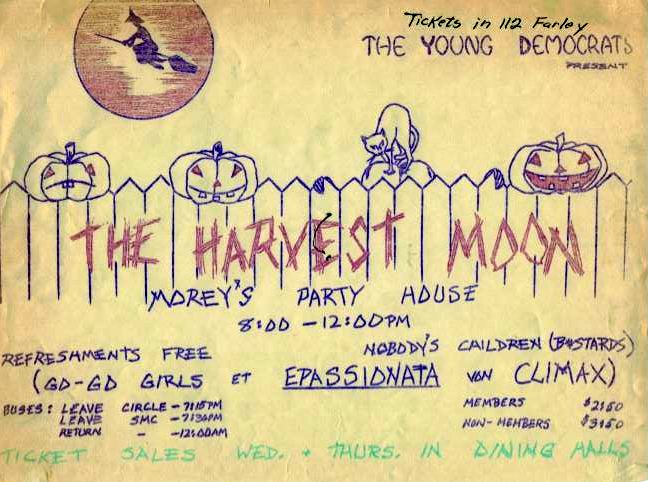
October 28, 1966 8 pm to 11:30 pm Morey’s Party House- -ND Young Democrats


October 31 1966  8:30 pm - 12:30 am Morey’s Party House --ND Detroit Club
November 4, 1966 8 pm - ? Morey’s Party House--ND New Jersey Club
November 12, 1966  8 pm- 12 am  Carriage House --ND Glee Club
January 1967--Stepan Center
Feb 17. 1967 Carriage House--ND Glee Club
March 3, 1967 8:30 pm - 12:30 am Laurel Club--ND Rugby Club
March 17, 1967  8 pm- 12 am Carriage House--ND Glee Club (green beer provided)
March 18, 1967  8 to midnight Carriage House--Farley Hall Dance and Date Party
April 8, 1967 8 -11 pm Immaculate Heart of Mary High School, Westchester, IL--IHM Student Council
April 22, 1967  8 pm - 12:30 am Laurel Club--ND Crew Club
April 29, 1967  8 pm -12:30 am  Laurel Club--ND Crew Club


Tell us more about playing in the classroom in South Bend?  Do you recall how this came about?
Peter: It wasn't a classroom except part time, I think it was a room where like the Knights of Columbus would meet. Our manager David Uhlig might remember. A gig is a gig... that one did not pay a ton. Like in The Blues Brothers, that scene where they play at the C & W road house...

Peter Herrly, "Cowboy" drummer, Roy Marshall, Jim Pino vocals, Dick Luebbe, Bill Mitsch,
 David Uhlig (manager) behind band

When did Dick Luebbe leave the band?
Bill: Dick lasted only the Nobody's Children 1966-67 season with NC’s “death" determined to be April 29, 1967 according to some documents I have.  He went on to play rough & tumble club hockey for Notre Dame.

Roy: I remember Dick wanted to play stuff like “Kind of a Drag” by the Buckinghams and “Never My Love”  by the Association. It was a little too sophisticated for my fledgling ability, but I think we all found some consensus.

Bill: We didn’t have the voices for the Association songs!


Did Nobody’s Children have any original songs?  If so, who did the songwriting?

Peter: Not really. We wanted to cover our favorites and entertain, and r&b was what we could agree on -- the Animals were big, Stones -- Roy loved the Beatles, but they are tough to replicate.  We would always discuss songs to cover, often heatedly and with passion -especially as music evolved in '67 and '68.  Our covers stayed more on the blues and rock side, but not always. We did the Animals very well!


What was the relationship like between your groups and the other campus bands like the Shamrocks, the Plague, the Shaggs or later Captain Electric and First Friday?

Peter:  Nothing for me, David James was way more into these groups and became quite the mover in those circles later (’69 and ’70, he told me).


Nobody's Children at a South Bend party spring 1967 "Cowboy," Roy Marshall, David James, Bill Mitsch
Were you aware of any of the local South Bend garage bands like the Illusions?

Peter: No. The big thing we were doing was checking out all the blues legends that were playing on the South Side in Chicago, and once in a while appearing in South Bend. Muddy Waters came to a club on the west side, unforgettable! In Chicago, we saw Howling Wolf, Lightnin’ Hopkins, Jimmy Reed, BB King... just amazing acts, before anybody but the Stones had heard about them, except the folks who went to the clubs of course.

Spring & Summer of 1967
Several members of the band were able to directly encounter the changing scene that was dawning on the West Coast.  The shift of youth culture from the Sunset Strip to the parks could be seen as a harbinger of things to come.

Peter: Roy, David James, manager David Uhlig I made a crazy road trip from South Bend to Los Angeles during spring break 1967. We were at that Easter Sunday "Love-In" at Griffith Park in March of 1967, which was fun and we also saw Lightnin’ Hopkins at the Ash Grove on that same trip.

Love-In at Griffith Park, Los Angeles on Easter Sunday, 1967- photo from Tropico Station
With the end of the 1967 spring semester, Bill headed home for a new musical experience.
Bill: I joined up with the Fantastic Emanons as their keyboard player upon returning home to Wheeling, WV for the summer break. The Fantastic Emanons ("no name" spelled backwards) were pretty good had already cut several regional hit records including “Hitch-Hike” that we played almost every night at a summer bar gig (The El Toro Lounge) we had.  We played all over the Ohio River Valley that summer.  I recall playing in Bellaire Ohio and Wheeling Park in Wheeling WV. We also practiced once on our Mitsch family front porch in suburban Wheeling that summer (2 summers before Woodstock) and a big crowd of neighborhood kids came by. It was a great event until we got busted by the Wheeling Police because some neighbors obviously complained. The good thing that came out of that is that my brother taped us with our Dad’s tape recorder.  Years later, after Dad died, we found the tape in the Mitsch home basement.  I took it to The Ohio State University audio folks and they were able to clear up a few of our songs. I have them on CD, but also on my iTunes. Every so often, the Emanons come up on my playlist as I am driving my Mustang in Ohio or Florida or sometimes on a visit back to Notre Dame.

The Fantastic Emanons-sans keyboard player Bill Mitsch

Fall 1967: The Emergence of Savage Rose
1967 saw the band at the crossroads as there were changes everywhere when they reconvened for the fall semester.  Besides what David James described in an archival email as a "heavy dependence on the Stones and Jimmy Reed material," psychedelic, soulful and heavier sounds from the likes of Blues Magoos, Young Rascals and Procol Harum seeped into their repertoire.


What was the impetus behind the band name change to Savage Rose?  

Peter: As I recall, we were kicking it around and there was a flower being tossed around. I did not want to be too flower-power, and Savage came in there – David James might have had the formulation, and David Uhlig was engaged (as a good manager should be!)


Who comprised Savage Rose?

Bill Mitsch-keyboard (Wheeling, WV)
Roy Marshall-lead guitar (Columbus, IN)
Peter Herrly-bass guitar (South Bend, IN)
David James-lead singer (Atlanta, GA)
Steve Foss-drums (Albuquerque, NM)

One of the key pieces in the evolution to Savage Rose was the inclusion of Steve Foss (class of '69), a very talented drummer fresh from a year in Innsbruck, Austria with the ND study abroad program. Prior to Notre Dame, Steve attended secondary schools in Albuquerque after a childhood of moving around the globe. The Farley Hall resident was brought into the band by David James.

Admist the alterations, their Leslie Speaker did make the transition from Nobody’s Children.

Bill: It makes an electric organ sound like a church organ as it has spinning speakers that give the wah-wah sound out of single notes and chords. It was the best thing I ever purchased, but it was a pain to haul around to gigs. It really got a workout with the Fantastic Emanons in summer 1967 as we played every night for much of the summer. 

Farley Hall, Oct. 1967, Roy Marshall, Steve Foss, David James, Leslie Speaker

The clothing choices for Savage Rose are very interesting for fall 1967 as the band appears to be wearing "working man" or "proletariat" clothes.  Am I reading too much into this or was this appearance chosen to stand out from collegiate look on campus and or the excessive psychedelic look that was in full bloom in places like Chicago?

Bill: Maybe reading too much into our clothing. We were a blue jeans group, but there was never any discussion about what we wore. We just showed up.

Was anyone the driving force or guiding force in the band as far as direction?

Bill: haha, everybody was! When David Uhlig took over, my role as record keeper and contract manager stopped.  That is why I do not have very much detail or documentation of what we did as Savage Rose.

Peter: David James took on a leading role as the lead singer, but also very good on blues harmonica.  He was also a solid rhythm guitar player who could keyboard, and was indispensable on equipment, etc.  Later David was indeed a huge force in the South Bend scene - music, Irish music also, and progressive politics. A wonderful man and a dear friend that my kids adored.

According to the aforementioned archival email from David James, Savage Rose took the stage at bygone South Bend spots and schools like Nicola's Pizza, St. Stephen's Church hall, the Mishawaka Bomb Shelter, the St. Mary's College Coffee House and the St. Mary's Academy which was on South Miami Street. The group also played at the still open Frankie's BBQ (est. 1968) and Rocco's (est. 1951). 

Spring 1968-The quintet looks over the edge of the unknown

What was the highlight musical moment for you in that era?

Roy: The Anti-Military Ball.

(The Anti-Military Ball was headlined by Phil Ochs.  It was held at the now demolished Notre Dame Fieldhouse and featured the groups Captain Electric and the Flying Lapels and Savage Rose playing under their other appellation of Indiana Joy!)

Peter: Playing at the Anti-Military Ball*... the same night that I as the commander of the Army ROTC elite spec ops unit had a date at the Military Ball. We played extremely well that night, but I had to do some magical stuff (including dumping off my date and disguising myself) to make my part happen. I did get to sing my one and only song “I'm your Hoochie Coochie Man.” At least that is how I recall it.

Savage Rose playing under their alias of Indiana Joy!
Image courtesy of Tom Wishing

* Note: "The university ROTC departments had a long-standing tradition of holding a Military Ball every spring. During the anti-Vietnam War protest movement of the late 1960s, when feelings against the Vietnam War had morphed among some into a more generalized anti-military feeling, it seemed to the protest movement at Notre Dame a fitting idea to have an Anti-Military Ball. Such was the climate in 1968." - Peter


Did the band both back Phil Ochs and play their own set at the Anti-Military Ball?

Peter: I was there for our own short set, then left as I recall to change and dance at the Military Ball, so I do believe we backed up Phil Ochs. David James would have remembered.

Bill:
it seemed like Savage Rose drifted away from me or me from it in 1968. I was at the Anti-Military Ball in 1968 (don’t remember seeing Savage Rose aka Indiana Joy! there) and ironically was still in ROTC the year before and went to the Military Ball.  One of our competitor bands borrowed my Farfisa keyboard that night and turned it up to screeching levels.  Sorry I was so generous.

The best moment I remember was in front of Farley Hall in Oct. 1967 with Roy Marshall singing a searing version of the Rolling Stones’ “Get Off Of My Cloud” and superb percussion by Steve Foss that bounced off all of the dormitory buildings on the north quad. Wish we had taped that session.


Farley Hall, Oct. 1967, Bill Mitsch, Peter Herrly, Roy Marshall, Steve Foss, David James
Steve: Seeing the Shaggs play in the basement of the LaFortune Student Center remains as one of my fondest memories of those times. It was a good place to meet girls from St. Mary's College in an informal setting.  Plus, there was dancing to a jukebox. Also should mention the Ed Sheftel Combo (from Northwestern University) at the 1966 Notre Dame Collegiate Jazz Festival (judged by Quincy Jones and Billy Taylor).  However, nothing beat the Shaggs at the student center!

Were there ever plans to record?
Peter: Maybe towards the end, glimmer of mention, with David James, our peerless vocalist, keyboard, rhythm guitar, and amp and sound man... but we never had time to get there. Roy, David, I and our manager David Uhlig all moved off campus, to the South Bend suburb Riverside no less.  Bill was very busy with his studies and David could fill in on organ -- but we were really doing more blues, and David was really pretty good at the blues harmonica.

Aftermath: War & Weddings

Bill:   I wanted to add that Leslie Organ Speaker was one of the reasons we were so good doing “Whiter Shade of Pale” by Procol Harum. That was Ruthmarie’s (Rosary College-Dominican University girl whom I charmed at Rosary’s grand piano in their lobby with Beatles and Otis Redding ballads) and my wedding march in May 1970. The band at the wedding that was permitted by a liberal Catholic Church was Dick Luebbe’s new band in Chicagoland, named Misery Loves Company.   We did not catch the irony of the band’s name for a wedding until later…Again, I better remember the date, May 28, 1970, and the place, Church of St. Leo’s, St. Paul MN. My wife’s name is Ruthmarie Hamburge Mitsch. Hitting the big 50 anniversary next year and I am sure bands will be discussed. We will try to get some old ND friends back in the fold.

Misery Love Company-May 1970-Ruthmarie Hamburge-Bill Mitsch Wedding
Dick Luebbe (originally from Nobody's Children) in white suit with red Gretsch
Steve:  After Savage Rose, I drummed with the South Bend-based Tommy and the Tornadoes led by Tom Wishing (class of '68). I also gigged with the progressive band Rotten Apple in Albuquerque.  Later, I acquired a pilot license which allowed me to fly from the Southwest to San Francisco to drum for the Tornotics comprised of Noam Cohen, Tom Wishing, his son Devin, and Johnny Augeri (class of '69).

Peter:  Afterwards the Vietnam War saw us all on very different ways, but those are other stories!

Roy: After college I got drafted into the army, spent about a year learning Vietnamese and then went AWOL to Canada for a while, came back and was put in the stockade for a while, then finally got discharged. I worked for Macy’s Parade in NY for a few years and then have been working as a carpenter/ handyman ever since and still am. I married a gal from Seattle, been here since 1980. My wife and I continue to play music together and now with our son. The Marshall Family Band; you can listen on Bandcamp. Still trying to figure out music, an endless pursuit started in Farley Hall.

Peter:  In 2017, we were invited to do a 50th reunion concert in front of Farley Hall by the young women there, but it was not to be with the musicians now located across the globe. All in all, our lives are connected to the past, and the future that we don't know.
Savage Rose-Fall 1967 Peter Herrly bass, Bill Mitsch keys, Roy Marshall guitar
While previously unexplored and largely unacknowledged, Nobody's Children & Savage Rose, can now be considered instrumental, along with foundational groups like the Shaggs, the Winds and Webster's New Word, in helping to establish Notre Dame's first musical golden age. This unpretentious group accomplished all of this by showing up to play direct, propulsive and essential rock ‘n’ roll that still stands out today.

Contributors:

Steve Foss

The Tornotics

Colonel (retired) Peter Herrly
Blue Line Films

Roy Marshall
Marshall Family Band

William J. Mitsch, Ph.D.
Director, Everglades Wetland Research Park
Eminent Scholar, College of Art & Sciences
Sproul Chair for Southwest Florida Habitat Restoration
Florida Gulf Coast University
2004 Stockholm Water Prize Laureate
Professor Emeritus, The Ohio State University

Special mention and thanks: Tom Wishing, Bernadette Netherby, RN