Monday, May 28, 2018

Liverpool Five-Arrive

With a band name that made me confuse them with the Liverpool Echo, I never gave this outfit previous consideration until “Sister Love” recently caught my ears.  The song offered not only a delightful mélange of beat, folk and garage, but also a palpable sense of soul.  The inherent soulfulness of the song made sense when I discovered it was written by Curtis Mayfield.  Arrive (their American debut album) remarkably features “Sister Love” plus two more compositions from Curtis Mayfield.  (Interestingly, 2008’s Best of the Liverpool Five collection from Sundazed does not include any of the Mayfield material.) "That's What Love Will Do (To You)" is the second Mayfield song and presents them in a refined Searchers mode. "Hey Little Girl" is a swaying dance floor number that Mayfield first handed off to Major Lance between his big hits "The Monkey Time" and "Um, Um, Um, Um, Um, Um."  The Liverpool Five's version features some standout backing vocals-especially when their voices converge on the forefront to proclaim, "Let's Get Together." Action-packed between the Mayfield compositions are some stompers that rave-up and nose dive somewhere between the Count Five and the Yardbirds. The LP5 drape fuzz all over the slow burning " I Just Can’t Believe It"  written by Barry DeVorzon (of  “Nadia’s Theme," “Theme From S.W.A.T.” and Valiant Records fame) and convey a "she's gone" lament with determined resolve in reaction to the crushing blow.


While the shopworn narrative is that the tough British Invasion bands reintroduced the blues back to America, what is often taken for granted (here in the U.S.) is the monumental influence of American soul music had on the development of British Beat music (along with skiffle, the Shadows. music hall and folk).  The band’s trajectory was just as adventurous as their song selection as they were mostly from London before honing their sound in Germany (like that band that was actually from Liverpool). They even performed at the 1964 Tokyo Olympics and played in the Philippines before sharing the Hollywood Bowl stage with the Beach Boys & the Byrds at the Beach Boys’ Summer Spectacular in 1965.  The group somehow ended up based in Spokane, WA where they reached the mountain top of the ultra-competitive Pacific Northwest scene. Thanks in part to Curtis Mayfield, it's now hard to overlook this British Invasion band and their well-traveled sound.


Thursday, May 10, 2018

Rex Kona and his Mandarins-Wild Orchids

While existing in the world since 1964, I only recently had the good fortune to encounter this domestic oddity with its tilt towards the Far East.  Overall, it’s a now sound record layered with copious vibraphone, wind chimes and marimbas. Further explorations reveal the prominent cross-currents of Latin jazz and samba swirling about at the time of recording.  The album is atmospheric in that listeners can hear the separation of the instruments and feel that something different in the air. Wild Orchids starts off with a brisk sense of urgency as the Mandarins quicken the tempo of the old standard “Kisses Sweeter than Wine.” Besides the obvious influences of Martin Denny and Lex Baxter, there are also hues of Tak Shindo as heard in the Sino-Japanese motifs which run throughout the album and are especially pronounced in “Bushi, Bushi.” “The Trolley Song” seems to even anticipate the playfulness of Rolfe Kent’s soundtrack for Sideways with its accordion-led melody. “Bird Train” meets and exceeds its song title with its dashing bongos and a whole Tiki Room of bird whistles. The only ambient sound absent seems to be the rhythm of the falling rain. Don’t expect a profound or earthshaking experience with Wild Orchids, however these sounds float through the speakers like a refreshing Pacific Ocean breeze.

Bobby Montez-Viva! Montez

Bandleader and vibraphonist Bobby Montez hailed from Sonora, Arizona, but good luck finding it on a current map or on the actual horizon because it’s one of those copper mining towns like Ray that no longer exits.  Montez was able to quickly rise from his dusty desert beginnings to space age heights by creating a vast array of musical stardust by blending Latin jazz with elements of exotica.  Viva! Montez is one of two albums he recorded with World Pacific after previous releases on Jubilee (1958’s Jungle Fantastique) and GNP Crescendo (1959’s Lerner & Loewe in Latin). Viva! Montez abounds with his sophisticated, yet sweeping arrangements which slide open at times to reveal their percussive infrastructure.  One of his most evocative numbers is “Garden of Allah” which refers to the long-gone West Hollywood hotel and favorite haunt of F. Scott Fitzgerald. While Montez’s vibraphone and piano carry the waves of melody, the congas and timbales swirl and then crest before the chanting chorus. His playful instrumentals “My” and “Brazilian” sound way ahead of their 1961 time due to their freshness, vibrancy and understated elegance.  It was written that by day he worked as a landscape architect and by night he led his quintet at fledgling nightclubs from the M Club in East Los Angeles to The Crescendo in Hollywood during the late ‘50s and early ‘60s. The last printed mentions of Montez playing live were engagements at the Golden Sails Lounge in 1967 and a residency at the Executive Suite on the Pacific Coast Highway in Long Beach in 1970, according to listings in the Long Beach Independent. The paucity of biographical information across the interwebs, only heightens the mysterious allure of this versatile artist and his incredible musical journey from Sonora, AZ to this century’s belated acclaim as an integral figure overlapping the West Coast Latin jazz & exotica scenes.

Thursday, May 03, 2018

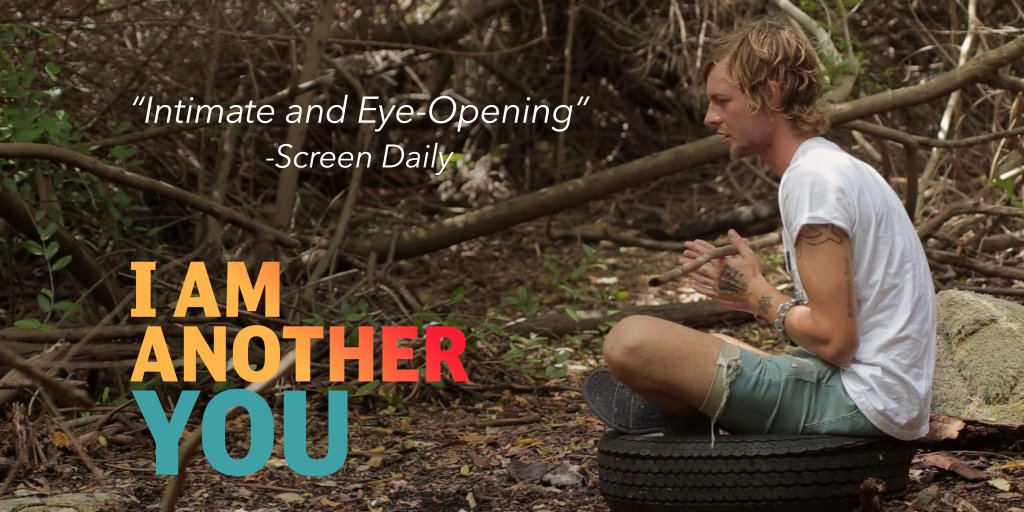
I Am Another You-A Film by Nanfu Wang


In the urban wilds of South Florida roams Dylan who both explores for the sake of exploring and works for the sake of hard labor. He is doing his “Into the Wild” thing, but in the opposite geographical direction of Alexander Supertramp aka Christopher McCandless, as Miami becomes his new sunny habitat to be deliberately homeless after a stint in San Diego. Nanfu Wang, a film maker from over-industrialized mainland China, sets us out to document street life in America where her path converges with drifting Dylan. While she initially senses freedom in that the sky is Dylan’s roof, she later sees the selflessness of Dylan’s trajectory.  He may appear free on the outside, but inside his mind is mired in a vat of drugs and ensnared by paranoia. He tellingly declares that he is "22 years old, but feels like 100." Accompanied by her camera, Nanfu decides to enter dumpster diving street life in order to better understand Dylan and the concept of “freedom” in America.  Right away, they end up getting roused by police for sleeping in a city park.  She eventually finds out he was originally from Utah and was Mormon for more than a minute.  As she digs into his past, she finds more layers and much more complexity, which eventually leads to filming Dylan on his home turf within the dynamic of his estranged family in Utah. Nanfu and Dylan’s working relationship immediately halts when things come to an impasse over a donated bag of bagels given to Dylan as goodwill by a "Philadelphia-themed" Miami bagel shop.  Watching their underlying Eastern & Western values clash over the donated bagels is particularly piercing.  Dylan argues that he does not want to schlep the extraneous weight and make unnecessary restroom stops, but Nanfu sees it as a shameful act of wasting food-especially premium-grade bagels given away as an act of kindness.  Dylan and Nanfu lead viewers to both the visible and elusive edges of homelessness and ultimately to the question, “Does one have to lose oneself in order to find oneself?"


Sunday, April 22, 2018

Shane Martin-Columbia & Epic Singles (1967-1969)

Here is another installment in the Columbia Singles series which has taken me down some previously unexplored musical pathways.  This release proves to be no exception as it covers two brief, but intriguing years of a musician who has been on a lifetime voyage of discovery.  Shane Martin (aka Neale Lundgren) was from New Orleans and naturally drawn to soul music’s “range of emotion.”  Lundgren started out in the Crescent City garage scene as a singer for bands like the Twilights and an early version of the legendary Gaunga Dyns. 
The Gaunga Dyns '66
(L to R: Beau Bremer, Brian Collins, Steve Staples, Ricky Hall, Bobby Carter, Neale Lundgren, and Mike King)
His ship came in and he was signed as a solo artist to Columbia/Epic.  He certainly had a smooth and strong delivery, but not enough distinction in his voice to take him to the first class. Songs like “Don’t Take Tomorrow Away” had him leaning more towards Gene Pitney than Steve Marriott, but there is certainly the presence of soul (and sometimes a slight sneer) in his voice.  From around a corner, the propulsive horns on "You're So Young" and "I Need You"sound like the building brass section from "MacArthur Park" which makes sense because these two Northern Soul classics and the epic "MacArthur Park" were all composed by Jimmy Webb.  He connects "Black is Black" by Los Bravos and ? and the Mysterians' "96 Tears" and it works because the stock material both share that "I Can't Help Myself (Sugar Pie Honey Bunch)" bass line. Interestingly, these singles were produced by Jason Darrow who previously wrote songs for ? and the Mysterians like "Hanging on a String." Also included is Martin's convincing "side-buckle shoes" interpretation of Jerry Butler's "He Will Break Your Heart." However, some of the singles like "I Keep it Hid" get a little too swanky and schmaltzy for their own good and enter B.J. Thomas-ville.  

He competently covers the Association’s soaring "Goodbye Columbus"-the theme of The Graduate-ish movie based on Philip Roth’s novella  The landing gear is activated and the album descends on Mark Eric territory with the wistful, sparkling and sweeping bossa-pop of "Something Beautiful is Gone." In the late ‘70s, Lundgren entered a Benedictine monastery and immersed himself in the sacred tradition of Gregorian chant, the mystical poets and Bach. These Columbia & Epic Singles provide the impetus to trace Lundgren's unexpected path both forward and back while focusing on this particular slice of time.  After all, it's part of an era that keeps offering a seemingly infinite supply of remarkable singles and stories.

Sunday, April 08, 2018

Debbie Lori Kaye-Columbia Singles

Debbie Lori Kaye had the unique distinction of being of Portuguese heritage, growing up Sault Ste. Marie, Ontario and being signed to Columbia Records as a teen.  It appears that she was possibly being groomed by CBS to be a consummate crossover artist.  She certainly straddled mid-sixties styles ranging from big production Nashville country through multiple branches of CanCon pop.   In other words, you could place her records somewhere between early Dolly Parton, Skeeter Davis and Lesley Gore.  This album starts with “Picking Up My Hat,” which was a #1 record in Canada for 9 weeks in 1965, and is undeniably catchy skip-a-long pop.  Her most recognized single “The Iron Cross” was arranged by Bergan White and later covered by the Untamed Youth. On this record released in July 1966, the lyrics defend her own donning of her boyfriend’s iron cross against the protests of her mother. Besides Peter Fonda in The Wild Angels some surfers, sidewalk surfers, gremmies, kooks and hodads wore these mass produced medals, most featuring a surfer on a board in the middle of the cross, as fashion accessories before the masses later clasped puka shell necklaces. The protagonist arguably claims the pendant is a symbol of her boyfriend’s love and the larger cross pattée shape no longer represents the horrific things it once did. She even slips in the fact that "some of our boys are dying over there," while many remained ineffectually fixated on a vending machine item. Then again, the younger generation was playing inconsiderately with a form of fire. What would Roland Barthes think? The B-side is the delightful “Baby What I Mean” which the Drifters would later convert into a R&B hit in late 1966 and then again covered by Spiral Starecase in 1969. However, her most compelling moment might be “The Playground” as it is laced with some monster fuzz guitar over subterranean lyrics, lavish strings and acoustic latticework.  Her one and only album from 1966, Hey Little One!, smartly included this track. This Columbia singles collection serves as a rectifying reintroduction to a singer previously resigned to one topical song, The expanded view presents a somewhat underrated musician who overlapped both national and musical borders.

Thursday, March 29, 2018

Habibi- Cardamom Garden EP

This all-female quintet certainly exudes a certain thrift shop charm, while weaving an appealing tapestry. Their focal point and catalyst is lead singer Rahill Jamalifard who is of Iranian-American descent and actually grew up in the flatlands of Michigan before following her global dreams to NYC. Under her direction, the combo adeptly intertwines Middle Eastern undercurrents with the enduring influence of the Shangri-Las, Luv’d Ones and Vashti Bunyan-which differentiates their sound & image to stand apart from their contemporaries. While many kids nowadays (inaccurately) call this surf rock with its abundant echo, reverb, and rolling drums, it all conspires to have a magnetic pull on listeners. Cardamom Garden sometimes slopes into that languid realm of wooziness where the weekend slips away before it even gets started.  Despite moments of slack, they have thickened their overall sound and expanded their sphere of influences to include Persian poetry (“Nedayeh Bahar”) and a Pebbles cover (“Green Fuz”) with the verses sung in Farsi that works to everyone’s advantage.
They should also be commended for their attention to harmonies, backing vocals and arrangements. This focus allows them to transcend the one-dimensionality that plagues many an emerging band.  If you have ever been enamored by the Century 21 female-fronted sounds of La Luz, Slumber Party, Louie Louie, the Girls at Dawn, Bobcat ’65, Summer Twins, the Splinters or even Best Coast, there is certainly something similar to connect to with Habibi.  It should be interesting to hear what they will do next, which is usually the point of an EP. Here’s hoping they incorporate even more pronounced Persian influences into their future pop efforts. 

Saturday, March 10, 2018

The Photos-S/T

When I first came across this album from 1980, I was excited to discover a power-pop band that I have never previously before encountered.  What was further intriguing was that the band was led by a woman who went by the stage name of Wendy Wu (not the Homecoming Warrior).  Groups that were female-fronted and supported by male backing musicians were surprisingly rare in the new wave-era despite the runaway commercial and critical success of Blondie and the Pretenders.  Moreover, a band featuring a female lead singer with an assumed Chinese surname of Wu was certainly striking during this angular time.  My initial impression was that the band was originally from somewhere like St. Louis before moving their impossible dreams to N.Y. or L.A.

The British Blondie?
The Photos actually hailed from Evesham-a civil parish between London and Birmingham and instantly expressed their chagrin when pegged as the British Blondie.  This is one band that accurately sounds like their graphic design while being fortunately directly inspired by Blondie despite their frequent denials. Songs like the dashing "Irene" would have sounded perfect on Rhino's Just Can't Get Enough: New Wave Hits of the '80s or their DIY series from 1993. “Friends,” a standout slower number building on Spector's wall of sound, could have been the closing number on the Valley Girl Soundtrack. Their stellar rendition of Bacharach-David’s "I Just Don't Know What to Do with Myself" fittingly concludes the proper album.  It also sounds like a highlight from an old episode of Rock Over London before being taped over and existing only in memory.

Developing their Sound
Overall, the songs are straight to the slanted point aesthetic of power-pop with some cuts wearing a splash of reggae-which humidified the UK air at the time.  The layered and large production is able to achieve the tricky balance of offering taut and tough guitars within songs that sweep and even soar at times. Perhaps the only shortcoming holding the Photos back was Wu’s voice.  While her voice was certainly proficient with pronounced Debbie Harry inflections, it is not in the same distinctive league of her model or Chrissie Hynde. In brief moments her voice slips into that dreadful office worker-Diet Coke metallic shrillness that would later be heard coating the hoopla of Grace Slick's Starship.  Along with Sheena and the Rokkets (Fukuoka, Japan), the Shivvers (Milwaukee) and the MnM's (Los Angeles), the Photos seem somewhat overlooked in the stack between the trailblazers that came before (Blondie and the Pretenders) and those who came successfully after (Joan Jett and the Blackhearts and Katrina and the Waves) in the video era. By happenstance, the Photos bring another perspective on the new wave movement to light.

Monday, February 12, 2018

The Wildlife - Columbia Singles (1967-1969)

What an unexpected surprise to see this collection of singles surface here in 2018. Previous to this release, the Wildlife were one of those ‘60s bands that recorded a handful of standout singles on high profile Columbia Records, but their music could only be partially found as Youtube recordings of the original records. Legacy is most likely releasing this digitally in order to extend their copyright and prevent having these 50-year old recordings slip through their grasp and into the public domain. The front cover photo presents the band in their full pop art glory-almost looking like a ‘90s Madchester band sitting in on a Stone Roses photo shoot. The first half of the album opens a trove of folk-rock pop songs that I have heard before by other acts, but needed to refresh my memory  in order to recall their exact origins. “This is What I Was Made For” came from the prolific pen of PF Sloan. “Where Do You Go” was actually Cher’s first single and written by none other than Sonny Bono. “Hard Hard Year” is a deep cut by the Hollies in waltz time, while “New Games to Play” was written by Ritchie Cordell who composed some of Tommy James’ biggest hits. “Come See About Me” is the Supreme number, which could be considered a brave & bold move by the band or simply foisted on by Columbia atop the heavy slab of Vanilla Fudge.  After uncovering these covers, we get the downbeat & folked up “Time Will Tell” which could be considered the chiming centerpiece of the collection.  The verses presents the conflicted jilted lover pleaing for that one last chance, while the choruses have him convincing himself of the eternal truth and foregone conclusion that "Time Will Tell." Directly following is the previously unissued "Visions" which is mid-tempo psychedelic-propelled pop at its mid-sixties finest. The tale of a combo from the Ohio hinterlands getting lost in proverbial New York major label hustle-bustle-shuffle is among the oldest tropes in show business. However, their captivating and enduring songs have reemerged 50 years later, thanks to copyright extension, to convey there are sometimes second acts for unsung American garage bands.

Saturday, February 03, 2018

The Soulful Strings - Paint It Black

Here we have some truth in advertising with the abstract image of a red background painted black aligning to the album title. Appropriately, this 1966 album of all covers leads off with a striking rendition of “Paint It Black” featuring abundant echo, prominent flute and Latin polyrhythms. The main man and driving force behind the red door was Richard Evans, a bass player who later went on to produce and arrange for megastars like Peabo Bryson and the legendary Ramsey Lewis before becoming a distinguished professor at Berklee College of Music in Boston. At Chicago’s Cadet Records, Evans led the large house band which included guitarist Phil Upchurch, flautist Lenny Druss and harpist Dorothy Ashby who became known collectively as the Soulful Strings. While none of their recordings express the deep depths of a David Axelrod project or the compounding congas heard on Music from Lil Brown by Africa, the music is certainly textured while the employment of strings allow for the unfurling of sweeping melodies. They interpret these hit songs in way that retains their essential core, but customize them to the point to also make them adventurous, dynamic, and enduring. In short, the strings are smoothly blended and skillfully balanced with the soulful elements. The album does sag in the middle as the source material (“Sunny” & “When a Man Loves a Woman”) now sounds tired and turgid due to radio overplay. The album takes flight once again and peaks with “Eight Miles High.”  Subsequently, the Soulful Strings would go on to release the original single “Burning Spear” which reached #64 in February 1968 on the Billboard Hot 100 and a half-dozen long players-all arranged & produced by the aforementioned Richard Evans. While the Soulful Strings have gained belated recognition and royalties from being frequently sampled, they have not yet received a domestic reissue treatment beyond their 1968 Christmas album which was re-wrapped in 2015. In any case, this debut is the place to begin exploring their transitional sounds created by Evans layering musical elements of Africa and Europe over mid-sixties pop and soul in the heartland of North America.

Thursday, December 21, 2017

Hi-Fi Baby: The Floyd and Jerry Story


The first time I heard of Floyd and Jerry, I was thinking the duo were along the lines of a Peter and Gordon or Chad & Jeremy act for Phoenix.  However, that preconception was shattered when I heard the hopped up and potent rock 'n' roll of their first band the Door Nobs and their signature song “Hi-Fi Baby” (that would be subsequently covered by the Barbary Coasters in 2005). Like so many other combos of the era, the lingua franca of the Beatles can be clearly detected, but the Westfall brothers were also deeply steeped in the twangy and indigenous country, folk and rockabilly influences & inflections which reverberated across the Southwest at the time. (Someone on Youtube aptly described them as kind of a garage version of the Everly Brothers.)  In 1966, KRIZ radio published an in-house newspaper Boss-Line that aligned the duo to the Phoenix-area parade of stars who reached prominence on the national level: Duane Eddy, Marty Robbins, Buck Owens, Wayne Newton and Waylon Jennings. They did indeed bring elements of the pre-British Invasion sound so deep into the ‘60s, it will have one double checking the mostly 1966 release dates of these records. While their work with the Door Knobs led off 2001’s essential Legend City compilation, I had not previously heard the bulk of their recorded output until this ambitious career-spanning retrospective.  This disc, action packed with 27 cuts of local color, presents the Viv & Presta singles of Floyd & Jerry along with unreleased demos, masters and a handful of gems they wrote for other performers.

A Double Shot from Phoenix to the
Philippines
The songs which immediately leaped off the disc were actually the ones which dashed up to the top of the local charts. "Believe in Things," which reached #1 in Phoenix in spring of 1966 features hooks galore and lyrics that could have floated directly out of the Dunhill Records cubicle of P.F. Sloan & Steve Barri.  The follow-up "Summertime Kisses," appropriately released in summer 1966, sounds like a missing link for the Monkees. The previously unissued Door Knobs master, "Summertime Breeze" is especially strong with its washes of steel guitar-ish drop-offs-evoking the spare beauty of the surrounding Sonoran Desert.  An obscure country group the Maveriks recorded  the duo's "Wonder Why," but it is brushed off by Floyd in a recent interview as pretty much a stupid novelty.  However, it works in a brilliantly absurd way that may make one reconsider their flat earth surface conceptions.  They even wore their hearts on their mod sleeves with the soulful sounds of "If You Want Me."  In 1967, Double Shot Records (home to Brenton Wood, Señor Soul and the Count Five) signed the duo. Two singles were released by the Hollywood independent, but unfortunately could not be be included on this collection due to the fact that the song rights are currently in the hands of a major music conglomerate.  Their first Double Shot single, "Love Me Girl" charted in Orlando and was soon covered by the Pinoy pop group Orly Ilacad and the Ramrods.
Nothing is Ever Easy
As with other musicians ranging from Gary Lewis to countless members of local garage bands, their musical dreams were essentially shattered when Selective Services came calling for Jerry.  Fortunately the Vietnam War did not mean the end of the Floyd & Jerry Story, as the duo resurfaced in that brief 1979-1981 moment when countrypolitan acts (e.g., Juice Newton, Eddie Rabbit) crossed over to the pop charts. While commercial success continued to elude them, the material from this phase is a strong last crack at the big leagues and thankfully included. It actually sounds like wind down music for The Fall Guy! The verses of "It's So Easy" (not the Buddy Holly song/Ronstadt cover of the same title) remind me of Robert Knight's "Everlasting Love." "Finger Touchin'" is a delightful country instrumental and testament to their guitar finesse which runs throughout their work.  I'm still trying to discern if "Northridge South" is a reference to Northridge and the California country scene just down south at the Palomino Club in North Hollywood.

While never truly breaking through to the national level, they were huge on the local scene which included the steep competition of acts like the Vibratos, Phil & the Frantics, P-Nut Butter and eventually Alice Cooper’s Spiders. They were also said to receive major airplay and acclaim in the medium markets of Bakersfield, Lubbock and Oklahoma City.  All and all, how many Arizona bands can proclaim opening for the Beau Brummels, the Yardbirds, the Dave Clark Five and also for James Brown in Tucson?
Japanese picture sleeve courtesy of John P. Dixon
Their overall sound may have sounded slightly dated in the context of the seismic shifts in sounds transpiring in 1966/67, but with time this disc now places Floyd & Jerry in the regional rock 'n' roll pantheon alongside the likes of the Gestures, the Gants, the Rockin' Ramrods and the Bobby Fuller Four. Furthermore, listeners can now hear their enduring pop sensibilities along with those clear and bold Western intonations still attuned and stretching out into the vastness of the desert.

Credit must be given to Mascot Records for making this music accessible to the world outside of collector circles and shoddy smartphone Youtube videos.  The stellar sound, exciting design and insightful liner notes by Dan Nowicki all converge to make this one of the top archival releases of 2017
Presta Record ad courtesy of Mascot Records

Thursday, November 30, 2017

Sunny & The Sunliners-Mr. Brown Eyed Soul

For over 60 years, Sunny Ozuna has been a major force on the Southwestern music frontier as a singer, bandleader, composer and independent label owner.  The versatile and dynamic singer is as comfortable and conversant with traditional Tejano as he is with horn-driven instrumental R&B and smooth soul.   Throughout the ‘60s, Ozuna and his bands the Sunglows & the Sunliners were the leading lights of San Antonio’s vibrant Westside Chicano Soul scene.   Mentioning Sunny Ozuna & the Sunliners to older workmates will bring instant smiles of fond recognition and an outpouring of compelling recollections from a long gone time and place.

The spotlight on this collection shines on his 1966-1972 soul sides sung in English and originally released on his own Key-Loc Records.  What is most striking is the soaring doo-wop influence which lifts several of these songs into another realm.  On the national soul scene during this time, the essential doo-wop elements were rapidly receding from the mix as rough & ready front men like Curtis & Otis took center stage.  It fell upon the Southwestern regional bands working the bars, cantinas, ballrooms, low rider clubs and military bases (e.g., Randolph in San Antonio) to keep the close harmony sound alive-partially for the sake of the slow dancers.  (In the Phoenix-area, the Servicemen had a similar '50s deep into the '60s vocal group harmony sound out at Luke Air Force base.) 

Their sublime treatment of Billy Stewart’s “Cross My Heart” could be considered a crowning achievement in Chicano Soul by casting out their horns and raising their voices to petition the skies.  A lovely spare elegance is expressed through their version of Marvelettes' "Forever." “Open Up Your Love Door” presents their elaborate vocal arrangements all topped off with a coda of the signature James Bond Theme from the horn section. “Give it Away” has that not a care in the world “Grazing in the Grass” feel of the Friends of Distinction, but is actually a cover of the Chi-lites' first charting record.   Another highlight is their dusky cover of Little Anthony and the Imperials' “Outside Looking In” where the Sunliners’ backing vocals express the determined mantra of "Gotta Find a Way, Gotta Find a Way."  However, not everything works as their schmaltzy reading of “Our Day Will Come” gushes over the edge and will not be replacing the Ruby & the Romantics' #1 hit anytime soon as the definitive version. Throughout their recordings, their sound is bolstered by an undercurrent of that hypnotic organ-a sound which eventually found its way North to Saginaw, Michigan with ? and the Mysterians, who pushed it to the forefront on their timeless "96 Tears." 

Mr. Brown Eyed Soul is not only a starting point in hearing some of the most accomplished sounds to come out of the San Antonio and Southwest during the ‘60s, but also an immersion into the prevailing spirit of Chicano Soul.

Tuesday, November 14, 2017

The Lottie Collins (Chiba, Japan) & the Evaporators (Vancouver) -Tempe, AZ-March 29, 2001

Just got in from the Evaporators and the Lottie Collins show that took place at Cannery Row on the edge of the Arizona State U. campus in Tempe.  At Cannery Row, the bands play on a small second level fenced-in loft stage. (It reminded me of some ski chalet scene from a '60 AIP movie.) The bands had to slice through the sometimes deeply rooted crowds on the ground floor to haul their equipment up and down the stairs.

After a hardcore band finished, the Lottie Collins took the stage above. They were full of that rising sun moving energy similar to what I saw last summer in Las Vegas with Jackie & the Cedrics.  They played a frantic ocean crossing wave of rock & roll which brought in cracked shells of surf-pogo, the Smugglers, beat-pogo, and the Ramones. After the show, I bought their "Electric Surfer Girl" 7" and it sounds like Leonard Phillips (of the Dickies) singing on the Barracudas' "Subway Surfin'" demo!

The Evaporators were up next.  After one song, I got caught up in the convincing fun of their performance.  Being that the beyond hyper-active Nardwuar likes to be in the crowd (more than on stage) made for some interesting transition scenes.  He had to drop the microphone down to the ground level (like a rescue rope) and run down & up a flight of stairs (to change shirts). He also sang from the stair-railing like he was some sort of prima-Madonna-diva!!  The crowd hoisted him up and he sang his songs about "buddies" and after school "block parents" while his (un-watched) band churned away above.  By the end, he was wearing an Exploited t-shirt and he was all over the place like some sort of foil to Henry Rollins. He then sprinted through the open front door to bring in more milling people to join in the fun and turn their frowns into smiles.  The grand finale was "Oh Happy Day" which had the Lottie Collins and everyone else dancing in unhindered sheer joy. At one point, in the night, I thought Rob Halford (of Judas Priest and Phoenix-area resident) would walk through the door complete with leather and spikes. (Nardwuar has interviewed Halford.) After the show, I spoke with a very amicable Nardwuar in "the punk rock parking lot" and he said that Rob Halford was on the guest list and he was disappointed he didn't show.  I said good-bye to Nardwuar (next stop San Diego) and the Lottie Collins (next stop Texas) and took off down the I 10--driving behind the illuminated fleets of semis doing their regular retail hauls to Tucson on this happy spring rock & roll overnight.