Thursday, November 30, 2017

Sunny & The Sunliners-Mr. Brown Eyed Soul

For over 60 years, Sunny Ozuna has been a major force on the Southwestern music frontier as a singer, bandleader, composer and independent label owner.  The versatile and dynamic singer is as comfortable and conversant with traditional Tejano as he is with horn-driven instrumental R&B and smooth soul.   Throughout the ‘60s, Ozuna and his bands the Sunglows & the Sunliners were the leading lights of San Antonio’s vibrant Westside Chicano Soul scene.   Mentioning Sunny Ozuna & the Sunliners to older workmates will bring instant smiles of fond recognition and an outpouring of compelling recollections from a long gone time and place.

The spotlight on this collection shines on his 1966-1972 soul sides sung in English and originally released on his own Key-Loc Records.  What is most striking is the soaring doo-wop influence which lifts several of these songs into another realm.  On the national soul scene during this time, the essential doo-wop elements were rapidly receding from the mix as rough & ready front men like Curtis & Otis took center stage.  It fell upon the Southwestern regional bands working the bars, cantinas, ballrooms, low rider clubs and military bases (e.g., Randolph in San Antonio) to keep the close harmony sound alive-partially for the sake of the slow dancers.  (In the Phoenix-area, the Servicemen had a similar '50s deep into the '60s vocal group harmony sound out at Luke Air Force base.) 

Their sublime treatment of Billy Stewart’s “Cross My Heart” could be considered a crowning achievement in Chicano Soul by casting out their horns and raising their voices to petition the skies.  A lovely spare elegance is expressed through their version of Marvelettes' "Forever." “Open Up Your Love Door” presents their elaborate vocal arrangements all topped off with a coda of the signature James Bond Theme from the horn section. “Give it Away” has that not a care in the world “Grazing in the Grass” feel of the Friends of Distinction, but is actually a cover of the Chi-lites' first charting record.   Another highlight is their dusky cover of Little Anthony and the Imperials' “Outside Looking In” where the Sunliners’ backing vocals express the determined mantra of "Gotta Find a Way, Gotta Find a Way."  However, not everything works as their schmaltzy reading of “Our Day Will Come” gushes over the edge and will not be replacing the Ruby & the Romantics' #1 hit anytime soon as the definitive version. Throughout their recordings, their sound is bolstered by an undercurrent of that hypnotic organ-a sound which eventually found its way North to Saginaw, Michigan with ? and the Mysterians, who pushed it to the forefront on their timeless "96 Tears." 

Mr. Brown Eyed Soul is not only a starting point in hearing some of the most accomplished sounds to come out of the San Antonio and Southwest during the ‘60s, but also an immersion into the prevailing spirit of Chicano Soul.

Tuesday, November 14, 2017

The Lottie Collins (Chiba, Japan) & the Evaporators (Vancouver) -Tempe, AZ-March 29, 2001

Just got in from the Evaporators and the Lottie Collins show that took place at Cannery Row on the edge of the Arizona State U. campus in Tempe.  At Cannery Row, the bands play on a small second level fenced-in loft stage. (It reminded me of some ski chalet scene from a '60 AIP movie.) The bands had to slice through the sometimes deeply rooted crowds on the ground floor to haul their equipment up and down the stairs.

After a hardcore band finished, the Lottie Collins took the stage above. They were full of that rising sun moving energy similar to what I saw last summer in Las Vegas with Jackie & the Cedrics.  They played a frantic ocean crossing wave of rock & roll which brought in cracked shells of surf-pogo, the Smugglers, beat-pogo, and the Ramones. After the show, I bought their "Electric Surfer Girl" 7" and it sounds like Leonard Phillips (of the Dickies) singing on the Barracudas' "Subway Surfin'" demo!

The Evaporators were up next.  After one song, I got caught up in the convincing fun of their performance.  Being that the beyond hyper-active Nardwuar likes to be in the crowd (more than on stage) made for some interesting transition scenes.  He had to drop the microphone down to the ground level (like a rescue rope) and run down & up a flight of stairs (to change shirts). He also sang from the stair-railing like he was some sort of prima-Madonna-diva!!  The crowd hoisted him up and he sang his songs about "buddies" and after school "block parents" while his (un-watched) band churned away above.  By the end, he was wearing an Exploited t-shirt and he was all over the place like some sort of foil to Henry Rollins. He then sprinted through the open front door to bring in more milling people to join in the fun and turn their frowns into smiles.  The grand finale was "Oh Happy Day" which had the Lottie Collins and everyone else dancing in unhindered sheer joy. At one point, in the night, I thought Rob Halford (of Judas Priest and Phoenix-area resident) would walk through the door complete with leather and spikes. (Nardwuar has interviewed Halford.) After the show, I spoke with a very amicable Nardwuar in "the punk rock parking lot" and he said that Rob Halford was on the guest list and he was disappointed he didn't show.  I said good-bye to Nardwuar (next stop San Diego) and the Lottie Collins (next stop Texas) and took off down the I 10--driving behind the illuminated fleets of semis doing their regular retail hauls to Tucson on this happy spring rock & roll overnight.

Wednesday, November 08, 2017

Greg Shaw

Just want to say thank you to Greg for all of his inspiration over the years.  I first came across Bomp via Domenic Priore's mindblowing Smile book in an East Lansing, MI bookstore back in 1991.  I remember seeing the "Bomp! is Back" ad with "Magic Still Exists" by the Leopards and "Highs in the Mid-Sixties: Riot on Sunset Strip" albums depicted and saying to myself, "This looks like the coolest label...I can''t believe bands are still playing in the mid-sixties style and there's a label for them...maybe magic still does exist!"   Later that spring, I remember blowing off my work at MSU and becoming engrossed in his New Wave on Record book in the reference section.  In the early '90s, I was able to to pick up almost all the late '70s issues of Bomp Magazine and read about the sounds and musicians that mattered to me (and still do) like Brian Wilson, Joey Ramone and Power Pop (Except for Trouser Press, the Big Takeover (to some extent) and some smaller zines (e.g., Yellow Pills), these sounds were not really covered anywhere else in that pre-internet-grunge dominated era.)  Greg's writing really connected to me because it contained the promise and hope of something better. It was factual and informative, but also very relatable because of large traces of passion and humanity in it. It was through its pages, I discovered some of the musicians and bands that continue to influence me to this day & night--the Last, Jonathan Richman & the Modern Lovers and the Barracudas. I'm thankful he believed in these bands and helped others discover and hear them. Through his writing, labels and the Bomp list he did bring something better.

He Put the Bomp! In the Bomp
I recall meeting him at the Las Vegas Grind II and how he treated everyone with much respect and dignity. Here was a man who was clairvoyant, insightful and influential on music that was more exciting and timeless than what the major labels (outside of Sire and Stiff) would even consider.  I liked how he was easy going, a bit shy and very approachable. It was a pleasure to talk about the Barracudas with him as Blair B. and I walked out in the glaring sun between the Rio and the Gold Coast for an unforgettable 3 hour afternoon show from the Black Diamonds.  The last time I saw him was at a Last show in Feb. 2002.  He remembered me and we talked about some email exchanges we had regarding the 1967 KFRC Fantasy Fair and the San Francisco Oracle for a sidebar article I put together for Scram Magazine.  We also talked about the then slated to reissued ''LAX'' CD and how LA Explosion (the single) should be on the album of the same title.  He seemed always willing to help and encourage other people with their projects. He provided his vast information and first-hand accounts which frequently connected to the larger perspectives on life.  In 2004, I finally read his article on surf music found in a 1973 issue of Stereo Review.  He was so insightful connecting music to the cultural circumstances of Southern Cal in the early to mid-sixties and so truly beyond 1973 and the current predictable patterns.

Friday, November 03, 2017

The Silver Seas-High Society

One recent Saturday afternoon, I was in a local Tuesday Morning store and immediately after George Benson’s decent live version of “On Broadway,” a song followed that stopped me in my tracks.  What I heard between the knick-knacks was what I thought was certified early ‘70s AM radio gold that missed my radar or some bubbling under “Round Wonder” that was deftly included in the store’s subscription music service.  I located the nearest overhead speaker and locked into the lyrics, in order to backtrack later. While making sure the kids were not breaking the many breakables, I thought I was hearing something in the same mystical realms of Curt Boettcher, Ron Elliott of the Beau Brummels or even Mark Eric with the uncluttered couplet: “Now as the summer starts to fade/Into the gold of autumn shade.”  Outside the air-conditioned store, temperatures were still toasty, but at least the mornings & evenings offered a contrasting reprieve and hope of a much needed tilt away from the Arizona sun. This buoyant yet reflective song perfectly encapsulates those elusive sparkling moments of golden sunlight through the crimson shadows.  The song turned out to be “We’ll Go Walking” by a Nashville band known as the Silver Seas and led by one Daniel Tashian, the son of Barry Tashian of the Remains.  (His dad once asked me if I could lend him a hand transporting some of his musical gear, while he was checking out of the Gold Coast Hotel in Las Vegas.  I was more than glad to assist.) I was furthered surprised that the album, High Society, containing this lilting gem was over a decade old-as the era of release was delightfully indeterminate upon initial exposure.  While the Bacharachian “We’ll Go Walking” is the clear standout on the album, the other songs reveal themselves to be competent Chamber pop along the gold rush routes of the Thrills and the Heavy Blinkers.  The Silver Seas' own harmonic detectors seem particularly attuned to Jimmy Webb, Gilbert O’Sullivan, Paul Simon and to the piano man himself-Roger Williams.  While this band of prospectors have yet to strike it anywhere close to commercial success, they have already evoked the soft-focused tints of autumn inside a Tuesday Morning store. 

Thursday, October 05, 2017

Bobkat'65-This Lonely Road


You gotta love debut releases like this 2017 one from Get Hip, one of my long-time favorite record labels. This trio, from Asturias in Northern Spain, is deeply immersed in the mid-sixties American garage rock girl group sound. On the surface, the sights and sounds are so immediately striking that they could crossover to the Burger, Lolipop, and/or Hardly Arts sets-not adverse to twang and reverb. Underneath, the roots are so buried that this record will have ardent acolytes reaching for their TeenBeat Mayhem! book, discovering a mostly hidden Hamtramck poet and reconsidering forgotten garage compilations. In other words, they are a contemporary combo playing genuine garage rarities and doing it well.  In the process, they forge their own sound that allows them to set themselves apart from others who have traveled along this midnight road.  To mention specifics, they sound in the vicinity like the recent past (Denise James, cub, Dreamdate) peeled away to reveal the golden past (Luv'd Ones, the Chymes, the Continental Co-ets).


The album sets forth with some "For Your Love" Yardbird-ian chords and continues crackling along until the fuzz comes storming in.  The exuberant "Try" is a cover of a '66 curio from the Cobras of Danville, IL.  This is Ernie Douglas rock 'n' roll at its epicenter and Bobkat'65 push their own brimming harmonies to the fore. This song in particular conveys their ability to use these records as starting points towards shaping their own sounds through the mists of time. "Gone Gone Gone" was devised by Hamtramck Renaissance poet Richard Wohlfeil and comes across like the kind of mean-street-lore that would snake charm the Detroit Cobras. Two originals ("Hey You Boy (Stay Away)," "I Don't Care") appear around the mid-point mark and have the raucous sound of the Pleasure Seekers denting into the Smears in the Garage. "Loneliness is Mine" was sourced from the Esquires of Irving, TX and the trio emphasizes the twang along with crashing reverb tanks to convey a sense of Dallas town dramatics.  Ana & Paula's voices, in unison, build to take the song into brooding Shangri-Las Land. "To Be Like You" was originally done by the Missing Lynx a folk-rock outfit from Great Falls, Montana.  The down, down, up, up, down is not only the standard folk-rock strum pattern, but also signifies the overall moodiness as well.  Their aligned voices and mid-tempo pacing express the sense of equilibrium, harmony, and hard-fought wisdom found along This Lonesome Road.

Thursday, September 28, 2017

Flamin' Groovies - Fantastic Plastic


It has been 25 years since the legendary Flamin’ Groovies released their last studio album Rock Juice.  While the band resumed actively touring around the rock ‘n’ roll world in 2013 (Japan, Australia, Europe, U.S.A., Canada), fans have been clamoring for a new full length.  They have selectively introduced many of these songs in their recent live repertoire and now have delivered the recorded goods on Fantastic Plastic. Initially I had my doubts as things get off to a pretty shaky start (vs. a shakin’ one).  The album opens up with “What the Hell is Going On” that sounds too much like the “Honky Tonk Women” done by a local bar band inspired by the Fabulous Thunderbirds or the Georgia Satellites.  “End of the World” is too derivative with its reformulation of “Don’t Fear the Reaper” by BÖC hinged upon the Byrds’ “So You Want to be a Rock ‘n’ Roll Star.”


However, things truly click into place when the recording reaches the showcase third and fourth positions.  The Beau Brummels’ “Don’t Talk to Strangers” has been a long-time favorite and here the Groovies, place their truly distinctive style on it.  With “Let Me Rock,” Chris Wilson is in his element and in full command.   I can envision him on the other side of the stage, adorned with his scarf like Snoopy vs. Red Baron, and belting out this exuberant new classic in full rocking mode.  Within is an instrumental passage that highlights the power & glory of the rhythm section comprised of Victor Penalosa (the Phantoms, the Quarter After, the Zeros) on drums and original member George Alexander on bass (both who were in this “new classic” lineup from 2013-2016).  Additionally, the song reveals the clear influence the Groovies had on their guitar-driven followers ranging from the Dictators and the Barracudas through the Hoodoo Gurus.  The “good timey” backing vocals place a smile on the face that reminds me of one their original influences and once label mates-the Lovin’ Spoonful.


As mentioned, the band has always had a knack for well-chosen covers and for making them their own (e.g., “There’s a Place” by the Beatles).  Still, it's really surprising to hear them give a 12-string Byrds-ian treatment to the recorded version of “I Want You Bad” by NRBQ.  When they unleashed this song in Arizona on the 2016 Labor Day Weekend they played it pretty straight-up, but the emphasis on jangle here takes it to another level. The yearning “She Loves Me,” with its layered harmonies and stacked guitars, takes us back to their yin & yang sound of their Sire & Bomp years -which was all about sonically and visually evoking much needed mid-‘60s majesty in the mid-to-late‘70s. It is an unexpected delight to hear the instrumental “I’d Rather Spend My Time with You.” Instros are somewhat anomalous
 in their world and they cast it out in a continental Shadows style that lifts off the ground with its jet streamlined sound.  “Cryin’ Shame” rolls over the odometer and brings everything back home by encapsulating everything wonderful (lavish harmonies, jingle-jangle guitars and underlying rhythmic propulsion) about this resounding California born and bred band who have been dashing past forward for over 50 years.


Tuesday, September 19, 2017

Ted Leo-The Hanged Man

One night in fall 1993 I turned on WVFI-640 AM (then “broadcasting” through a carrier current system to the residence halls at Notre Dame via electrical outlets). Right after the Ventures' cover of "Sukiyaki," Ted Leo expounded upon "The Show” by Doug E. Fresh and Slick Rick’s vocals on the B-side, where Slick Rick covers Taste of Honey's 1981 version of “Sukiyaki."  Later, Leo mentions Ludella Black of Thee Headcoatees before he plays the Smugglers' version of “Miss Ludella Black” by Thee Mighty Caesars.  Through his commentary, references, humor and music, it was like that “New York station” both cosmopolitan and subterranean- way beyond the realm of the typical student and/or college radio DJ in '93.  Later in his show, he would spin more Ventures and April March’s “Voodoo Doll” single.

Lookout Mountain Rock
Outside of his legendary work in Chisel, I consider his trio of Lookout Records albums his strongest and most immediate, not only for their Big Star riffs, but also for the mod and Moby Grape moves as well.   It all came together in 2004’s “Shake the Sheets” which matched up succinct stripped-down songs with graduate school idealism, street-level politics and a heart extended towards the disenfranchised, the discounted and the downtrodden. Playing the album in a context of a Southwestern college town, with its atmosphere somewhat already attuned to the consideration of the common good, this stack of songs naturally fit in like the mountains on the horizon.

This all brings us to this year 17 solo album The Hanged Man. The muffled production sounds, at times, like it’s already in need of remastering and the front cover art is too much like the sideshow art previously employed on Attack of the Smithereens way back in 1995.  Before it reaches its midway point, the album starts to drag and plod with overwrought songs like “William Weld in the 21st Century” and “The Nazarene.” Musical traction is lost within the overextended length and weight of these back-to-back songs.  (If this was Lou Reed in an experimental mood, we would just give him a hall pass and go on to praise his pierced together sheet metal guitars in the next sentence.)

However, who am I to criticize as Leo has suffered through some truly disturbing life circumstances and there are way more serious matters to attend to in life than subjective opinions regarding the production and packaging of recorded sounds. By confronting his confusion, internal strife and past circumstances beyond control through his gift of music, Leo's encouraging others with similar experiences towards possible healing and reconciliation.  It takes an artist of a certain elevated & noble level to take his/her own pain and suffering and transform/transcend it through art and actually make life better for others-- it all leads to the definition of soul.
Wednesday Week
“Used to Believe” sounds like Falkner (Jason that is) in which the chorus rides those immersive aquatic 1001 strings from “You Only Live Twice.”  There is also a stunning moment that is flecked by one of those spinning out, coiled and braided guitar solos before going back into this song already in progress. Also surging forward is “The Future (Is Learning To...)” where Leo reaches the summits of his Lookout years with a rousing chorus buttressed by verses of Century 21 Joycean word play that wraps around to hold up the towering melodies. With its jaunty marching cadence, “Run to the City” covers the attraction (work & culture) and repulsion (unaffordable housing & damaging commutes) of coastal cities with a switch of a preposition.

While he is quite the enigma, Leo has been consistently “small-c” catholic in scope and “small-m" methodist in his adherence to noble DC DIY tenants. Yet, I don’t understand his incessant Twittering which seemingly goes against his discerning denouncements of our current culture’s desire to (over) document everything and miss the moment or his frequent plugs to read the writings of Jaron Lanier (where the computer scientist states the obvious about the blatant misuse of technology). There have been shows where too much talk broke up the continuity of the rock.  Other times, he’s ridden the edges of a guitar sound propelled by his fluid fretboard power that satisfyingly clanged and spiraled up to the stratosphere.  Still, he has more than earned his platform and has the right to believe that the ordinary working person has much more agency than what is seemingly possible-especially in these current conditions where unchecked power pretty much rides roughshod or gets easily pardoned.

What if We Give it Away?
While critics will rightfully cite that Leo is "Steppin’ Out" in full-on Sophisti-pop mode and dress—most directly on the deceptively simple, swank and sanguine “Can’t Go Back."  Leo, himself, might mention tragic figures like the late- Scott Miller again or conflicted souls like Emitt Rhodes among his seemingly infinite continuum of musical influences.  For the most part, The Hanged Man reminds me of This Sounds Like Goodbye by Ken Stringfellow and other moments hearken back to his experimental first post-Chisel solo album tej leo(?), Rx / pharmacists, which has also stood the test of time.

With the Clash as his North Star, Leo has never been afraid of breaking form in order to stay away from formula.  Sure, he has had his share of missteps and misfires, but he has continually pushed his limits, challenged listeners and diversified. His back catalog features several stylistic ventures into disputed musical territories-especially when he signaling the schisms and conveying distress. The remarkable guitar tones and crackling production of “Little Smug Supper Club” is actually reminiscent of Don Gehman-produced Scarecrow-era John Mellencamp.  This mini-epic not only questions the level of devotion to beliefs, but also the beliefs themselves by those who live the lifestyle.  Or in other words the dangers of repetitively reconfirming predisposed assumptions and beliefs.

Like a Phil Ochs for the lost Generation X, Leo has long been attuned to deciphering shifting atmospheres and  the evolving present. He can also be sagacious about the past, which he amplifies in the twangy form of “Lonsdale Avenue.” This standout song masks displacement and the ultimate loss of life on earth, but rings to remind us to use life’s challenges as catalysts to both deepen our understanding and continually evolve. The Hanged Man presents a circling back to his experimental first solo album, some semblance of home, and Leo's continued quest for the impossible dream. In short, he's beginning to see the light, that can only be brighter after all the darkness.
                                          
It's a Mod, Mod, Mod, Mod World-1993 mix tape by Ted Leo

Monday, September 04, 2017

Rufus Harley-Re-Creation of the Gods

His jazzy spaced-out bagpipes rendition of the groundbreaking "Eight Miles High" by the Byrds was my first encounter with the music of Rufus Harley.  Intrigued by further releases like his spiraling cover of "Windy," (which was reported to have brought audiences to their feet) I recently plunged into the 2006 Rhino collection Courage which offers his complete works (comprised of four albums) for Atlantic Records. This set is packed with that pervasive snaking, stinging and buzzing sound created by the inherent sustain of the bagpipes. Harley is able to express the melody via the chanter while delivering true distinction through the three drones. During his most active period of 1965-1970, he was reviled by old guard critics, embraced by listeners and respected and championed by fellow musicians like Coltrane, Herbie Mann and Sonny Rollins. This adventurous, idiosyncratic and frequently incandescent music also features strong elements of Latin jazz percussion (think Willie Bobo) which add additional dynamics and propel these songs forward. As an aside, these '60s recordings have taken me on a round trip from my first cassette The Crossing by Big Country in 1983 to now. To think all this would begin with Big Country's guitar emulations of the bagpipe!  

This brings us to 1972's Re-Creation of the Gods, which many hail as his crowning achievement with its nods to the triangular power of community, church and cosmic consciousness as expressed by his quartet. While embraced by the crate diggers for incorporating funk, hard bop and ground level storefront production, initial listens left me ambivalent and unmoved. The stacked strands of bagpipes, B-3 organ, bass, drums and desperate baby cries act as overlapping obstacles in that they cancel out much of the surging momentum or sense of melodic wholeness found on his previous works. It took some repeated listens to sense and begin to appreciate the looseness and density that some listeners will instantly embrace. Still, I gravitate towards his previous Atlantic releases and would first reach for his 1970 album King/Queens (presented in its remastered entirety on Courage) and includes the aforementioned soaring "Eight Miles High" and "Windy." On this final album for Atlantic, Harley taps into upper echelon Pacific Coast pop while offering promise land possibilities.


Thursday, August 24, 2017

Bob Morrison-Columbia Singles

Where did this come from?  While Dion's once long lost folk-rock recordings, as heard on Kickin Child: Lost Columbia Album 1965, are receiving warranted recognition, I didn't know of the wanderer's label mate until this summer.  Being on Columbia Records in the Mid-60s, there will be the automatic associations with Bobby Dylan.  Yes, both Dylan and Morrison were "discovered" by John Hammond and there are times of that wild mercury flight of fancy lyricism beading up on minor key songs like "I Looked in the Mirror" and "I Fall to You." These self-reflective songs express Morrison's valiant and tricky attempt to align the emotional depths of the heart with the vast dimensions of the mind. Other less mystical songs present a versatile artist with a clear and competent voice working with material that is all over the sixties stylistic map-even veering into overgrown areas entangled with copious use of strings.  Leaning in a Bobby direction (Vee & Vinton this time) on "Let Her Go, Little Heart," he evokes Gene Pitney being inspired by David Gates' "Never Let Her Go" a decade before this could even be possible. Representing the accelerated stylistic shifts of the '60s, this collection begins with the initial shock of a monster fuzz-laced number "Hey! Puppet Man," which has propped up on a few garage compilations over the years.  The 1966 single "Wait" stands out as his peak pop moment and is arguably his strongest showing.  This John Simon-produced 45 bounces merrily along side of the Cyrkle while shining like a Boyce & Hart commissioned gem for the Monkees.  While the cover image presents Morrison as an over-earnest, but well-intentioned folkie, he had an ace up his houndstooth sleeve.  Morrison later co-wrote "You Decorated My Life" for the Gambler himself-Kenny Rodgers.  It is his own songs, even if they came nowhere close to the charts, that cross the decades sounding fresh and enduring. Once considered second-tier, singles like these now sound frequently remarkable, as they still reflect, sans overexposure, the rapid transitions being made in those tambourine times. 

Wednesday, August 02, 2017

Isasa-Los días


Isasa plays and composes in the American Primitive tradition or what could be flipped as Primitivista España as the musician is based in Madrid. Besides the requisite acoustic guitar as the foundation, he also incorporates a Weissenborn lap slide guitar and banjo into the frameworks found on his second solo album released in late 2016. With the fretwork infrastructure in place, he shapes his sonic sandcastles in the air.  In these realms, he plays in the ethereal open spaces between the finger-picked notes and the rounded off slide notes, while allowing ample room for listeners’ imaginations.  The musician admits that he needs the tangible instrument in his hands when he is composing and is not one of those artists where melodies hit like a flash of lightning and later the instrument is utilized to decipher, translate and express the inspiration. With this background knowledge, he knows that deliberate practice (aka focused work) can make momentum and sometimes summon the muse that won’t instantly beckon him to compose off the top of his head. Being a creator of all-instrumental music, he’s already working in the realms of the implicit, with the music‘s inherent ability to express and evoke feelings that are beyond the capacity of words.  In translated interviews, he emphasizes the importance for others to bring in their own set of unique experiences in order to make their own interpretations of his music. These fluid sounds bring listeners to the point of reflecting on the subtle and mostly forgotten experiences which stack up to change us (hopefully for the better) as individuals. The lone banjo number, Gorrión (i.e., Sparrow), is actually the standout song on the album and could have fit in on the seminal The Banjo Story-Vol.I compilation from 1963.  Hopefully, he will continue these banjo explorations on future recordings.  Later, “Rondo de Segovia” unfolds to reveal Middle Eastern motifs & Indian ragas running alongside the Spanish accents and flair. The quixotic spirit is imbued in the notes, heard from the strings and felt in air on Las días.


Monday, July 24, 2017

Tak Shindo-Far East Goes Western

While his foray into African sounds and instruments on 1958’s Mganga! is justifiably his most recognized work as it bears all the elements of Grade A exotica including some remarkable  Afro-Cuban percussion, this one might be his most representative of his East-West experience as a Nisei. Takeshi "Tak"  Shindo was born in Sacramento in 1922 and had the severely conflicting experience of being interned at Manzanar for two years and then serving in the U.S. Army starting in 1944.  He exhibited the Japanese way of ganbaru with his determination to make it through those times of extreme adversity and hardship.  After the war, he was a renaissance man in that he led his own Latin-Jazz band, studied at USC under Miklós Rózsa, collected Japanese instruments and acted as an advisor and content provider for Hollywood when it came to Japanese music.  1962’s Far East Goes Western (produced by Quincy Jones) displays Shindo’s ability to take a concept beyond the novelty factor and lay down some enduring tracks. His main approach was to incorporate Japanese instruments to complement and convey the Western melodies.  In this case, Western is specifically the campfire and soundtrack songs of America’s Old West. This was actually not too much of a stretch for Shindo, as he composed music for famous television Westerns like Gunsmoke and Wagon Wheel throughout their '50s heyday.  In several of these textured songs, the shamisen outright replaces the banjo and gongs provides the punctuation points between measures.  In other moments, the koto accents such famous numbers as “The Ballad of High Noon” (aka “Do Not Forsake Me, O My Darlin’”). "Deep in the Heart of Texas" even has a vibraphone run that would not sound out of place on an Emil Richards record.  By overlaying these Japanese elements and jazz embellishments over the recognizable Old West melodies, he created enchanting new sonic realms while adding commendable contributions to the overall exotica/ lounge/mood music movement of the mid-century. Fittingly, Shino would later go on to compose the music for the Japanese Pavilion at the EPCOT Center when it opened at the Disney World Resort in 1982.  During the exotica revival of the mid-nineties, the adventurous music of Tak Shino would finally receive its due recognition.  What is more remarkable is his own life as a Nisei, which required sacrifice for his own individual survival and the arduous task of working in the interstitial spaces in order to improve relations one song at a time.

The Flight 13: Make a Hit Record

Rising out from the unpredictable crosscurrents of the old pueblo of Tucson and bordertown of Nogales, the Flight 13 are ready to begin their ascent.  Like the now shuttered Western Plaza,  they play straight up rock 'n' roll which is actually an out of left field rarity in these seemingly protracted yet repetitive times.  Standing out from the glut of slapdash "We Don't Give a Hit" pretenders, this one lifts off with another top flight mid-fi production from Matt Rendon.  Leading off is the potential big hit, "Cast the Night Out" which is like the Resonars and the Chocolate Watchband making their mark at the love-in. "The World that Makes You Mad" features prominent flute flourishes along with a guitar riff that reminds me of getting a haircut and hearing "Lovefool" by the Cardigans overhead at Great Clips.  Things get back-to-basics with the stripped down rip cord rock 'n' roll of  "Catch a Move On" which recalls the Real Kids and "You Make it Move" by Dave Dee, Dozy, Beaky, Mick & Tich (and later covered by the Insomniacs).  Adorned with organ and horns, "No Disappearing" addresses the "The Singer Not the Song" shadows once cast by Rolling Stones and Alex Chilton.  The wham-bam highlights continue with the pelting at the windows and spiraling forever changes of  "Rain and Love." A guitar tone reminiscent of Duran Duran can be heard in "Venomous Planet." "Ancient Dust" is all ratcheted up with Jaggerisms in the verses until it breaks wide open to a welcomed Chocolate Watchband overlook chorus. "Urchin Mind" percolates up with an electric piano between tremoloed Alice Cooper-ish vocals and considerable David Axelrod beats. The stomping Get Hip sound - that is the '80s garage revival recordings of the Cynics and the Town Cryers, along with their Nuggets & Pebbles bedrock predecessors can be heard in "What They Want." (The band's name is actually a direct reference to the song "Flight Thirteen" by the legendary Tucson '60s combo the Dearly Beloved.) Meanwhile, "The Easiest Thing" veers off in the direction of the desert mirage psych of the Mystic Braves. The Back in the USA  shuffling and quavering street rock of "Hassle" laments being forestalled at every turn and connects the dots between the MC5 and CCR.  Rock 'n' roll like this has been pretty pushed off the radar and regulated to corners of the internet here in Century 21, however this fringe contains the musical essence of the past and a departing point for take-off. For now, the Flight 13 are ready to breakthrough the everyday holding patterns and take listeners to exciting new destinations.

Sunday, July 09, 2017

Palomar- II

Having their own sound could be considered an understatement when describing this indie-pop band consisting of three females on the front-line and a guy on drums that play with an incandescent energy that could light up every streetlamp in all five boroughs. These creative songs burst out of the starting gates with a brisk pop and then dash down the straightaways before turning some unexpected corners with lyrical dexterity and finesse to some never explored cool parts of town—illuminated by ambitious and actualized idealism. Hard to describe, but very easy to like this band that remembers the concept of playing and living up to potential!

Various-The Gene Pitney Story Retold

From the day I heard my dad’s 45 of “The Man Who Shot Liberty Valance/ “Take it Like a Man” on a Fisher-Price record player when I was in single digits, I immediately liked Gene Pitney.  The liner notes also revealed that instant attraction was also the reaction of several of the musicians gathered on this tribute. Maybe his ability to simultaneously whirlpool boldness with an authentic fragility is the reason his voice and enduring records can pull you in at any age.  To M’Lou Music has followed the lead and spirit of eggBERT Records and their solid “Melody Fair: Bee Gees Tribute” and “Sing Hollies in Reverse” releases and have rounded-up a collection of like-minded contemporary pop musicians who merge care for their craft with a deep respect for a vital and transitional musician. The dichotomies of Pitney’s lyrics and universal nature of his songs come through loud and clear on almost every one of these interpretations.  I totally overlooked the so-true line of “I Die a Little Bit to be in Love” until of heard Randell Kirsch & Billy Cowsill’s version of “It Hurts to be in Love.”  Also behind the cool front cover, standouts are rendered by the Now People, the Retros, the See Saw, It’s My Party and Lynchpin who sound like Barry McGuire-lite plugged into the better moments of Warner-era R.E.M. (The only glaring omission from the line-up is not including Outrageous Cherry’s remarkable cover of “Lips are Redder on You.”)  This tribute is a triumphant testament of the musicians’ ability to funnel Pitney’s contradictory sentiments embedded in his verse, chorus, lines, words and range into their own sounds and appeal like Gene Pitney himself-to so many ages and on so many levels.

The Beards-Funtown

OK, add the Muffs to cub and Blondie, divide by the Beat and then compound to the power of Buck. Ah forget the formulas because it’s summer and it all arrives out of speakers fitting together like sparkling grocery carts or something.  “Make it in America” should be considered the anthem of this summer if there were a “Funtown” where officially-licensed Beards beach towels and colored-billed visors are sold next to the Panama Jack stuff and a radio station that plays “I Wanna Call in Sick Today” by the Excessories.  I would love to hear “Make it in America” really making it and blasting out of ’76-motif GE transistor radios, shower radios and bike radios all over this land. “Sidewalks” takes a break from the sun and is cool daydream believer pop for air-conditioned weekend afternoons.  Oh yeah…if you buy the real thing you will be greeted and treated by 11 videos.  Unlike most side projects, the band went all out for this release and the download excuse simply does not hold sway anymore.  I think my favorite video is for their cover of Frank Black’s “Thalassocracy.”   It’s all moving footage of the congested freeways of auto-centric Los Angeles. Makes me feel like I’m there stuck in traffic and I only want to hear classical on KUSC-FM for some reason.  Well, I don’t live in Los Angeles (any longer), so the already classic “Funtown” has been parked and playing in the car and home stereo all Arizona summer long. 


Freddy & the Four-Gone Conclusions Wigged Out Sounds

Action-packed with fuzz, folk-rock, beat and R&B, “The Wigged Out Sounds” present Freddy and Co. back on the forefront of the middle-sixties garage scene they helped re-open and restore so many years ago.  Freddy’s bands and songs have always stood out from the pack because of their ability to demonstrate a Riot on Sunset Strip sense of urgency underneath Gold Star Studios harmonies and melodies.   The band’s essential element is Freddy’s versatile and veritable voice--that can scorch and sneer like a post-baseball/pre-metal Jim Sohns and then curve into the sweetest ‘60s pop. A live favorite from the ol’ Gold Dollar in Detroit to the Gold Coast in Las Vegas, the single "Today" opens up the album with its striking folk-rock jangle and valiant harmonies that rivals anything on Renaissance by the Association. (The only thing missing is a shrink-wrap sticker demanding that Ben Franklin and Woolco record shoppers, “Tune-In TODAY to the Wigged Out Sounds!”) The piercing, snarling and Tax-ing "Fell from Grace" hooks and lifts the band over the their competitors and the corrosive Detroit river a la the front cover of the first Outsiders album.  "I Can't See You" surges like a live-wire charged with uncoiling freakbeat as seen through the unraveled vision of Arthur Lee.  Halting and haunting are the first two words that tumble down on the keyboard to describe their centerpiece cover of Del Shannon’s "Stand Up." Max Crook and his Musitron organ even appears on this stunning rendering that puts an instant smile on the face and leaves its indelible melody in the head for days.   Like a mid-sixties top 40 boss radio station, the hits keep a coming (each with their own singular and distinct nature) like the forlorn folk-beat of “Cry in Shame” and the fierce fuzz storm of “(Come on Over) To My Side.”  An Ian & the Zodiacs song “Why Can’t It be Me?” is given an American garage overhaul to pleadingly express the stinging sentiment which waylays in the hallways, sidewalks and teardrop driveways of life. With their instantly captivating and built to endure “Wigged Out Sounds,” Freddy & the Four-Gone Conclusions have fulfilled the tall orders and high expectations of listeners around the world.  Moreover, they have continued the big legacy already set by “Little Girl,” “Little Black Egg,” and “Little Annie Lou” with their own “Little Bit O’ Soul.”

Saturday, July 08, 2017

Jon Rauhouse-Jon Rauhouse’s Steel Guitar Air Show

Don’t you just love it when none of the local record stores carry the works of a hometown musician and you have to send away for and/or cross the state lines to get the goods?  This Tempe-born (who remembers watching Reggie Jackson play baseball at Arizona State University) and current Phoenix homesteader/musician plays a pedal-steel guitar in a signature style as timeless as Route 66 and as cool as a dewdrop inn.  Best known for backing city & western musicians like Neko Case, Sally Timms and the Calexico stable, the tables are tuned on this record with the pedal-steel coming to forefront while special guests amble in and out through the swinging saloon doors. Inside the album, it’s the cover songs where Rauhouse and his pedal-steel guitar really glow.  He puts a cool new shade on  “The Lonely Bull” “Perfidia” (with a brief, but welcomed  “Pet Sounds” quote) and “Summer Samba” while reminding listeners how enduring and wonderful those aforementioned songs really are. JR reaches this comfortable fruition by knowing when to illuminate his renditions with single spare candle or when to adorn with the multi-colored glowing patio lights.  His originals have a homespun quality that would be great to hear beyond indieworld and between segments on Nation Public Radio or even on the front porch of an Indiana Crackle Barrel.  Don’t be expecting the grand  sweep of the Friends of Dean Martinez, just be ready for some twangy pedal-steel guitar that sometimes swings like that pirate ship at the fair and other times stretches out like the vast desert itself.

Gary Lewis and the Playboys “Listen” and “New Directions”

While these two albums will probably not be featured in Mojo anytime soon, they are very good unsung sixties soft-pop albums with that unmistakable and straightforward Gary Lewis voice (that you either enjoy or makes you cringe) encased in some vibrant and lush embellishments--resulting in the most listenable long players of his career. The visionary arrangement of Jack Nitzsche takes these songs into depths and realms beyond the standard pop buoys to make “Listen” Gary’s "Save for a Rainy Day."  Case in point, “Listen,” arguably offers his most ambitious song “Jill,” which still floats up like a yellow balloon with its climbing vocals--long after his records have been dumped overboard by the ex-teeny boppers under the misguided concept of relevancy and rolled off the gang plank by most critics. “New Directions” includes songs from Tim Hardin and Bonner/Gordon (songwriters for the Turtles, the Lovin' Spoonful, the Mojo Men and Gandalf), which contribute to widening Gary’s breadth and scope. Never really promoted because of thee son’s tour of duty in Vietnam, New Directions is teeming with should have been hits like the bass-anchored “New in Town” and “Let’s Be More Than Friends” which sunbursts so optimistically during such a dark and tumultuous time in his life and this country.   

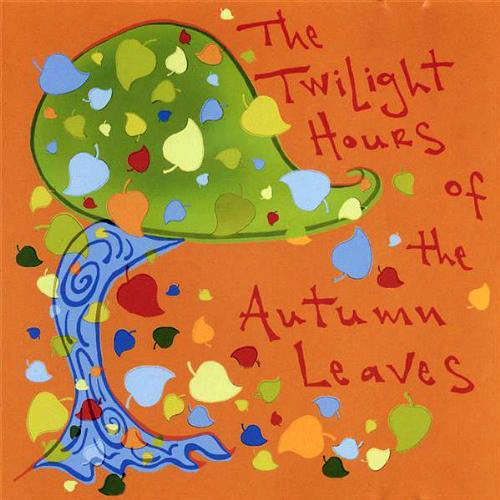
The Autumn Leaves-The Twilight Hours of the Autumn Leaves

Almost five years after their sparkling debut “Treats and Treasures,” it was great to hear (through the Radio Rumpus Room archives) that the Minneapolis band had not fallen to the forest floor. During those five (deceivingly dormant) years the band has branched off into new and natural sonic directions--while still thankfully rooted in the ‘60s sounds and aesthetics. This album opens up with the ominous and departing “Night of the UFO” which evokes the feeling of being in an iced-over airplane cutting through the blackness over the tundra and frozen lakes of Minnesota.  By the second song, the flickering cabin lights and flangers are squelched and direction is found landing the plane in the ba, la, la sunny West Coast dawn.  Jeaneen Gauthier’s yin backing harmonies arrive and swirl with the yang lead vocals of David Beckey—instantly making this one warm and inviting record.

Gauthier’s bobbing harmonies echo somewhere between the daybreak rays of Wendy & Bonnie and the dusky ones of  Stereolab.  “Maria’s Hat” is told with Davies detachment strung and stung at moments by Electric Prunes guitars and effects.  An autoharp opens up the gate to “Morning” with Beckey playing Lee Hazlewood while guest vocalist Lori Wray wears the boots of Nancy Sinatra and comes off sounding like Sandy Denny. Before the autoharp closes off the song, a slanting bridge connects the number to an exquisite baroque guitar solo.  A Hammond organ makes “Seaside Symphony” bounce and bump like the silver ball off the rubber bumpers of a pinball machine while the abundant harmonies suspend the song like an air hockey puck. Next, a cascading and circular guitar riff introduces “The Light Brigade of Fireflies” like it’s from the same distant shores as the Del-Fi rarity “Things Will Work Out Fine” by Beauregard Ajax.

Lastly, the elusive perfect day (that Lou Reed has even experienced) begins to fade into evening as “Stars in the Snow” begin to appear. Musically, “Stars in the Snow” holds onto some Notorious Byrd Brothers railings before reaching a starburst overlook of harmonies and the conclusion that life can be grand sometimes.  What can be played in the background as a short album echoing moments of the Paisley underground, the Church, R.E.M., Legendary Jim Ruiz Group, Brasil ’66, Stereolab, the Feelies, Yo La Tengo, High Llamas and Beachwood Sparks takes on a different glow when played front and center.  In the clearing, this is one sophisticated song-cycle naturally extending to where they have not gone before—all while still proudly displaying its sixties-tinged vibrant hues!


The Resonars-Lunar Kit

After four years, the Resonars have emerged from their Coma Cave Studios, burrowed somewhere in the cacti-strewn mountains surrounding Tucson, with an album that shines like a molten gold star on the Arizona state flag.  Like on their previous album “Bright and Dark,” “Lunar Kit” starts down the previous trails blazed by the Hollies, the Byrds and Love before veering off into a foothill neighborhood somewhere between the charming pop neighbors of the Blow Pops, Rock Four and Zumpano and out-of-their-heads hoods like the Loons, the Lears and Outrageous Cherry.  “Why Does it Have to be so Hard” proclaims some Electric Prunes albums have been playing up in the their mountain hideaway.  “She’s in Love with Her,” and “Flood Lamp Eyes,” could be beaming from radio ridge atop Mt. Lemmon—if the radio conglomerates ever looked back to history or beyond their shortsighted restrained formats and playlists (or if Little Steven replaces his batteries in his garage door opener).  The band really takes flight when they fasten their jet stream harmonies to the coiling and circling jangling guitars a la the Byrds on “Lunar Kit” and “Way Way Way Way Out.” The only wrong turn the band takes is “Little Spoiled Baby” which sounds like the band accidentally wandered into an overtly bad college bar and had to play some late-night wank blues before being allowed back out with their lives and instruments intact.   Before taking a cosmic rough ride back to the mountains, the Resonars address such earthly concerns as making it through the day and uncertain relationships with some sage-like lyrics submerged in a warm tube glow production.  The Resonars on “Lunar Kit” have once again bridged the summits of the mid-sixties sounds to an elevated place in the now.  Moreover, this still climbing band has opened up additional backcountry routes and magic hallows for listeners to discover and explore on & off their musical maps.