Friday, January 19, 2024

Human Switchboard-Who's Landing in My Hangar?


For some reason, Human Switchboard has eluded me in that I had not previously heard their music until 2024. Despite reading good things about them, I was somehow under the impression they were much more of a new wave synth rock outfit that played with a cold detachment...like a more arty Human League or a more melodic Human Sexual Response. I recently happened upon their first and only album Who's Landing in My Hangar? in a stack of donated records that actually included reissued White Light/White Heat by the Velvet Underground and Captain Beefheart’s Safe As Milk. Their prominent use of the Fafisa struck me hard and fast like hearing live Modern Lovers for the first time on Precise Modern Lovers Order. Not only present were the Lou Reed-ish vocals that reminded me also of those of Brother JT from the Original Sins, but also the most welcomed counterbalancing female vocals in the realm between Maureen Tucker and Chrissie Hynde. I also thought they were born and bred in the skyscraper canyons of New York City and shared sidewalks with Warhol. While they made their waves on the live front both opening for the likes of Alex Chilton and headlining in the New York City area (e.g.., CBGB’s Danceteria, Hurrah, Maxwell’s, Max’s Kansas City, Peppermint Lounge) their time spent growing up and living in industrial Northeast Ohio and snowy Syracuse were just as much an integral influence upon their sound. In their case, they embodied a good type of scrappy Midwestern resourcefulness coupled with the fortitude to make it happen against the prevailing headwinds. Overall, they generated a record that both reflects and transcends their era and continues to endure.

Worth the Excitement

Who's Landing in My Hangar? displays not only their vast versatility, but also their command to cast moods across the record, along with expressing a spillway of emotions within the songs themselves.  While their sound touches upon street rock, art punk, soul, garage and power-pop, they are ultimately singular, complex and uncategorizable. In other words, despite the genre hopscotching, they retained their consistent character across their recordings.

From the Other Music documentary
Another View
Most of all, they drew from the depths of the Velvet Underground and made an exalted sound of their own that connected to the stripped down, yet not thin or threadbare essence that I frequently value in music. Behind the wall of guitars and brimming keyboards, their rhythm section also exhibited the push-and-pull of the early Talking Heads. 

Who Put the Bomp?
Additionally, Human Switchboard appeared on the 1979 Bomp compilation Waves (An Anthology Of New Music Vol.1) and reminded me of being on a similar wavelength of what the Last were doing on their second album Look Again when Vitus Matare’s Farfisa keyboards rose to the forefront. Perhaps only Seymour Stein could match Bomp’s Greg Shaw when it came to prospecting powerful and lasting pop during the ‘70s. 

Myrna Marcarian (keyboards) & Bob Pfeifer (guitar)

Complementary Contrasts
One of their innate abilities was their ability to make discontent flow seemingly. This particular ability could be said to be the highest fulfillment of the promise of the new wave movement. Behind this musical dichotomy are the dueling identities of Myrna Marcarian and Robert Pfeifer. Combinations of absence/presence, straightforwardness/circuitousness and clarity/dissonance are some of the dynamics at play. It works like the epiphany when an art teacher imparts the concept of negative space and the physical and spiritual world momentarily snaps into place.


Urban Core
Leading off is the majestic “(Say No to) Saturday’s Girl” that is almost a response song to Blondie’s “Sunday Girl” mixed in with some Lulu and Lesley Gore loveliness. The frantic “Who’s Landing In My Hangar?” features Marcarian’s pronounced organ stabbing in a good way as she takes it to the edge against the rush of Pfeifer’s “New York Subway” spiraling guitar. “In This Town” is their Lee Hazlewood and Nancy Sinatra moment, albeit with lyrics expressing the cold indifference of the city. Further, their songs retain their insurgency, while capturing the ominous feelings of an unraveling New York and the bleak drabness of Cleveland of the time. To start side 2, Marcarian steps back up to take lead vocals on “I Can Walk Alone.” The sweeping song is a personal manifesto and declaration of fortitude set to an indelible melody.
 

Despite all the Computations
In retrospect, the full focus should have been on Myrna Marcarian as she co-composed their two best standalone songs ”(Say No to) Saturday Girl” and “I Can Walk Alone.” However, to fully appreciate the light, one must obviously have contrast with the darkness. While “Don’t Follow Me Home” does hinge to the Doors a little too closely, it does resolve with sweetness and light courtesy of countervailing backing vocals from Marcarian. The jaunty “Book on Looks” tilts towards the superrock of the Fleshtones.  Pfeifer continues to deliver his confessionals and character studies with deadpan vocals that hover between art skronk, bursts of squalling sax and perpetual motion to where the light breaks.

Casting Their Spell

Live video footage shows their conviction and compassion for what they did as Myrna Marcarian is beyond convincing with her strident vocals and arresting keyboard playing. She is indeed a colorful focal point who brought in an advanced pop awareness and humane presence that clashed and converged with the street level sensibility of Bob and the sparks and shards flying off his guitar.  He certainly knew his way around the guitar and the interplay with Marcarian’s Farfisa organ is an essential element to their amalgamated sound. Live footage also reveals drummer Ron Metz played in a similar rangy fashion as John Dugan of Chisel.

Future Shock
Their sound did get glossier as the ‘80s ensued and 1983 Polydor demos revealed somebody (that is John Stainze) was trying to possibly shine them up to be an American answer to Culture Club. (For the record, I do enjoy Culture Club.) Still, “A Lot Of Things” is an all-around captivating pop song that benefits from the studio polish as well as being reminiscent of the Bangles at their best. On these later recordings, Pfifers’ quavering voice goes less Lou Reed and more in the direction of solo Mick Jagger or solo David Johansen. Your mileage may vary as some listeners do indeed enjoy this late phase in which Marcarian’s signature Farfisa sound is replaced by a Korg.


Ripple Effect

The 1981 album caught them at the peak of powers in a run that spanned from 1977 to 1984. Be sure to check out some of their compelling early garagey material that appeared on Who's Landing in My Hangar? Anthology 1977-1984 CD from 2011. The slinky “I Gotta Know” and “San Francisco Nights” deserve special mention as the former features Myrna on the glockenspiel and connects Girl Group pop to Paul Revere & the Raiders, while the latter is a Robert Pfeifer standout inspired by the Pickwick Poet Lou Reed.  
Making the Connection They were also the little band that got raved about by big acts like Lenny Kaye, Elvis Costello, the Beastie Boys, and Kurt Cobain (how did he hear so many records in his short 27 years?). Their sound would go on to influence not only the Feelies, Yo La Tengo and indie-popsters like Saturday Looks Good to Me and Lewsberg, but also the multitudes of garage bands now treated with indifference like the Kent 3. Living up to the promise of new wave is what sets this group and record apart from so many others. Consequently, Who's Landing in My Hangar? will reveal itself to the listener in its own time-even if it takes 42 years.
Ron Metz (drums), Myrna Marcarian (keyboards) & Bob Pfifer (guitar)

Tuesday, December 26, 2023

Favorites of 2023


 1. Cut Worms-Cut Worms

3. The Feelies-Some Kinda Love
Performing the Music of The Velvet Underground

4. Uni Boys-Buy This Now!

5. Logan Ledger-Golden State

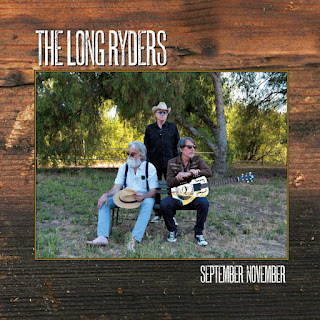
7. The Long Ryders-September November

8. The Wrong Society-Down With

Reissues & Collections
2. Astrud Gilberto-Now

Sunday, December 17, 2023

Doré L.A. Soul Sides / Doré L.A. Soul Sides 2

The rise of the Doré label coincided with Los Angeles’ ascent as an epicenter in the U.S. recording industry. Along with Era, Del-Fi, GNP Crescendo, Dot, Specialty and Imperial, Doré was part of the scrappy, enterprising and vibrant Los Angeles independent rock ‘n’ roll scene before the major labels (RCA Victor, Columbia, Capitol, Warner Bros.) became truly established and entrenched on the West Coast. 

Lewis Bedell’s Doré Records started as a subsidiary of Era Records in 1958. In the shadows of the Capitol Records tower, Doré operated in the heart of Hollywood at Sunset & Vine. In its early stages, the label was known for its numerous pop, doo wop and novelty flops. However, a fortuitous turn of events occurred with the arrival of Phil Spector with his group the Teddy Bears to the label. “To Know Him is to Love Him” was Spector’s breakthrough that went on to become a worldwide hit and an enduring classic.  Doré was also the launchpad label for Jan & Dean. In addition, both Lew Adler (Dunhill & Ode Records) and Herb Albert (A&M Records) began their legendary music industry careers at Doré. By the mid-sixties, Lew had the foresight to detect that soul music was the only style that could withstand the onslaught of the British Invasion and the Beatles. 

Lew Bedell-1969

The collection opens with the lush and lavish “It Only Hurts for a Little While” by the Whispers, which was recorded at Gold Star Studios with the booming sonics bolstered by such session giants as Hal Blaine, Tommy Tedesco and Jules Wechter. “Baby’s Gone Away” by the Superbs features Eleanor Greene on lead vocals, who would later become known as Eleanor May after her marriage to Los Angeles Angels baseball pitcher Rudy May. Sweet, smooth and spacious vocal harmonies come to the fore on this 1965 single. Eleanor was also involved with the Shade of Jade whose ”Why Does It Feel So Right (Doing Wrong)” sounds like it should have been a 1968 hit as well as almost foreshadowing 1971’s “Mr. Big Stuff” by Jean Knight.

“Family Man” by Slim & the Twilight might be a blatant rip off of “Mother-In-Law” by the Ernie-K-Doe, but it’s also from the pen of Russ Regan who had a legendary career in the music industry starting in promotions with Motown before later presiding over Uni Records. “Family Man” would also have been an apt cover in the age of Peter Zaremba's Love Delegation.


The Superbs appear again with “On a Day When It's Raining.” It’s an easy going atmospheric record that showcases their effervescent vocal group harmony. The Natural Resources were sort of a Doré supergroup and also the label’s entry in the domain of the late ‘60s psychedelic pop-soul to compete with the likes of the 5th Dimension, Friends of Distinction, Rotary Connection. In the early ‘70s, the Natural Resources would record under the name of Natural Resources Unpolluted with a sound that went deeper into the funk a la Sly Stone & the Family Stone. 

Pinnacles of Mid-Sixties Soul The liner notes reveal “The Winds Kept Laughing“ by Betty and the Chevelles was augmented by members of the Cascades (of "Rhythm of the Falling Rain” fame). It starts off guitar driven and ramshackle before a surprise turn into sweeping 1964 production pop with a musical bed that evokes “The Lonely Surfer” by Jack Nitzsche from the previous year. The Vel-Vettes’ dramatic 1966 number “You Really Never Know Until It’s Over” follows and is a charming example of the late girl-group sound on the subtle, yet soulful side.


“Gone With the Wind Is My Love” by Rita and the Tiaras contains all the de rigueur elements to make it a classic of the Northern Soul scene. The belting vocals of jazz singer Rita Graham combined with a captivating backing track by the Tiaras lifts this one over the top. Little Johnny Hamilton & the Creators’ “Oh How I Love You” is another stomper blaring with horns and bursting with building energy. In my imagination, I can also hear this covered by the Action and ? and the Mysterians. Further, prepare yourself for an instrumental break on par with Ramsey Lewis.


I was surprised that I hadn't previously heard “We Together Baby” by Smokey & the Bears until this compilation. This thrilling 1967 instrumental is a direct lift of “Louie Louie” blended with “Soul Finger” by the Bar-Kays to whip up an entirely new creation. Hearing the yearning “I Want You” with its spare guitar grandeur by Dee Torres on WFMU’s Cool Blue Flame is what initially drew me to further explore the Doré Records story beyond my Jan & Dean records. The timeless, mysterious and otherworldly song defies categorisation, while also aptly described on YouTube as an “excellent barrio ballad.” The glimmering guitar triplets flicker like candles over swells of organ to cast a sublime atmosphere. 


“I Cry Only Once a Day Now” by the Puffs is a 1966 update of a 1962 Lew Bedell composition and is done in classic girl-group fashion. The Superbs continue their role as soft soul serenaders on the second volume with “Goddess of Love.”  Bobby Swayne handles the lead vocals on this sunlit soul-pop crossover.  


While Doré’s main focus was decidedly on the soul side during the ‘60s, it surprisingly also released some garage & psychedelic records in the mid to late ‘60s.  Records from this surprising phase can be heard on the Blow My Mind! The Doré-Era-Mira Punk and Psych Legacy compilation. By the ‘70s, Dore was primarily known as a comedy label and in a way it was a return to form as Lew Bendell started in the entertainment industry as a stand-up comedian. Comedy albums by Hudson & Landy are easy to catch in the used bargain bins here in the West. I bought Hangin’ in There for a buck because it was supposedly recorded at the Pomona National Golf and Country Club. I ended up releasing it back to Goodwill as their '70s humor (which dates quickly) did not do it for me.  


Lew Bedell is said to be one of the good guys in the recording industry of the mid-century. He was willing to give musical aspirants a chance to transcend the quotidian and possibly achieve their artistic dreams. Bedell did indeed create a conducive atmosphere for the many who recorded for Doré. These records endure today because they express the wide-open possibilities of Los Angeles. Additionaly, they retain a gritty street level and small label essence now championed by archival labels like Now-Again and Numero Group and embraced by subsequent generations of listeners. These two volumes showcase the remarkable range of the label’s soul releases. Most of all, these records are still breaking through like the sun over the California coast.

The Creators from Compton who backed Little Johnny Hamilton

Monday, November 13, 2023

Shirley Ellis-Sugar, Let's Shing-A-Ling / Soul Time With Shirley Ellis


While best known for her playground diddy, “The Name Game,” which took on a life of its own and made her a household name for a brief 1965 moment, Shirley had an extensive and wide-ranging career that stretched from 1954 to 1968.  Before leaving the music industry, the self-taught and unsung musician left on a strong note with this overlooked, but culminating 1967 Columbia album that put an exclamation mark on her career.


The opening number “Sugar, Let’s Shing-A-Ling” prompts the thought that as a dance, the shing-a-ling was probably not well known outside of discotheques and gyms of Northeast cities, until the Human Beinz mentioned it in their 1967 update of the Isley Brothers’  “Nobody But Me.” Following this grand entrance, is the swaying sweet soul of “Back Track” which was co-composed by fellow Columbia Records labelmate (at that time) Lou Christie


Her powerful composition “Soul Time” will get you right back on the dance floor and as can be predicted, it’s an enduring classic on the Northern Soul scene. “Soul Time” would also later be reworked by Madeline Bell, just a few months after Shriley’s release. It was also covered in 1968 by the Mystics-Hong Kong’s only ‘60s soul group comprised of musicians of Portuguese and Cantonese descent! While “Soul Time” only reached #67 in the U.S., Filipinos recognized the record has what it takes and more and it went all the way to #4 in the Philippines. 


French EP featuring the photography of Sandy Speiser

The album features stunning and striking photography from Sandy Speiser-an in-house photographer for Columbia Records who warrants further investigation. Also glaring, are the uncredited studio musicians and backing singers whose contributions are lost to the mysteries of history or until the surfacing of recording sessions contracts. Overall, contextual information is scant beyond the fact the album was produced & arranged by Charlie Calilleo. (On a side note, when Shirley performed live at New York’s Basin Street East in 1965, she was backed by Mitch Ryder’s Detroit Wheels who were called out for not knowing her material by Billboard’s Herb Wood in a live review.)


Jet Magazine-June 15, 1967

It might seem she ventured a little away from her stock-in-trade pop soul sounds on this album, however Ellis was always adventurous and not afraid to cross genres. The beauty from the Bronx first started singing with the jazz-calypso combo the Metronomes in 1954. A decade later, she realized her first hit with the unvarnished “The Nitty Gritty,” that successfully employed crowd sounds effects like “Fingertips-Part 2” by Little Stevie Wonder. George Harrison was said to be a fan of this live-wire record and it was later covered by the Hollies. She would follow by recording a dashing and Latin-inflected cover of “Stardust.” Yes, this album is a slight shift in direction and sophisticated turn towards the supper club scene, but it also showcases her aforementioned versatility. “How Lonely is Lonely” certainly spotlights Ellis' magnetic and compelling qualities that would certainly translate to 1966 Atlantic City. The adept singer also delivers a lush and lavish rendition of the irresistible 1965 Barbara Mason hit “ Yes, I’m Ready.” “Music and Memories” has been compared to Amy Winehouse. Their vocals do bear an uncanny resemblance as astutely pointed out by writer Harry Young. It’s also a refined work of production pop enhanced by female backing vocals and moving orchestration. Fittingly, the album fittingly closes on one her compositions “To Be or Not to Be.” She hits her full stride as both a composer and vocalist on this lovely song that works on all levels.

Let's Shing-A-Ling / Soul Time With Shirley Ellis was lost in the tidal wave of 1967 releases as it was far from the vanguard, but it has aged well to be a solid listen nonetheless. While it may have been only 2 calendar years between “The Name Game” and these recordings, there were seemingly decades of musical and technical changes packed between 1965 and 1967. Her third and final album does reflect some of these transformations and her name alone calls for listening for those who have only heard her big 3 oldies radio hits "The Nitty Gritty,” “The Clapping Song,” and “The Name Game.” Those who wish to further explore these additional aspects and dimensions, will encounter a compelling 30 minutes of Soul Time.

 
Photograph by Sandy Speiser

Tuesday, October 10, 2023

Freezing Hands-Empty the Tank


Current Phase If you need to get up to speed with Freezing Hands, now’s the time as the wheels are already spinning on Empty the Tank. Their fourth proper album continues their course, while also capturing their forward momentum and revealing new factets. Like the lightning quick album releases of the mid-sixties, this has surprisingly arrived shortly after 2022’s It Was a Good Run. With its similar themes, constant through-lines and overall continuity, Empty the Tank could even be considered conceptually as a Double Album, in the grand ‘70s tradition, when paired with its immediate predecessor. They have definitely honed their sound and once again found their distinctive spot between pop, punk and rock 'n’ roll. In addition to delivering memorable hooks, melodies and harmonies last heard in the late ‘70s power-pop heyday of the Nerves, 20/20 and the Beat, they also venture into '60s pastoral pop that somehow connects Tucson’s sunny Reid Park and parking lots to the Zombies’ "Beechwood Park" through the mists of the Kinks’ “Village Green.”

Giving the Youngsters a Run for their Money Uni Boys and the Reflectors from Southern California and the Whiffs from Kansas City are currently leading power-pop into Century 21. All of these combos feature 1979-ish radio-ready melodies and a compressed sound that is laced as tight as Shoes. In contrast, Freezing Hands are able to add a spaciousness in their sound made by lived experience, years of work and exposure to a wider range of influences. Musically, their harmonies are able to give their sound an expansiveness that matches their panoramic Tucson surroundings. On the production side, their latest is once again presented in suitable mid-fi stereo and bears the production trademarks of Midtown Island Studio. 

Dateland Records Recording Stars

They project a rare symmetry in their sound. However, the abundant hooks, harmonies and melodies bely and contrast with the lyrics. Underneath the hood are daring, intricate and integrated lyrics, steeped in the Kinksian tradition and not afraid of addressing the state of oneself, Tucson and the world.  Moreover, the lyrics do not expect, nor receive any answers.


"When We Get to Tucson You'll See Why" ("Thumbelina" by the Pretenders) Perhaps some of their sonic vastness and lyrical depth can be attributed to the symbiotic relationship between Tucson and the band. The band is imbued with a certain Tucson-ness, but it’s not provincial or a yearning to move to the costly coast. It’s a certain openness known by those who have lived there and dismissed by those who don’t know, don’t value or don’t care. There is indeed something undefinable in the desert air and its live and let live ethos that can spur creative pursuits. Reflecting the unpredictable atmosphere of Tucson itself, Travis writes lyrical assemblages with straightforward, skewed and serpentine perspectives all clashing, converging and co-existing within the hooks and harmonies. Overall, there is a magnetic pull that encourages further exploration and engagement way beyond the usual cycle of point, click, skip ad, and scroll on.

Moving Targets

As previously mentioned, there’s an even stronger slant into the Kinks as heard on side one’s “Sunny-Free” and “For the Taken.” Further, they offer their own distinctive and dramatic take by applying sardonic character sketches and studies to their own locale. While the geographical settings for the bands drastically differ, their milieus overlap as Freezing Hands trade out football (soccer) for baseball, pubs for strip mall dive bars and rolling bucolic greens for parking lots, foothills and flatlands sprawling with red tile roofs. Until a recent revisit of those post-Turtles Flo & Eddie records spurred by reading Mark Volman’s recent book Happy Forever, I had not previously perceived Flo & Eddie's significant influence on Freezing Hands. It all makes sense as Ray Davies produced Turtle Soup by the Turtles.

  TONIGHT

Wax Cups” evokes both "Drivin' Around" by Raspberries and the magic feeling that can still be felt when one returns to the Pacific Coast and observes the breaking waves and feels the cool of those misty California nights. In addition, it’s also a celebration of the option to go out once again. Meanwhile, “High Diver!” expresses the anticipatory aspects of that power-pop belief in the literal and figurative TONIGHT with the appropriate levels of top-down buoyancy in the grand tradition of Raspberries and ‘70s Beach Boys with the keys adding a Cars-like gleam. The lyrics shift easily from the slapstick and satirical to the clever and contemplative before twisting back on themselves. 


Freezing Hands live at the Yucca in Tempe, AZ (March 2023)
L-R: Kevin Conklin (bass), Travis Spillers (guitar, lead vocals), Matt Rendon (drums, backing vocals) Scott Landrum (keys, backing vocals)


Inherent intuition Upon first hearing the song title announced by Travis when they played the Yucca Tap Room in Tempe last March, I thought that “I Was a Teenage Piece of Shit” was going to be an “ID Slips In” exploitative throwaway. It’s actually a reflective rumination on redeeming yourself in the universe for past harms done to others. It also actually flips the script on the usual narratives where oldsters gloat about how much they got away with in one’s youth. It concludes with the never ending quest “To Be a Much Better Human,” while musically it’s somewhat of a sweeping continuation of “Here with the Babies” from the preceding album. The song also displays their intuitive sense of combining “inside baseball” details with harmonies and relentless Stooges' “1969” inspired handclaps. Matt’s remakrable drumming in Freezing Hands recalls the great Clem Burke and the late Phil Seymour. (His propulsive, yet intricate style of beat-pop-jazz drumming has to be seen and heard live.) Overall, it’s a brave display of their growth and development and knowing when one has to take things head on or when one needs to consider approaching from other angles. 

Arrangements & Rearrangements

Concluding side one is the cheeky “Got Me a Friend” which could be a concert closer and/or slotted in the upcoming movie Peter Rabbit 3: Naughty by Nature during a festive montage. 


Most groups typically front load their albums with the uptempo numbers up on side one to make a grand entrance and grab attention.  Freezing Hands are not most groups as they work in reverse with the speediest and catchiest numbers on side two. 

Beat Boys in the Jet Age The album takes off on side two and goes from strength to strength, while prospecting similar power-pop territory as the Deathray Davies, Flop and the Lolas. “Destiny, Destiny” is total next phase new wave rock 'n' roll combining 20/20, the Taxi Boys, Greg Kihn Band with Look Sharp!-era Joe Jackson. The on-target lyrics delve into notions of changing fate in the face of the pre-ordained. “Disappearing Bug or Horse” returns them to the valley of the Dickies merging with TVT-period Guided by Voices. Besides the aforementioned American influences, there are also hints of UK mod revival sounds like the Look UK and the Lambrettas-especially when those bands incorporated Broadway showtunes influence like the Look UK covering “Tonight” from West Side Story.


Topsy-Turvy Self-referential songs are tricky as they can work or they can fall flat. Thankfully “My Guitar” is more Young Fresh Fellows than goofy Too Much Joy. “Taxiing” raises the question: “Is that a riveting AC/DC riff by way of Hoodoo Gurus?” "Friend-O" unfolds as a rollicking barroom morality play and has the galloping kick  of “Kodachrome” by Paul Simon.


The enthralling “Nothin’ in the Tank” is this album’s tour de force. The song is already incorporated in their live set and immediately stood out at their aforementioned rare live show at the Yucca in Tempe last March. The “canvas sneakers power-pop” of the Nerves and the Beat arrives on the forefront. It’s a mini-masterpiece with layers of whirling vocals and cascading melodies before finishing in a round.

Nothing in Reserve Under constantly changing circumstances, Freezing Hands have remained true to their ambitious and distinctive approach of spanning musical decades to advance their harmonic, melodic and enduring sound of their own making. All this is made possible by their resolute commitment to rehearsals, recordings and live shows on top of the push & pull of workaday life. In a way, their undeterred pursuit to create their own captivating sound and realize their visions in the face of everything else are also major characteristics of the Old Pueblo of Tucson itself.

Freezing Hands-photo by Ed Arnaud
L-R: Kevin Conklin (bass), Travis Spillers (guitar, lead vocals), Matt Rendon (drums, backing vocals) Scott Landrum (keys, backing vocals)