Here is evidence that exciting rock ‘n’ roll can not only come from the most unlikely of places (Athens, Ohio), but also be recorded in this century (2010 to be exact). Perhaps it was the humdrum and indeterminate band name that prevented this group from ever crossing my radar. The four-piece not only had the Memphis sound down, namely Reigning Sound, but they accomplished it without a bass player. While previous releases had them leaning in the direction of more rough & tumble rock ‘n’ roll in the realm of the Pagans, New Bomb Turks, and the swaggering seventies Stones, Liar, Liar presents them successfully expanding their sound out to the ‘70s melodic pop ‘n’ roll regions of the Real Kids and the Beat. With its prominent whirling keyboards, soulful vocal delivery and pop sensibilities, it was this third and final one on Germany’s Alien Snatch Records that proved to be the charm. Initial listens had me pulling a stockpile of expressions out of storage and Lyres records off the shelf. On “Bad Lie,” they proceed to burst out of the gate, quickly work up a storm and fire on all cylinders. The little vocal inflections at the end of “Sarah” and interspersed throughout “Looking at You” initially threw me for a loop as I could not quite place where I heard them before, then I recalled they were probably inspired by a David Byrne or David Johansen scat. The incendiary “Losin’” is testimony that they were well attuned to a long gone past which allowed them to skirt the transient hipster trappings of their time, while successfully bringing in street-level characters like “Long Tall Sally” into the darkened alleys of the 21st century. The surging & shuffling minimalism of the Subsonics informs “Ambulance” which arrives on the scene "where the people were dancin’ in street/where the music never sounded so sweet.” The party rages on with “Looking At You” before heading back to the Reigning Sound of “Stick Around” that is unadulterated, straightforward and brimming as tomorrow morning’s black chicory coffee. “Chasin’ UFOs” has them exploring the murky smear of night through the brambles with keyboards that reach a boil like a bubbling cauldron. Lastly, “I Wanna Know” unspools with the radio “ahn” somewhere between “Heart” by the Remains and Modern Lovers' “Roadrunner." Bucking the trends, they understood what they were good at and they worked feverishly within that framework. This rudimentary intuition is at the essence of rock ‘n’ roll and allowed the soulful quartet to connect the sound and spark of the past to the chain reaction of the present.
I first encountered the Red Birds when I came across their colorful picture sleeve 45 of “Kami Fusen” (Paper Balloon) in their native land at a flea market surrounding the Tō-ji temple in Kyoto. Although they appear on the vibrant cover of this 1973 release like the ultimate Japanese sunshine pop band, the song starts as a slow burner before turning an unforeseen corner of chugging guitar chords before their co-ed harmonies interlock and lift the song to the stratosphere. Akai Tori (the Red Birds) were pretty prolific in their short span that ran from 1969 to 1974. Of their 10 albums released in five years, Inori (Prayer) surfaced to be the most intriguing in spots, yet bewildering as a whole. In general, it’s not dependent on MOR covers of boring Western hits (e.g.”You’ve Got a Friend,” “Bridge Over Troubled Water”) or the more cloy trappings of early ‘70s soft rock that time stamp their other albums. The album starts especially strong with the versatile group quickly establishing a countervailing direction from their previous efforts. “The World of Nothingness-Birth” could be best described as an approximation of taiko in space before segueing into the curvilinear lushness of “Awakening.” which sounds like Cold and Bouncy-era High Llamas warmed by “Sun Goddess” from Ramsey Lewis. Elsewhere, “Malibu” casts the vibe of prime Sergio Mendes & Brasil '66. “Niji Otaou” ("Sing a Rainbow") features Junko Yamamoto's pleasant female vocals which are reminiscent of those later heard on the Pen Friend Club albums. Despite the enchantment found in some of these individual songs, the album frequently goes off the tracks with missteps like the old-timey silliness of “Rakuda-chan.” In other moments, its momentum is thwarted by plodding and scorched out filler material like “Hoshi” and ”Ishi." “Kioku.” ("Memory") reprises the space-age waterbed sound of “Awakening” as a male voice recites a monologue that contains some sort of The World Without Us contemplative message by way of Rod McKuen. The lofty a cappella choral title track of “Inori” ("Prayer") fittingly concludes this stylistically incongruent album. This Handel composition is once again as unanticipated as all the preceding songs that are only held together by some loose conceptional ecological theme.
While there have been several proposals, including Japanese offers, to reissue this 1980 ahead-of-its-time recording, none have been accepted by its creator Gregoria Paniagua until this year of years. This baroque hoedown has been remastered and restored to its full glory by the always interesting Madrid-based independent Munster Records. The instrumental record immediately casts a folkloric atmosphere while further listens will reveal visionary approaches along with a playful sense of both voyage and discovery. On the whole, it sees around corners and flows along with a continuity like Van Dyke Parks’ Song Cycle, the 2011 reclamation of the Beach Boys’ Smile, Eiichi Ohtaki's A Long Vacation, or Khyber Mail by Sohail Rana.
Kraut Folk & Celtic Disco
The term Kraut folk has been thrown around this record and the opening song “Dragon,” surging forward with a Motorik rhythm, comes into direct alignment with the neologism. After an interlude of breakwater and seagulls, “Plancton'' washes ashore under a festive and fanciful atmosphere with its expansive employment of violas. The song is also adorned with everything and the kitchen sink including the actual musical use of a zucchini scraper! Cutting through the kitchen counter clutter, “Kyrie Nicolai” is playful, effervescent, and evokes prancing through a medieval village. The lavishly melodic “Ciao” features perfectly placed beats and unexpected accompaniments like an Egyptian sistrum which reinforce and enhance the composition.
“Spaghetti Alla Milanese'' with its insistent beat merges the record back on the imaginary musical Autobahn only to be sidetracked to regions ruled by the bombo. “Preludio Balsamico Y Chacona'' sounds closer to Brazilian Tropicália in that it's an aural equivalent of a Henri Rousseau painting than the unclassifiable Iberian sounds which predominate the record. The title track “Batiscafo” is dazzling Celtic disco reminiscence of the High Llamas. It would come as no surprise if Sean O'Hagan of the High Llamas has an original issue of "Batiscafo" in his extensive record collection.
Ambitious & Adventurous
With melodies so instantly captivating, it’s difficult to grasp how the individual instruments and found sound sources fit together so seamlessly to create the overall multidimensional sonic atmosphere. Each listen will reveal there is much beyond its curvilinear edges as striking details and intricacies emerge. At times, it even seems like the strong melodies are built on sands as they begin to shape shift like the amorphous clouds depending on the context, conditions and situations. “Batiscafo” is a welcomed and sweeping work of art and contrast to this vicious 2020 world. On another level, this vibrant record is an expression of Paniagua’s innate musicality and ability to intertwine disparate elements together into a comprehensive and unified whole. Connecting and expressing both subtle undercurrents and panoramic perspectives is always a challenging, but a worthwhile pursuit regardless of year.
It was one of those musical moments where everything coalesced to make the world whole again. It was a time when a song presented a moment of balance and an overall sense of tranquility-exactly when it was needed.
At first and from a distance, I thought I was hearing Astrud Gilberto’s cover of “Never My Love” from her 1968 Windy album. To my surprise, it was Isobel Campbell’s interpretation of the Association’s 1967 hit record. I then recalled that Scottish singer-songwriter Isobel Campbell was slated to release an album here in upended 2020. Further investigation revealed that her 5th solo album actually arrived way back in January and this cover was culled from Voices in the Sky, a bonus EP comprised mostly of covers. Surprisingly, “Never My Love” was never a hit in the UK and for some reason the Association’s layered harmonic sound never caught on in the UK like the Beach Boys. It could be postulated that Campbell’s move from Scotland to Los Angeles might have spurred this cover of a cover. Besides being tailor made for Campbell, the relatively lengthy glockenspiel solo on the outro makes her rendition truly distinctive.
Even though it has been 14 years, you can depend on Campbell to deliver the finest in spare, hushed and understated 21-century sounds in the tradition of Marianne Faithfull and Claudine Longet recordings from the ‘60s. On one level, these are the unintentional sounds of a spring & summer that never happened-bypassing a cruel Southern California bummer that has seen a historic mission torched on the forefront and a city surrounded by raging wildfires.
Chris Szczech, the Los Angeles-based recording engineer and mixer at Sonora Recorders, supplies the studio, frame & canvas for Campbell to layer her trademark sound. The lite psychedelia of “Rainbow” leans in the adventurous direction of Rita Lee while incorporating a gamelan which makes this song stand out. Overall, she delivers a smooth, breezy and atmospheric listen, however a deeper immersion will reveal some of the factors which have truly knocked the world out of balance. For instance, the loping “Heart of it All” seemingly captures the spirit of the open country in the chorus, but the verses disclose the obvious incompatibility of our ways with all the surrounding beauty. “Hey World” reminds me of “Hey, Love” by the Coronados and the shuffling eclecticism of Jonathan Richman before the backing gospel chorus kicks in. “There is No Other” is both a paean to the city and a sonic document of her physical and stylistic transition from UK pastoral folk to amorphous Californian adult contemporary. Her attempts to reconcile the contrasting forces of dark and light elevate her music to merely being shelved as Whole Foods background sound. Los Angeles is imbued in the grooves with lyrical indentations which act as an assessment of city far from the optimism seen and heard in Jackie DeShannon's LA. Still, Campbell does taps right into its atmosphere of all things under the sun that make it unlike any place in the world.
Despite her noble attempts to raise needed awareness of the escalating numbers of those experiencing homelessness, “Boulevard” stretches on too long like one of those drab moments of late ‘90s R.E.M. album filler. In these lackluster moments, she could use a touch of the fluidity heard on albums like Kadhja Bonet’s 2018 album Childqueen. Still it’s good to hear these beguiling, relatively sparsely adorned, and smooth songs that generally succeed. Like those two albums from Those Pretty Wrongs, this album is also instilled with the hope, promise and costs of the golden dream. During this summer of reckoning and wreckage “There is No Other” is a transitional release, while “Never My Love” is a transcendent moment finding a way towards a better world.
In the grand tradition of the Japanese preserving and celebrating aspects of vanished Americana, the Hot Shots formed in 1995. They were first embraced by the West Coast swing music scene which was still reelin’ in 1997 when the Hot Shots were ascending their first American stages in California. After a few singles and the departure of co-founder Rockin' Enocky, they returned to the U.S. in late 1998 to record this debut album at Ecco-Fonic Studio in Los Angeles with Deke Dickerson. Released in 1999, “Wise Up, Watch Out” presents a sound that smartly avoids the trampled road of over-the-top rockabilly and ventures out to the rural routes of country-tinged rock ‘n’roll, honky tonk, rhythm & blues along with some Latin flair. The one and only Chie Kodama sets the tone on her acoustic guitar and her vocals makes each song shine brightly, while joyfully expressing her innate love and conviction for this music. “Pretend” co-written by Chie along with bass player Hiroshi Shishikura gets things rolling in a refreshing manner with a slightly bucking rhythm and twangy fills provided by Yuichiro Matsushita. “Tell Me Baby” is an understated lovely ‘50s pop number composed by Chie and capped off by her declarations of “I Wanna Know Right Now/”I Wanna Know Right Now” in sincere Joey Ramone style. Hank Cochran’s “A Little Bitty Tear” is delivered by way of Wanda Jackson with some impressive fretwork replacing the orchestrated strings originally applied by Capitol Records to Jackson’s single. The upbeat “A New Idea On Love” is such an obscure cover that the only background information I could find was that it was probably written by Mickey Baker of the renowned and much sampled ‘50s duo Mickey and Sylvia. Clinching the matter, is detecting a “Love is Strange” guitar quote in proceedings. Furthermore, its intertwined co-ed vocals shoots this one across the starlit Western skies like one of those dashing and delightful Judy & the Loadies songs. The album closes with “Guitar Battle” where Deke Dickerson and Yuichiro Matsushita trade off runs and riffs in classic Merle Travis & Joe Maphis fashion. Deke Dickerson plays a fitting and supporting role as producer, along with providing some backing vocals and accompaniment which brings forth further dimensions to the overall sound and presentation. You couldn’t ask for a better start for a combo that thankfully is still actively performing, recording and releasing records that are each distinctive in their own vintage sounding way, while overall expanding and expressing the vast possibilities of heydays to come.
With its galvanizing wake up call of “We’re Completely the Same” Daniel Hortter delivers an opening salvo for the times on the driving “The Two of Us.” Hortter has mentioned that the song was derived from the intolerance that he and his black girlfriend faced for being in an interracial relationship at the time. Musically, this jolting and fierce song stops listeners in their tracks to be in the now with a sound similar to Rare Earth, Eric Burdon and Arthur Brown. Propelled by copious congas, “Little Woman” sweeps down like the cool Canadian air mass known as the Guess Who before spiraling into a guitar freakout. The flared-out and heavy duty "Crowd Pleaser” enters the scene with its propulsive drumming and flashes of wah-wah slotting them somewhere between Blue Cheer, Black Pearl and Deep Purple. Being such an evocative and monster song, it's surprising that "Crowd Pleaser" has not yet been tapped to be featured in a television series and/or on movie soundtrack. After all this righteous ruckus, “Never Put Away My Love For You,” surprises listeners with its softness bordering on Bee Gees wispiness. This offset sound is actually not a stretch at all as the Yellow Payges were even known to have the smooth Herman's Hermits hit “There's a Kind of Hush” in their 1968 live repertoire. Given they first made their name as the house band at The Hullabaloo on the Sunset Strip in Hollywood, versatility was their calling card and this adeptness allowed them to span several '60s crosscurrents. In their current configuration, they were able to pull off impressive live covers of Marvin Gaye and Kim Weston’s “It Takes Two” and the epic "River Deep – Mountain High,” All roads lead to their showstopper “I’m a Man/Here ‘Tis” as it demonstrates their unwavering devotion to gritty rhythm & blues and the rough & tumble influences of Bo Diddley, Yardbirds and Eric Burdon and the Animals in particular. With its vocals through a megaphone effect, primal production and Daniel Hortter on harp, “I’m a Man/Here ‘Tis” sounds either like it's from 1966 or something from a garage punk band that Crypt Records would have unleashed in 1996. This rave up builds and builds before being topped off by an incendiary drum solo pounded out by Danny Gorman. Volume 1 presents an overall hard-edged iteration of the band stamped with metallic tinges and some road wear so prevalent during the late hours of the '60s. It's almost a blessing that the standout selections contained within never became national hits as they might now be cursed by classic rock radio redundancy. Nonetheless, they more than paid their dues during the upended late '60s with the results being songs that continue to endure with a message and delivery for the ages.
Volume 1 was actually the tip of the iceberg as the band had an extensive past that stretched back to 1965 and the surf music scene of Torrance and the Sunset Strip of Hollywood, The band went on to appear with the Byrds, the Leaves, the Seeds, the Doors, Love, Buffalo Springfield, Grateful Dead, Turtles and even toured 6-months with the Beach Boys. They were all set to tour Japan in 1968 with Eric Burdon and the Animals, but things fell through. Yet, it might have been fortuitous as the Animals encountered problems with visas and the Yakuza. On a side note, Volume 1 surprisingly appeared in the Japanese record store racks upon my visit to Osaka in 2019. Upon inspection, this particular disc didn’t travel over the Pacific to reach Time Bomb Records as Big Pink Music of Korea remastered and reissued Volume 1 in 2015.
2013 L to R: Daniel Hortter, Danny Gorman (drums, the Palace Guard), Michael Rummans (bass, the Sloths), Dave Provost (guitar, Droogs, the Textones, Davie Allan & the Arrows)
The music industry probably pressed them to be the next Grass Roots, while their true direction aligned them in the direction of the Rolling Stones, the Yardbirds and R&B. In that regard, the hard working band from Torrance were one of the most commercially successful mid-sixties acts of the Long Beach/San Pedro/South Bay scene that produced the Music Machine, the Merry-Go-Round the Sons of Adam, Things to Come, Power and the adjacent Westside act the Sloths. Michael Rummans of the Sloths joined the Yellow Payges in 1967 and then again during their 2013 reformation. His topflight bass playing reminded me of Bruce Foxton of the Jam. Not settling in or on one particular style may have smudged the Yellow Payges in their and/or Uni Records’s attempts to make them a national household name. Their aptly named posthumous singles collection "Crowd Pleasers" presents a refreshing variety of songs that are stylistically diverse as AM radio's Top 40 of the time with occasional descents into the freeform FM underground. Still, being all things to all people is exhausting and possibly led to their demise.
Their first single “Never See the Good In Me” features Daniel Hortter’s almost scat like singing accompanied by some coiling sitar runs which assert their presence and attests to their adventurous approach from the start. The sweeping showdown of "Jezebel" under its Southwestern shadings is my favorite rendition I have heard thus far of this oft-covered rockabilly/garage staple. With a stinging fuzz lead riding over the galloping rhythm guitars, harmony galore and all strapped together by a bending bass "Our Time is Running Out" is their most magnificent single ride and side in their 45 rack. The Jimmy Webb inscribed "Sweet Sunshine" makes for another highlight that rises and rises on the energy of its radiant, soulful and poppy chorus. "Judge Carter"is decent horn rock a la the Buckinghams with an especially noteworthy overlapping horn outro. If "Just What I was Looking For" resembles a languorous Monkees song, it’s not a coincidence as it was written by Goffin/King who regularly lavished the Monkees with their gifts of composition. Featuring a jingle-jangle folk-pop sound and going back home theme, "Home Alone" is their great lost buried B-side. Decorated by a Hammond organ and complemented by early Cryan' Shames-ish chiming guitars, "Home Alone" (like the aforementioned “I’m a Man” on its top side) elusively avoids to sound like its release year of 1970-by five intense years! The Complete Yellow Payges Singles '67-'70 reveals so many additional sonic layers, facets and dimensions of this highly regarded and competent band, all while being extremely listenable. Their current live performances attest to their undeterred way of approaching the present moment with soul, wisdom and idealism of the mid-sixties and making the most of the opportunity to continue creating sounds that are needed and now.
Daniel Hortter in 2019 wearing the yellow blazer for the first time in 50 years.
Danny Gorman on drums.
While the records of the Exciters continue to reign supreme in England’s Northern Soul scene, the Jamaica Queens-based quartet is reduced in their native country to one-hit wonder status and soundtrack appearances. Pop music doesn’t get much more catchy and dynamic than their 1963 #4 smash hit “Tell Him” featuring the commanding and consummate voice of Brenda Reid. Her voice seemingly leaps off the 45 issued by United Artists. The dashing song, written by Bert Berns, is one of the highest peaks of the Girl Group era and borders on punk rock with its propulsive drive. Follow-ups like “He’s Got the Power” bubbled under the Top 40, but lack of chart action is by no way indicative of the quality of their enduring songs. They went on to open for the Beatles in 1964 and recorded for Roulette, Bang and Shout Records before landing on RCA Records and working with producer Larry Banks in 1969. With soul going into every direction at that time, I was curious about the approach and orientation of this record found behind an appealing front cover. “Turn Me On” and “I Don't Have To Worry (No More)” are immediately evocative of mid-sixties soul pop in their arrangements and provide a sense of continuity with their older material. Surprisingly, a few of their songs actually seem a few months to a few years ahead of their time as they are on the cusp of what would be big once the ‘60s flipped over to the ‘70s. For instance, “Fight that Feelin’” seems to prefigure 1972’s chartbuster and current TV commercial warhorse “I’ll Take You There” by the Staple Singers, while the fuzz-driven “You Don't Know What You're Missing ('Til It's Gone)” has a stutter and swing similar to what would later appear in “Mr. Big Stuff” by Jean Knight. “Always” frequently gets maligned as being too Middle of the Road and supper club schmaltzy, but its straightforward melodic beauty works for me and would sound just right flowing effortlessly along with “Precious and Few” by Climax and Heatwave’s “Always and Forever.” The highlight of the album is the kinetic “Movin’ Too Slow” as it works both as a dance floor filler and as an early anthem of women's empowerment. Granted, there are some lackluster songs (e.g., the two numbers where Herb Rooney takes lead vocals) which results in the album being uneven. However, there is enough surging energy delivered with a sense of finesse to make Caviar and Chitlins well worth exploring.
The Nuggets compilations have featured a preponderance of bands from California, Texas, New York, Illinois, Michigan and Washington and rightly so as it comes down to largely a numbers game based on population and socio-economics in the mid-sixties. Breaking Nuggets down by state also reminds me that there has never been an appearance of an Arizona group on one of the many iterations of this series. However, the case could’ve been made for the inclusion of the Grodes or the Dearly Beloved from Tucson or Phoenix’s Phil & the Frantics. In the '80s, Greg Shaw astutely amassed these mid-sixties recordings and brought this previously deeply buried Arizona music history to the surface from the Bomp!/Voxx Records offices in Burbank, CA. Shaw proceeded to introduce these regional Arizona rock 'n' roll acts to a worldwide audience by including a few tracks on his Pebbles compilation series and even giving the Grodes, the Dearly Beloved and Phil & Frantics the full album anthology treatment in the mid-'80s as part of his Rough Diamonds:The History Of Garage Band Music series.
The Sound
They could be as rousing, feral and stomping as any Pacific Northwest armory band and also etch somber, reflective, but still resolute ballads that were usually the domain of earnest beat combos who operated under the dismal and overcast skies of New England. While the mid-sixties were a time of vast musical possibilities, it is still confounding that the Zombies would cast the largest shadow on a band from Valley of the Sun. The remastering of Frantically Yours presents a bold and upfront sound with the pronounced Vox Continental keyboards rightfully placed on the forefront. The keys played by Rick Rose in the original line-up of the Frantics and Ted Harpchek in the second version of the band provide the overall characteristic of their sound while casting a moody, flickering and otherworldly atmosphere. Phil Kelsey’s idiosyncratic voice is also a major distinguishing factor. While I have a hard time placing it somewhere on the nasally continuum between Gerry Marsden of Gerry and Pacemakers and Sammy Davis Jr., it’s well suited and fittingly works in the context of their layered sound. The band was truly at a transitional phase of the mid-sixties combining the elements/sounds of the early sixties while looking around the corner to the sounds of things to come-sometimes within the space of the song itself. The closest contemporaneous comparisons would be some sort of combination of the Gestures, Butch Engle and the Styx and with an undercurrent of the Summer Sounds if we wish to go truly obscure.
The Songs
“Theme,” “I Must Run,” “Pain,” “Where Am I Running To,” and “I’ll Do It Again” all have an entrancing, transcendent and an almost liturgical quality to them. “Theme,” the backing track to “Where Am I Running To” is top notch with its descending melody, echoing drums, and ringing guitars recorded at the cavernous sounding Audio Recorders of Arizona. Their immortal "I Must Run” is a study in contrasts being in minor key, with lamenting poetic lyrics (written by Phil Kelsey and Jim Musil) that transforms the heartbreak into a crescendoing chorus before a modulation that elevates the profound song to another better realm. In addition, the organ break rates right up with the solo in “Kind of a Drag” by the Buckinghams in the pantheon of ‘60s roller rink greatness. “Pain” is their sideways approximation of “It’s Only Love” by the Beatles and comes close to the peak glory of “I Must Run” and subsequently would go on to directly inspire Jeff Conolly’s Lyres who covered it on their 1993 Happy Now...album. With guitar accents that anticipate Jefferson Airplane’s “Today” by over a year, “Till You Get What You Want” also incorporates an incessant and hypnotic Vox Continental keyboard riff that would later become the bedrock sound of ? and the Mysterians. There is also a clear emulation of Dave Clark Five’s Mike Smith vocals in Phil’s tone and phrasing.
1985-Rough Diamonds: The History Of Garage Band Music-Voxx Records
On 1985’s Rough Diamonds album, Greg Shaw devoted the majority of side 1 to their R&B-infused rock & roll which made them a top live draw. Frantically Yours places these sides right in the heart of the collection and this positioning works in contrast to their more recognized British Invasion-inspired songs that start the collection in mono and later reappear in stereo to conclude the disc. My particular favorite from the early era is their original “Give Up” as it’s sort of their slanted take on Len Berry’s “You Can’t Sit Down.” “New Orleans” most associated with Gary ”U.S.” Bonds is another standout of their earlier recordings.
1999 Bacchus Archives collection
First Line-Up of Phil and the Frantics
Bill Powell (guitar), Joe Martinez Jr. (drums), Phil Kelsey (vocals/sax) Rick Rose (keys), John Lambert (bass)
The previously unreleased “Exclusively Yours” and the buried “Whenever I’m Alone” showcase Phil Kelsey’s ability to tap into his inner Peter Noone. These two tracks flow well in the context of the overall presentation. The finest rarity in my perspective is the instrumental “I’ll Do It Again” as it has all the classic hallmarks of “I Must Run,” “Pain,” and “Theme” that set the group apart from their fierce competitors. While it might be only a backing track, it stands on its own mesmerizing merits and would be a great lead-off track on one of those Arf! Arf! compilations of psychedelic instrumentals.
John Lambert second from left, Bill Powell third from left.
Exclusive to this deluxe edition are “Laugh at Me” and “Happy Man” by Beethoven Soul which are slightly oblique ‘60s pop songs without all the treacle later lavished on by Dot Records for their 1967 long player (shown above). The band featured Bill Powell (guitar) and John Lambert (bass) who exited Phil & the Frantics right after a Dec. 31, 1965 flood which temporarily closed JD’s nightclub as they were supporting families and needed to keep working a stage each night. On this 45, Beethoven Soul’s sound has a continuity with the overall Phil & Frantics aesthetic sans the unmistakable voice of Phil Kelsey. The flood and the departing band members sent Phil scrambling to reconstitute a new version of the Frantics. Phil was sagacious as he selected two musicians from the Vibratos, Steve Dodge (guitar) and Ted Harpchek (keyboards), who had just broken up, in addition to adding Tommy Miller on bass. Before disbanding, the Vibratos were Phil & the Frantics’ major rivals and also the gold standard of Phoenix-area bands due to their vast proficiency playing and recording Beatles-esque pop.
The Second Line-Up of Phil and the Frantics
Phil Kelsey (sax), Joe Martinez Jr. (drums), Steve Dodge (harp), Ted Harpchek (keyboards), Tommy Mller (bass)
Southwestern Frontier Sound
The floorboards of the double-decker JD’s nightclub literally connected the notes of rock ‘n’ roll to country. Country was featured on the main floor while rock & roll took place downstairs in the Riverbottom Room that experienced that aforementioned flood on New Year’s eve 1965. One can imagine the booming sounds of Waylon Jennings and the Waylors seeping down through the ceiling as they were the house band on the main level 7-nights a week. Phil and the Frantics absorbed these country inflections and captured moments of confluence between country and rock 'n' roll in their sound. By circumstances and proximity, they could be said to be on the vanguard of country rock ‘n’ roll-a few moons before Nashville West (featuring future Byrds Clarence White and Gene Parsons) over in El Monte, California. Their most overtly country number “What’s Happening” is a jagged barn burning hoedown which anticipates the ‘80s college rock cow-punk movement by 20 years! Their cover of Buck Owens’ “Act Naturally” by way of the Beatles captures an early 1965 reunification between country and rock ‘n’ roll. The fact that a majority of their songs were co-produced and co-arranged by Waylon Jennings (with Jim Musil) meant jack to me when the Bacchus Archives CD was released in 1999. (I would have then mixed up Merle Haggard with Waylon.) Now, I think of it as one of the remarkable and singular musical overlaps to occur in the Southwest during the mid-sixties! Waylon’s deft hand in shaping these songs into something mysterious and ahead of their time can also be found in the ambitious and inventive arrangements which approach those heard on the New Colony Six records. It is now a point of pride that I work in the same city, Chandler, that Waylon called home for years.
Panel featured in The Tempe Sound exhibit that ran at the Tempe History Museum during 2014 & 2015
Seismic Shifts
Phil & the Frantics were a quintessential regional band that could not quite break through to the national level due to several factors inside & outside of their control. It could be said that Phil was seemingly mostly adept at navigating the twists, turns and exhilarating rapids of music during the mid-sixties Their backstory of near misses and lost opportunities, “could haves” and “would haves” is messy, but contains some of the common elements, music industry characters (e.g. Bob Keene of Del-Fi Records), radio stations and accelerated changes that played out on the Phoenix, Los Angeles, and Las Vegas circuit during the mid-‘60s. In order to eradicate the myths and misinformation which have built up over the years, journalist Dan Nowicki turned over new sources and re-examined previous documentation on how everything went down. His detailed and comprehensive liner notes included in the 24-page booklet will get those up to speed who are familiar with a few of their songs, but not much of their captivating story which took place in the thriving and teeming Phoenix music scene with its epicenter being the unincorporated “county island” strip somewhere between Scottsdale and Tempe.
Capturing the Vanished Past
In proverbial Arizona fashion, this lost era is now represented by a vacant strip mall structure as the former JD’s currently stands empty after years of being a mattress/furniture place. Phil & the Frantics were ultimately prevailing as their distinctive sound has stood the test of time and their best songs continue to make a considerable emotional impact. Belated credit must be given to Greg Shaw for introducing the Arizona sound of the mid-sixties to an international audience in the ‘80s. In the late '90s “Arizona’s unofficial music historian,” John P. Dixon recaptured the lightning with his commendable and tireless efforts which resulted in a Phil & the Frantics retrospective CD released by Dionysus Records/Bacchus Archives. Dixon is the co-producer, along with Dan Nowicki, of this definitive anthology packed with 26 songs.
Front and Center
Sometimes in the midst of exploring unmarked trails in hopes of chasing down some of the most arcane (e.g.,Thirst) and elusive (e.g., 5d) Arizona bands, there is momentary inattention paid to the groundbreaking combos that initially plowed the low desert grounds and left a high stack of records which sound better with each passing year. Releases like Frantically Yours rectify this situation by bringing forth the mid-sixties sounds recorded by Phil & Frantics that are as evocative, overlapping, and expansive as the Sonoran Desert itself.
After hearing their Spector-ish, Brian Wilson-esque wall of pop song "Hit the Snow," I starting searching around for more music and information about this current San Franciscan band. While they may be a little too twee for some, they find Spector's place through the quiet neighborhood side streets. Their first album, Terrible Things Happen is an introspective and ornate recording that seems (on the surface) far removed (and sometime sheltered) from the blunt & repetitious weekday world of work, congested freeways and forms. Their second and much stronger release, Last Match decides to "Don't Worry Baby" and go out to re-explore both the narrow & wide world. The album seems to be a restatement that beauty can be found and experienced (both from the past and now) with the acknowledgement that the dispiriting factors will always continue their tired cycles.
Their live show last night (Nov. 18, 2000) in Phoenix at the "art space venue" (Modified) was a bit incohesive, but it did contain some moments of illumination that make this band stand on the vista of Spector's vision over the "lower case" underground of indie-pop bands. The Aislers' show does not go "all out" or "break through the artificial facades" in the way that many of the riveting garage bands do, but they could get a whole room dancing (if others left their attitudes at the door). Their live sound, layering a happy Vox Contential organ, trebly and sprinting Fender guitar, beat-surf drumming, wrecking crew Fender bass and a chiming Guild 12 string, created both an atmosphere of hope and a smile.
Sometimes when doing yard work, you hear a song streaming over the phone that stops you in your tracks and makes you put down the equipment to check the playlist. “Baby Blue” by P.P. Arnold was recently one of those halting songs. While I have previously heard this strong album upon its 2019 release, re-encountering the uplifting, sweeping and lush “Baby Blue” spurred me to revisit this release and further explore Arnold’s back catalog and storied career. "The First Lady of Mod" was at the epicenter of ‘60s Swingin’ London working in the overlapping musical circles of Immediate Records' Andrew Loog Oldham, Mick Jagger and Steve Marriott of the Small Faces. Being an Ikette and contributing backup vocals on the Small Faces’ “Itchycoo Park,” Ike & Tina Turner’s "River Deep, Mountain High" and Del Shannon’s Home & Away album are just a few highlights from that heightened time within a long and legendary musical career. The New Adventures of...P.P. Arnold is her return to the forefront and first solo album in 51 years! It’s a fitting and appropriate title as these 15 songs express new stages in an already remarkable life. With the aforementioned “Baby Blue” setting the tone, her musical momentum continues with the horn-driven “The Magic Hour” featuring her heartfelt vocals which soar in the top-tier stratosphere of Ronnie Spector and Darlene Love. Her sublime reading of “Different Drum” continues her tradition of rendering some of the ‘60s' most endearing and enduring songs (e.g., “As Tears Go By,” “Angel of the Morning.”) “Daltry Street” presents a microcosmic window into a past scene fastened to a cinematic Bacharach-ian arrangement and delivered with calm, cool and collected vocals reminiscent of Dionne Warwick. The ballad “You Got Me” is the album’s sleeper. Originally recorded by Jaibi (aka Joan Banks) in 1967 and two years later by the Exciters, “You Got Me,” showcases Arnold’s timeless and stately elegance along with her protean abilities. After its initial splash when it was released in the rushed world of 2019, this expansive comeback album has proven to have lasting reverberations. Not that you would expect anything less than eternal from P.P. Arnold.
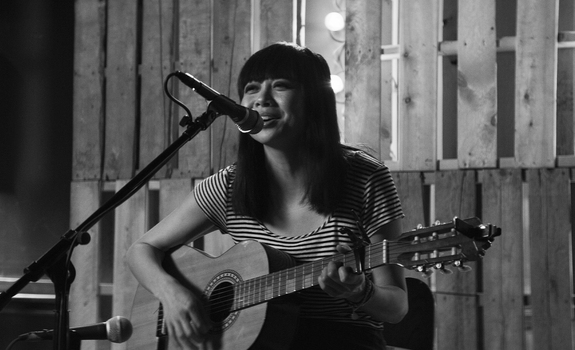
Yea-Ming seems perennially overshadowed and unsung outside of her home base of Oakland and the overall greater Bay Area. Her songs are instantly captivating, memorable and endure over the long haul of time. Her skillful compositions are steeped in classic pop Brill Building structures and echoey atmospherics that would also be right at home in a Bakersfield honky-tonk with their distinctive steel guitar embellishments. The Rumours’ twangy guitars and amps are aligned to project a perfect timeless tone while her lovely lantern light vocals guide the way under Western skies. In their own distinctive and competent way, they have shaped and sustained an endearingly sincere and jangly folk-pop-country sound. Overall, their enchanting songs turn corners with attention paid to arrangements complete with unexpected bridges which effortlessly connect the songs to new realms. Yea-Ming has been leading her band the Rumours for almost a decade now with the time between performing and recording spent perfecting her natural acting abilities in films like Daylight Savings (2012) and I Will Make You Mine (2020). With everything up in the air, I thought this time was as good as any to check in with the multi-talented Yea-Ming and discuss her captivating music.
It must be exciting to have a movie that you star in named after one of your songs!
How did Lynn Chen come about naming her directorial debut after one of your signature songs which is also the title of your 2016 debut album?
It’s very cool! I Will Make You Mine is the 3rd installation of a trilogy. The first two movies centered around the main character Goh played by Goh Nakamura and his 3 different love interests (Rachel, Erika and Yea-Ming played by Lynn Chen, Ayako Fujitani and yours truly) that you never really get to know. For IWMYM, Lynn says she wanted to get to know these women and discover their humanness since they seem so cool and mysterious in the 1st two installments of the trilogy. Since the first two movies were named after real life Goh’s real songs, Lynn thought the 3rd movie should be named after one of my songs. She says that she went into my catalog of music and I think had her husband call out all of my song titles out loud until one sounded like a movie title.
Tell us about your background in music. I read on the Lilystars Records page that you studied piano for a time at UC Berkeley. (Nice to hear your waltzing piano playing on “Sign on My Window.”) How long have you been singing? Did your parents encourage (or discourage) you musically in any particular/general directions?
I majored in music at UC Berkeley but the Lilystars Records page is a little bit of an exaggeration in that I didn’t focus my studies on piano performing per se. If I had, I’d be a much better player haha. But I did have to play the piano to get through a lot of those classes…
I took piano lessons from the age of 7 and through high school. My parents were not particularly encouraging in me playing music but they did purchase a brand new KAWAI piano and pay for weekly lessons for 11 years which I now realize is not small change. I believe that my mom allowed me to play piano because she read that prestigious universities required extra-curricular activities and piano would work. For her, the purpose of piano lessons I think was so I would get into college, not to become a musician. She was stoked when I got into Berkeley, but NOT stoked when I changed my major from biology to music.
I didn’t really start singing until I got into punk and indie music circa 1997-98. I always loved singing but never thought I was a good singer and I even got rejected from the University choir at Berkeley when I tried out which was obviously very discouraging. But when I started listening to punk and indie music, I began to realize the beauty and nuances of imperfect and unconventional voices. That encouraged me to start writings songs and make me feel like it was okay for me to sing them.
On a similar note it sounds like not a lot of music was played at home when you were growing up- let alone Fleetwood Mac! ( I finally now get the meta Fleetwood Mac Rumours reference.)
There was not! You could probably count the music my parents owned on 2 hands, the most memorable of which was the soundtrack to Dr. Zhivago on vinyl. Haha. So random!
I also read that you became enamored by Lookout! Records bands like the Queers, MTX etc. Were you allowed to attend all-ages shows? If so, were you going to Gilman at the time? ( I can only imagine you harmonizing with Joe Queer/King like Lisa Marr has done so well over the years.) Did you gravitate from the punkier sounds towards the softer Sacramento/SF (e.g., Go Sailor/Tiger Trap/the Softies) and Vancouver (e.g., cub) pop sounds or vice versa or did you embrace it all during the same time? (I also detect a trace of Dear Nora’s “ We'll Have a Time” and a wonderful Velvet Underground influence in your sounds.)
I discovered the Queers and MTX in the college dorms my freshman year. That was the first place I lived where I had access to ethernet and I was able to do music searches online. I ran across Lookout! Records and was able to download music videos off the internet with that “fast” internet connection. So by that time I was already 18 and was so ashamed of my limited knowledge of my hometown venue Gilman and hometown record label Lookout! that I caught up as quickly as I could. Though, if I had known about Gilman while still underage, I wouldn’t have been able to do much about it since my parents were very strict and rarely let me go out.
So though I was late in the game, that fateful day in my college dorm room changed my life. That exploration of pop punk and later on working at Rasputin Music in Berkeley led me deep into indie music, lo-fi recordings, classic rock and pop melodies in general. I think I gravitated towards lo-fi recordings and unconventional voices because I myself knew I could never be the polished person that I felt was expected from me (from my parents and from the conservative music program at Berkeley).
Before Dreamdate, I was in a band called Hawaiian Getaway which is where I met Anna Hillburg. Anna “auditioned” to be the bass player for HG and killed it because she’s got such a natural knack for music so of course she joined the band. And quickly became my best friend, songwriting partner and collaborator in Dreamdate and beyond. I was in one other band prior to Dreamdate, but it was short-lived and never recorded and never named.
So what brought about your explorations into the echoey and forlorn country & western sounds? (which I love by the way)
I’m not sure exactly but it felt like my songs just started coming out a little country sounding around 2004. Of course, I know I didn’t invent those sounds. I do however remember gravitating heavily to Appalachian bluegrass that I heard in an American music class at Berkeley. I also remember being very attracted to the country twang in certain indie bands like Beachwood Sparks, Wilco and Yo La Tengo. So I think it just seeped in to my work subconsciously.
How did you meet up with Eoin Galvin? His apt lap steel guitar playing (e.g., “You Took Me By the Hand”) is one of the things that sets the Rumours apart in the crowded and somewhat temporal indie-pop scene. Another distinguishing factor is the group’s competence to shape a simultaneously amicable, yearning, strummy, plaintive and entrancing sound that does not fall into over-precious twee traps or self-absorbed folk.
Eoin Galvin was in a band called Readyville in the early 2000s, the same time Hawaiian Getaway was around. We played some shows together at that time and I always loved his nuanced and sensitive accompaniment. He’s the kind of musician that knows how to play the song not the instrument. I asked him to play with me when I first “went solo” and wasn’t even sure what I wanted him to do. At first, I thought maybe he could play keyboard. But at our first meeting, he brought like 5 instruments to try and as soon as he started playing the lap steel, everything felt like magic and I knew that would become a huge component of our songs.
In the country music tradition, would you like to briefly introduce the band at this time?
I would love to! On my left is the brilliant and beautiful Anna Hillburg on bass and vocals. Over here on my right we have Eoin Galvin (almost always on my right because he is left handed and otherwise our guitar necks would get tangled) making those sweet sounds on the lap steel and guitar. And of course we have Sonia Hayden holding us all together on the drums.
L-R: Eoin Galvin, Yea-Ming Chen, Anna Hillburg, Sonia Hayden
Photo by Adam Thorman
I’m curious how your Fender Stratocaster frequently sounds more like a Fender Telecaster or perhaps there are Telecasters used on the studio recordings?
Wow, that is a very interesting observation and to be honest I'm not sure. I’m constantly being lured by studio guitars that I end up using when I show up to a session but I don’t actually remember what they are because I don’t have that kind of gear brain and I also have a terrible memory. I do own a fake (Squire) Telecaster (my first guitar that cost $100 at guitar center in 1997) so it is possible that I have used that on some recordings. But it’s also very possible that I have used my Fender Strat and played it cleanly to retain a bright-ish sound because that’s what I like. So I guess my answer is, I don’t know and you’d have to ask my music producers if they remember.
By chance, are you of Taiwanese descent? I’m basing this on your hyphenated first name.
Yes!
How do you think your experience of growing up and living in California has obviously shaped your sound?
I’m not sure how living in California has shaped my sound. Is it really obvious? I never realized that. That’s kind of cool! The truth is I have never lived anywhere outside of the Bay Area (besides Georgia and Taiwan briefly as an infant) so I don’t think I have an outside perspective on this.
Your songs contain bittersweet lyrics frequently expressing the intangibles of the human condition and experience. You seem to take the coal and pressure of life and turn it into pop diamonds. Would you like to elaborate on your “stubborn” lyrical writing process?
Thank you! I guess I do try to make lemonade out of lemons. I always felt like lyrics should be personal, partially because I grew up naively thinking all art in general was personal, but also because I found writing about my pains and sorrows was very cathartic and therapeutic. Maybe it’s cliche but it’s my way of getting together my difficult feelings and putting them in a neat package so I can lay them to rest but also revisit and be grateful for that difficult time by seeing it in this different light. I suppose I’m stubborn writing songs because they are so personal - they are like extensions of a diary - and therefore I prefer to work on them alone until I have a pretty set structure before I present them for collaboration.
You demonstrate an innate knack for super-catchy melodies. Do you compose and develop your melodies with guitar and/or on piano or do they just come across like bolts of lighting?
Ooh, I wish it was like bolts of lightning! It’s been guitar for most of the time, but I’ve started exploring writing melodies on the piano in the last year.
Since you pretty much stick to playing in the greater Bay Area, are there any cover songs in your live repertoire either solo and/or with the Rumours besides "Anyway" by Dreamdate?
Are you thinking of "Go Fish" by cub? Dreamdate also used to do a rad cover of "Monster Mash" that Anna sang lead whenever Halloween came around. But lately, I actually don't have any cover songs in my live repertoire. Don't know why. Covers are fun. I'll consider bringing them back.
Design by Chris Appelgren
How do you decide which shows are solo and which are for the full group? I imagine work schedules must play a huge role in aligning the stars.
Really it’s just scheduling. And sometimes it's just what is requested
What factors do you attribute to the fact that the Rumours have been going strong and steady and blazing their own distinct path for almost 10-years now? A stable musical line-up in the transient Bay Area (where everything is subject to change without notice) is not something that listeners should not take for granted.
Honestly, I think that it’s just that we like hanging out with each other. We’ve never gotten huge, so there’s not much to stress out about and therefore not much to fight about. We just get together when we have shows or when I have an idea I want to explore. Hanging out with my band is super fun. We spend a good 30%-50% of our practices gossiping and talking about TV, movies and books.
Are you the driving force or guiding force in the band as far as direction?
Haha. Well if I have to pick one, I think I’m more of a guide. I’m not very aggressive and I’m not optimistic enough to be a driving force.
Any sneak preview words you can provide on the new album? Will “Eskimo Eyes,” the closing song on the “I Will Make You Mine” soundtrack be included on it?
It's in the works! Half of it is recorded. The other half might have to be quarantined recorded. I think "Eskimo Eyes" will make the cut but you never know. What’s on the horizon for the band? Any particular directions do you foresee your music going? I don’t know honestly. I’ve been doing this so long that I try not to foresee anything or else I get bummed. The only thing I know is that I want to keep writing and recording because that's the part that makes me happy. Which also means I want to keep being inspired. So I foresee myself looking for inspiration wherever I can find it.
"Let Me Stand Close to the Water"-video filmed by Claude Cardenas
What are some concepts that you have learned from being in a band that you are able to apply to work and/or life?
Teamwork, patience and empathy and (oh my god this is so cheesy but) finding a groove with other people.
Any book/author recommendations from your vast library?
One of my favorite books of all time is A Stroke of Insight by Jill Bolte Taylor. I think it’s super underrated. It chronicles the recovery of a neurologist from a stroke on the left side of her brain. Essentially, it’s a self-help book, but from the perspective of a scientist who’s learned to distinguish between her left brain from her right brain because of this stroke. I won’t go into it but it’s an amazing read for anybody neurotic, analytical but also creative and emotional which I guess is how I would describe myself. Final thoughts/closing comments? Thank you for listening to the music!
Sounds like the type of record that Jon Baker of CHiPs would put on in his apartment after a long day patrolling the freeways of Los Angeles. Etc. were based out of Westchester, CA (near LAX) and initially formed their band in 1973 while students at Westchester High School (also the alma mater of the Turtles). This 1976 album is somewhat of an anomaly for its time as it contains all original compositions, while looking back to ‘60s pop (namely the Beach Boys) for some of its direction. Still, it’s far from a proverbial lost classic as there are too many mediocre moments due to its time of release during the early tide of what is now retroactively called yacht rock. (If the record was issued just two years later, it would have been interesting to see if the new wave/power pop movement would have had any influence on the band.) Both “Rose for Sister Georgia” and “Left Me Blue” veer a little too far into Steely Dan and Doobie Brothers sheen pop territory to wishy-washy effect. Things get better with “Sazonar,“ a slightly spacey jazzy instrumental, that lifts off somewhere between Wes Montgomery and El Chicano before adding some “Shafty” chakka-chakka guitar that fills the air between the pet rocks, wood beams and skylights. “My Thought are of You” is their solid attempt for a pop rock commercial breakthrough that doesn’t quite make it. Still, the straightforward number does place a slight smile on one's face-reminding listeners of those contemporaneous big hits from Orleans.
Marina Pop
Soft rocking “Freedom” is noteworthy for its quixotic bid to reach the stars in a light polluted sky. Its prominent harmonies and fluent guitar would not sound out of place on a Bread or David Gates solo album of time. “Like a Star” and later “Freeway Driver” are as clunky, predictable and pedestrian as those Beach Boys bar band-ish blues shuffles that frequently filled their late ‘70s albums. Perhaps these hokey numbers sounded better live inside a rollicking lounge of a Century Blvd. Ramada Inn. “Red Eyed Sara” is a little better in its attempts to approximate the country rock sides of the Rolling Stones or Poco as it gains some momentum with some unexpected twist and turns. With some brief keyboard nods to the Today!-era Beach Boys, “The Beating of My Heart” takes things back to soft rock mode before stretching out to a sunset horizon filled with warm percussion and guitars. Lastly, “Julie’s Song” is another foray into the sunlit and soulful Bruce Johnston/Beach Boys-esque harmony pop rock. The band truly shines on these Beach Boys-inspired songs and could be said to be a lost link between the boys from Hawthorne and later acts like the Explorers Club who emerged in the wake of the Brian Wilson revival. Overall, this 1976 lone album by this semi-pro band is a worthwhile listen to discover the momentary traces of the ‘60s California Dream that had not completely faded deep into the ‘70s.
For a country rock band from Crockett, CA (East Bay Area), Bridges seems to be an apt title album. The straightforward album cover art depicting those landmark bridges spanning the Carquinez Strait provide a further sense of orientation. On sonic levels, the music itself literally crosses and connects several musical styles with a somewhat natural ease. Bridges is their 1969 follow-up album to their competent and congenial 1968 eponymous debut that has been somewhat unfairly derided over the years for its over-reliance on cover songs. Both of their albums were recorded and produced in Nashville by the legendary Bob Johnston (whose production credits include industry giants like Dylan, Johnny Cash, Simon & Garfunkel and Marty Robbins). Johnston builds keenly and clearly upon the band's already established strong musical foundation. Overall, Bridges is not truly rock nor country, but leans towards a folksy twangy pop direction with subtle jazz undercurrents and is definitely stronger for it. While their sound could have benefited from some dusty steel guitar sparks, at least the gloppy Hearts & Flowers strings were not applied. Some of these rustic and jazzy inclinations can be attributed to both the source material and the musicians involved. If there seems to be a thoughtful John Stewart (of the Kingston Trio) feel to the album, it is not coincidental, as John Stewart contributed two songs (“July, You're A Woman,” “Looking Back Johanna”) and the band also featured John’s brother and multi-instrumentalist Mike Stewart (formerly of the We Five).
West 1968
The Byrds-ian “Peaceful Times” exemplifies the group's economical approach while showcasing their warm, yet striking guitar tones intertwined with harmonic vocals that build to the sky. This song stalled out as a single in 1969 as it probably seemed too countervailing during the burn out of the decade. It’s the later half of the album where West actually finds their firmest footing and true direction. “General Mojo's Well Laid Plan” is a well-executed jazzy country-ish instrumental that was contributed by jazz bass stalwart Steve Swallow (of the Gary Burton Quartet). Surprisingly, another fine instrumental “Funeral on the Beach” subsequently follows. This group composition places their proficiency and telepathy on the forefront. The hushed “Sad About the Times” is a low-key gem that echoes the Byrds’ “Everybody's Been Burned" in theme, but without the acidic burnishing. This soft pop song seems to encapsulate the unraveling present, while lamenting the end of the idealistic era and expressing reservations about the impending ‘70s. (“Sad About the Times” would also go on to later inspire the title of a 2019 compilation from Mexican Summer.) While generally too understated to move mountains or units for Epic Records, the seemingly good-natured and earnest group left a transitional album filled with bittersweet songs that continue to glow with the promise of the West